Road Salt and Your Car: Why Winter Washing Isn't Enough in South Jersey
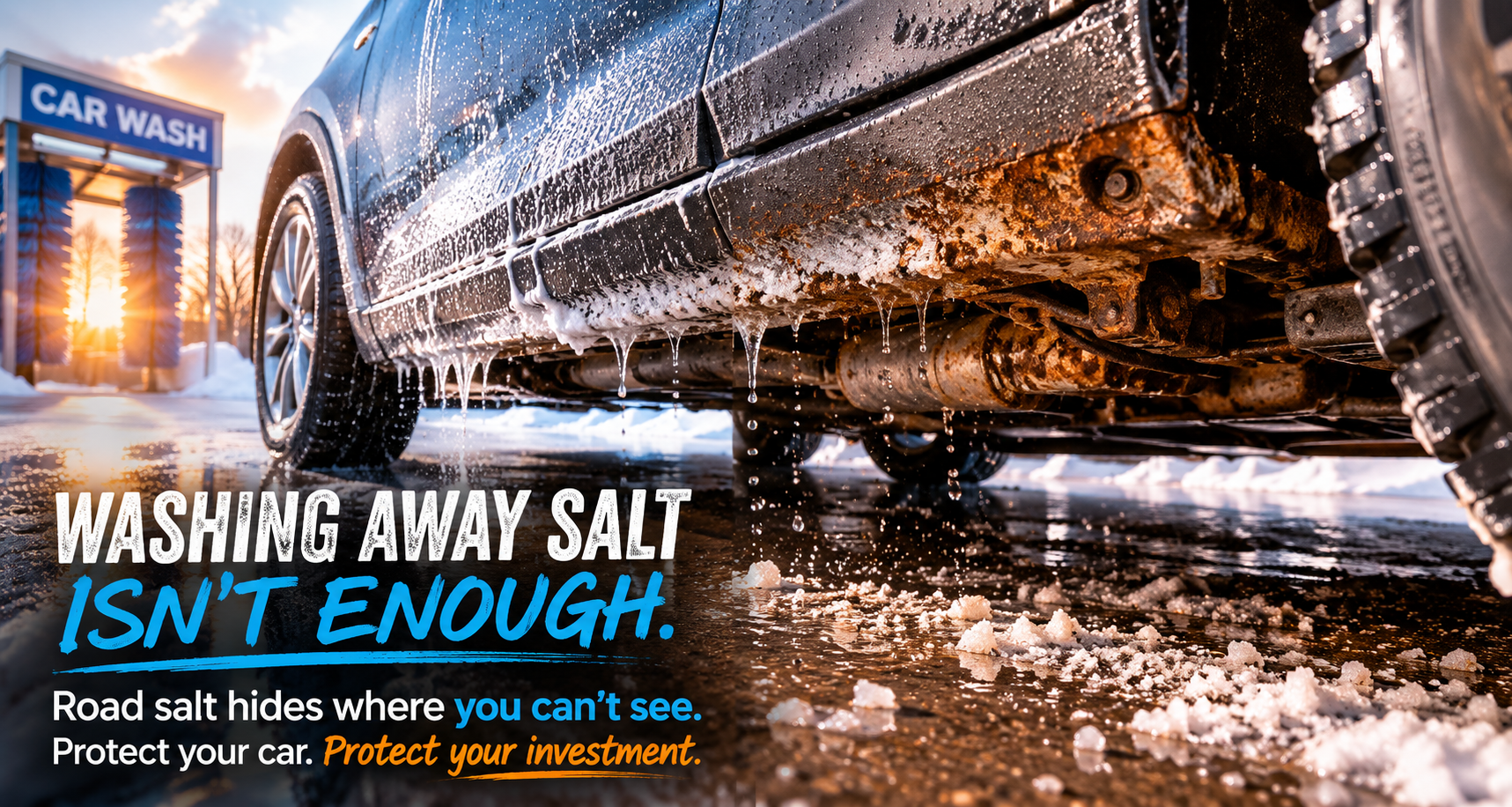
Ask most South Jersey drivers how they protect their car in winter and you'll hear the same answer: "I run it through the car wash." It's a good instinct — washing away road salt is genuinely one of the most important things you can do. But here's the uncomfortable truth that the car wash industry doesn't always make clear: a winter washing routine alone, especially the quick drive-through kind, leaves your car exposed in ways that quietly cost drivers thousands of dollars over time.
New Jersey is a heavily salted state, and the salt sprayed across the Atlantic City Expressway, Route 42, and every back road in Gloucester and Camden counties doesn't just sit on your paint where a wash can reach it. It works its way into seams, packs into your undercarriage, and clings to brake lines and suspension components you never see. Understanding why washing isn't enough — and what to do instead — can be the difference between a car that lasts 15 years and one that rusts out early.
What Road Salt Actually Does
Road salt is mostly sodium chloride, and it's highly corrosive, especially when mixed with moisture, which accelerates the oxidation process. The mechanism is relentless: every passing tire throws salty slush into your wheel wells, onto brake components, and across the underbody. When the water dries, it leaves a salty film that actively attracts more moisture from the air. That means even on a dry day, your car's metal parts never really dry out — they sit in a constant cycle of damp, salty film.
Over time, that salt accumulates on the undercarriage, clinging to brake lines and suspension, causing rust that can corrode, weaken, and eventually break metal parts including brake rotors, suspension components, and exhaust systems. These aren't cosmetic issues — they're safety and reliability problems. And they're expensive. As one repair shop notes, washing may seem excessive, but it's far cheaper than spending thousands of dollars to replace rusted and damaged components.
It's worth knowing that many New Jersey roads are now treated with liquid brine in addition to rock salt. Brine is more effective at preventing ice, but it's also more damaging to vehicles because the chemicals stay in liquid form longer and seep into cracks and crevices where corrosion accelerates.
Why a Quick Wash Falls Short
So if washing removes salt, why isn't it enough? Several reasons.
Drive-through washes miss the undercarriage
The underside of your car sees the most salt damage and is the hardest area to wash after a winter drive. Many automatic washes either skip the undercarriage entirely or offer only a light underbody spray as a paid add-on that doesn't have the pressure to dislodge salt packed into seams and crevices. If your wash isn't actively blasting the undercarriage, wheel wells, rocker panels, and the lower edges of the doors, it's leaving the most vulnerable salt right where it does the most harm.
Salt hides where water doesn't reach
Even a thorough wash struggles to reach everywhere salt collects. It packs into door seams, rocker panels, and frame cavities, and behind trim where a surface rinse simply can't penetrate. As one rust-protection specialist puts it, salt gets into places you never see — eating away at brake lines, rocker panels, and wheel wells long before the outside looks bad. By the time you spot a rust bubble on a wheel arch, corrosion has usually been working underneath for a while.
Frequency matters more than people realize
Washing once a month isn't enough during an active New Jersey winter. Experts recommend washing — including the undercarriage — every one to two weeks during the salted months, and sooner after a heavy storm. Going all winter with only occasional washes lets salt pack into seams and behind trim, giving corrosion all the time it needs.
The heated-garage trap
Here's a counterintuitive one that catches a lot of drivers. Parking a salty, wet car in a warm garage every day can actually keep the corrosion process active by giving salt and moisture a comfortable environment to work in. The warmth accelerates the chemical reaction. So if you've been tucking your slush-covered car into a heated garage thinking you're protecting it, you may be doing the opposite unless you're washing regularly.
The Layers of Protection Washing Doesn't Provide
Washing removes salt that's already there. But true winter protection is about creating barriers so salt has a harder time bonding and reaching bare metal in the first place. This is where a wash-only routine leaves gaps.
Paint protection: wax, sealant, or ceramic coating
Your paint and clear coat are what protect the metal beneath from rust. A wash does nothing to reinforce that barrier. A coat of wax adds a temporary shield that helps repel salt, but it needs frequent reapplication. For longer-lasting defense, a ceramic coating creates a hydrophobic layer that prevents salt and grime from bonding to the paint, so salty water beads up and rolls off instead of clinging. That same property makes every subsequent wash more effective.
It's also critical to seal exposed metal. If your car has stone chips that expose bare metal, those spots are where rust starts, so touching them up seals them before salt can reach bare steel. No amount of washing fixes an open chip.
Undercarriage protection: undercoating and rust-proofing
For the underside — the area that takes the worst abuse and is hardest to clean — undercoating adds a thicker shield against salt spray, slush, and moisture. Undercoating prevents moisture and salt from reaching undercarriage components, and the ideal time to apply it is before the full onset of winter, on a clean, dry undercarriage.
A few honest caveats here, because undercoating isn't magic. It makes the most sense for older vehicles you plan to keep for years, models prone to rust, and used cars that have lived in high-salt regions; if you're leasing or trading in within two or three years, the return is smaller, and modern cars already leave the factory with galvanized steel and protective coatings. It also must be done correctly — a sloppy application can trap moisture and make rust worse, and a thick coating should never be sprayed directly over active rust. And crucially, even good undercoating can't replace regular winter washing. The two work together; neither alone is enough.
EV Owners: Pay Extra Attention
If you drive an electric vehicle, road salt deserves even more of your attention. EVs aren't immune — in some ways they're more vulnerable. Battery packs, charging ports, cooling lines, and electronics all sit low in the chassis, exactly where winter slush, salt, and standing water collect. Aluminum battery housings and charging ports can corrode even faster than their gas-powered equivalents. For EV owners, regular underbody washing, keeping charging ports dry and salt-free, and considering EV-safe protection are all worthwhile precautions.
What a Complete Winter Routine Looks Like
Putting it together, protecting your car through a South Jersey winter means going beyond the drive-through:
Wash thoroughly and often — every one to two weeks, with real undercarriage attention to the wheel wells, rocker panels, and lower doors, not just a surface rinse. Try to wash when temperatures are above freezing so water drains and dries rather than freezing in door seals and latches.
Lay down paint protection — a fresh wax, sealant, or ideally a ceramic coating before winter so salt has a harder time bonding, plus touch-ups on any stone chips exposing bare metal.
Protect the underbody — consider undercoating or rust-proofing on a clean undercarriage, especially for older cars or vehicles you plan to keep long-term.
Get a pre-winter inspection and watch for warning signs — bubbling paint around wheel arches, flaking metal on underbody parts, or crusty buildup around brake and fuel lines all deserve a professional look.
Why This Is Worth Doing Right
It comes down to economics and longevity. Cars in salt-belt states have measurably shorter lifespans, largely because of road salt. And the damage isn't something insurance bails you out on — AAA confirms that undercarriage corrosion counts as normal wear and tear, meaning your insurance won't cover it. When structural parts like brake lines, subframes, and suspension components decay, the repairs are expensive, and they often arrive as sudden failures rather than gradual warnings.
A proper winter routine — washing plus protection plus inspection — is, in effect, the cheapest insurance policy you'll find for your vehicle. It also preserves resale value, since a rust-free, well-maintained car commands far more on the used market than one with corroded panels and a salt-stained interior.
The drive-through wash is a start. But in a South Jersey winter, it's only the start. The drivers whose cars look and run great after a decade aren't the ones who washed occasionally — they're the ones who washed thoroughly and protected what the wash couldn't reach.
Want winter protection that goes beyond a basic wash? Underboss Detailing is South Jersey and Philadelphia's premier mobile detailing service — we come to your home or office for thorough undercarriage salt removal, paint decontamination, and protective wax or ceramic coating that shields your car all winter long. Don't let salt quietly eat away at your investment.
Book your winter protection detail today →
Sources: autonocion, Mike's Auto Repair, Malco Automotive, Nanak Car Wash, Delta Sonic, Autoblog, Recharged, NH Oil Undercoating, 207 Undercoating, New England Rust Defenders, AAA.
Frequently Asked Questions
If I wash my car regularly, why isn't that enough in winter?
Because washing removes salt that's already there but doesn't reach everywhere salt hides or stop it from bonding in the first place. Salt packs into door seams, rocker panels, and frame cavities where a surface rinse can't penetrate, and quick drive-through washes often miss the undercarriage entirely. Complete protection pairs thorough washing with paint and underbody barriers.
How often should I wash my car during a South Jersey winter?
Every one to two weeks during the salted months, and sooner after a heavy storm. Going all winter with only occasional washes lets salt pack into seams and behind trim, giving corrosion the time it needs. Try to wash when temperatures are above freezing so water drains and dries instead of freezing in seals and latches.
Do automatic car washes clean the undercarriage well enough?
Usually not on their own. The undercarriage sees the most salt damage and is the hardest area to clean, and many automatic washes either skip it or offer a light underbody spray that lacks the pressure to dislodge packed-in salt. Make sure any wash actively targets the wheel wells, rocker panels, and lower doors.
Does parking in a heated garage protect my car from salt?
It can backfire. Parking a salty, wet car in a warm garage daily keeps the corrosion process active by giving salt and moisture a comfortable environment. The warmth speeds up the chemical reaction. The garage is fine — just wash regularly so there's no salt sitting on a warm, damp car.
Is undercoating worth it, or is washing enough?
They do different jobs. Undercoating prevents moisture and salt from reaching undercarriage components and makes the most sense for older cars or vehicles you plan to keep long-term. But it must be applied correctly on a clean undercarriage, never over active rust, and it can't replace regular washing — the two work together.
How does ceramic coating help against road salt?
A ceramic coating creates a hydrophobic layer that prevents salt and grime from bonding to your paint, so salty water beads up and rolls off rather than clinging. That protects your finish and makes every winter wash more effective. Unlike wax, it lasts years instead of weeks.
I drive an EV — do I need to worry about salt more?
Yes, arguably more. EV battery packs, charging ports, cooling lines, and electronics sit low in the chassis exactly where salt and slush collect, and aluminum housings can corrode even faster than gas-car parts. Regular underbody washing, keeping charging ports dry and salt-free, and EV-safe protection are all worthwhile.
Will my insurance cover rust damage from road salt?
No. AAA confirms that undercarriage corrosion counts as normal wear and tear, so insurance won't cover it. That's exactly why a thorough washing-plus-protection routine is worthwhile — it's the cheapest insurance you'll find against expensive, sudden failures of brake lines, suspension, and frame components.
Want winter protection that goes beyond a basic wash? Underboss Detailing brings thorough undercarriage salt removal, paint decontamination, and protective coatings right to your home or office across South Jersey and Philadelphia.