Fall Detailing Tips: Removing Leaves, Tree Sap, and Pollen in NJ
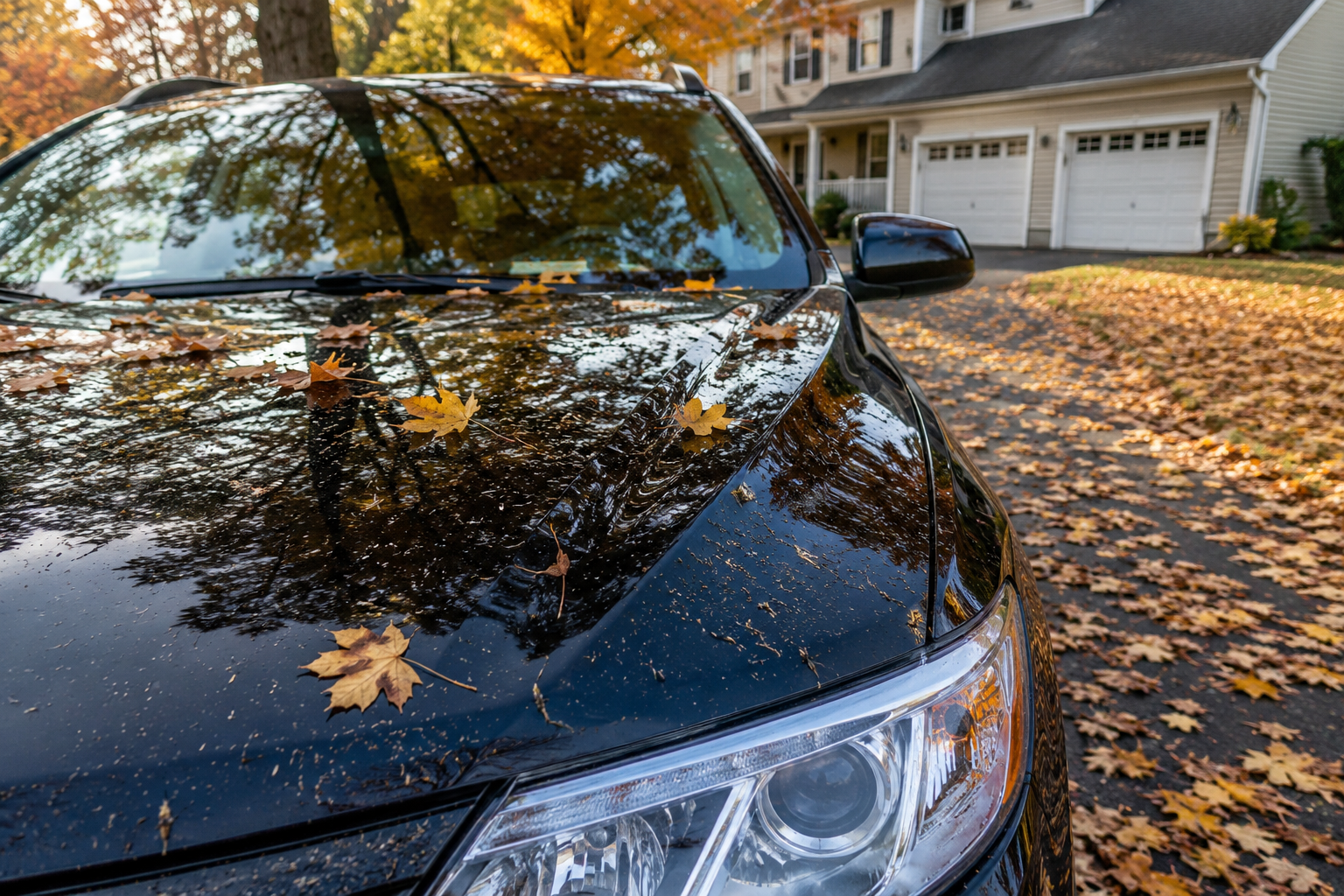
Fall in New Jersey is one of the best times of year to be on the road. The crisp air, the brilliant reds and golds along the Garden State Parkway and the back roads of Gloucester and Camden counties — it's beautiful. But that same scenery is quietly hard on your car. Those picturesque leaves, the sap dripping from the trees you park under, and the lingering pollen all carry a hidden chemical and physical threat to your paint, glass, and even your car's drainage system.
What makes fall especially tricky is that it's a transition season. You're cleaning up the residue of summer while preparing for the brutal winter ahead. Getting your detailing right now protects your finish from autumn's specific hazards and sets your car up to survive the salt and slush to come. Here's a complete guide to fall detailing for New Jersey drivers.
Why Fall Is Tough on Your Car
It's easy to think of a fallen leaf as harmless. But left sitting on your paint for hours or days, leaves become a concentrated problem. As one detailing service explains, leaves trap moisture against the clear coat like a sponge, promoting oxidation, and they release acids and tannins that can stain paint and trim. Those brown, tannin-like stains often don't wash off easily once they've set in.
Leaves also pick up and hold other contaminants — pollen, sap, dirt, and industrial fallout — and press them against your paint, where they embed in the clear coat and make cleaning harder. And when leaves combine with moisture on your carpets or floor mats, they create the right environment for mildew and odor-producing microbes.
Consumer Reports puts it plainly: it's best to avoid parking under trees in fall, especially if you're not driving much, because leaves find their way into a car's nooks and crannies, getting caught under wipers and clogging air intakes and drain holes, and wet leaves contain acidic tree sap that can damage paint. Add in the bird droppings and acorns that come with parking under trees, and fall becomes a season that demands attention.
Removing Leaves the Right Way
Clearing leaves seems trivial, but doing it wrong can scratch your paint. If leaves have dried into sticky residue or baked on, aggressive scraping or using the wrong brush will introduce micro-scratches and swirl marks in the clear coat.
The safe approach is to remove leaves gently. Pick them off by hand or use a leaf blower on light air pressure — but go easy, because too much pressure can lodge leaves deeper into hard-to-reach places. Pay special attention to the spots where leaves love to collect: around the windshield, the cowl area below it, hood vents, and trunk edges.
Don't Forget the Drains and Cowl
This is the fall maintenance step most drivers overlook, and it's one of the most important. Leaves, dirt, and pollen wash into your car's drainage channels — the cowl area below the windshield, the gutter channels, and especially the sunroof drains that run down the A-pillars and C-pillars. Once those channels clog, water has no exit path and backs up into the headliner or footwells.
The consequences add up fast. Blocked drainage can cause water leaks into the cabin and accelerated rust in hidden spots. A leaky sunroof is no small thing — trapped moisture can create mold in the headliner within 48 hours, and rust spots can appear in under two weeks if water keeps pooling. What starts as a few clogged leaves can turn into repairs costing several hundred dollars.
Periodically check and clear the cowl and sunroof drains so water runs away from the cabin. One important caution: to clear sunroof drains, don't jam a wire hanger down them — that can tear the sunroof lining. A vacuum to draw the leaves out is far safer. This is also an area where a professional detail helps, since detailers know exactly where these channels run and how to clear them without damage.
Tackling Tree Sap Before It Etches
Tree sap is the most insidious fall hazard because it actively damages your paint over time. Sap contains sugars, resins, and organic acids that harden and chemically bond with your car's clear coat. When sap first lands, it's soft and lifts off easily. Leave it sitting, and that same spot hardens into a deposit that etches into the clear coat, causing staining, dullness, and in severe cases permanent damage that requires paint correction or repainting.
Speed matters more than people realize. Acting within the first 24 hours gives you the best chance of clean removal without any lasting marks. The UV from even mild fall sun makes it worse, baking the sap harder onto the surface.
How to remove sap safely
The safest DIY method for fresh sap is to apply 70 to 90% isopropyl alcohol to a clean microfiber cloth, let it dwell for two to three minutes, then gently wipe — never spray it directly on the paint. For hardened sap, a dedicated tar-and-sap remover applied to the deposit and given five minutes to re-soften works best. If chemical removal leaves a bit behind, a clay bar with plenty of lubricant lifts the rest.
Just as important is what not to do. Never use a razor blade, metal scraper, or dry cloth on hardened sap. Avoid harsh household chemicals — nail polish remover and acetone can melt or strip the clear coat. And resist the urge to scrub aggressively, since that pushes grit into the paint like sandpaper and leaves swirl marks. After removing sap, the spot may look dull, so follow up with wax to restore protection and shine.
One thing to watch on glass: if sap lands on your windshield, don't run your wipers over it — that just smears it into hard-to-remove streaks.
Dealing With Bird Droppings and Acorns
Parking under trees in fall means bird droppings too, and they're more damaging than they look. Bird droppings contain uric acid with a pH between 3 and 4.5 — highly corrosive to automotive paint. Once dried, they bond to the paint, and the sun's heat intensifies the acidic reaction, accelerating etching. Clean them within a few hours: soften the dropping with a damp microfiber cloth first, then lift it gently with pH-neutral shampoo. Never wipe a dried dropping with a dry cloth, since the hardened debris will scratch your paint.
Washing Away Lingering Pollen
While spring gets the reputation for pollen, fall in New Jersey brings its own load — ragweed and weed pollen peak in September across the region, and the fine dust settles on every car parked outdoors. Combined with the tannins from leaves and the acids in sap, pollen is part of the contaminant layer that builds up on your finish through autumn.
Frequent washing is your first line of defense. Use a pH-balanced car shampoo to lift contaminants without stripping your wax or sealant, washing top to bottom. For pollen and other contaminants bonded to the paint that a wash alone won't remove, a clay bar treatment leaves the surface smooth and clean. Don't forget your cabin air filter either — a clogged filter pulls pollen and dust into the cabin every time your heat runs.
Protect Your Paint — and Prep for Winter
Removing fall's contaminants is only half the job. The other half is laying down protection, and fall is the ideal time to do it for two reasons: it shields against autumn's sap and leaves, and it prepares your car for winter's salt assault.
A fresh coat of wax or synthetic sealant acts as a barrier against moisture, dirt, and acidic materials. Wax typically needs reapplication every two to three months, making fall the perfect time for a fresh layer; a synthetic sealant can last up to six months, carrying protection right through winter. A well-maintained wax or sealant coat also makes sap and bird droppings far easier to remove before they can damage the paint.
For the strongest, longest-lasting defense, ceramic coating is worth serious consideration heading into a New Jersey winter. A professional coating acts as a sacrificial barrier, preventing sap's acids from reaching your actual paint, while its low surface energy makes contaminants far less likely to stick. The same hydrophobic properties that shed sap also help shed road salt all winter long, making it a smart fall investment that pays off across two seasons.
Why a Professional Fall Detail Makes Sense
You can handle plenty of fall maintenance yourself, but a professional detail offers real advantages this time of year. Detailers safely clear clogged cowl and sunroof drains, remove etched sap and bird-dropping stains that a regular wash can't touch, perform full paint decontamination to strip embedded pollen and tannins, and apply durable protection that outlasts standard waxes. They can also catch early problems — a sap mark beginning to etch, a leaf-clogged drain, the first signs of a leak — before they become expensive repairs.
There's a timing advantage too. Handling your fall detail before the first hard freeze means your car goes into winter clean, protected, and sealed against the salt that does the most damage. As one detailer notes, addressing contaminants and applying protection in fall is far easier and cheaper than restoring etched clear coat or repairing rust later.
Your Quick Fall Detailing Checklist
To bring it all together:
Exterior
Gently remove leaves by hand or low-pressure leaf blower
Clear the cowl and sunroof drains (use a vacuum, never a wire hanger)
Remove tree sap promptly with isopropyl alcohol or a dedicated remover
Clean bird droppings within hours using the soften-then-lift method
Wash with pH-balanced shampoo; clay bar to remove bonded pollen
Apply fresh wax, sealant, or ceramic coating
Interior
Vacuum out tracked-in leaves and debris before they cause mildew
Replace the cabin air filter
Check for any musty smell signaling a drainage leak
Fall in New Jersey is short, and winter comes on fast. A thorough fall detail clears away autumn's acidic, staining hazards and armors your car against the salt and slush ahead — protecting both its appearance and its value through the toughest months of the year.
Want your car cleaned up and protected before winter hits? Underboss Detailing is South Jersey and Philadelphia's premier mobile detailing service — we come to your home or office to remove sap, clear leaf debris, decontaminate your paint, and seal it with wax or ceramic coating. Get ahead of the season and protect your investment.
Sources: Consumer Reports, Ideal Image Auto Salon, Detail King, Fresh Layer Mobile Detailing, Fresh Start Detail, Bliss Car Wash, Apex Auto Performance, AutoZone, Flex Autos, Auto Detailing Pro.
Frequently Asked Questions
Can fallen leaves really damage my car's paint?
Yes. Leaves trap moisture against the clear coat and release acids and tannins that stain paint and trim. Wet leaves also contain acidic tree sap, and Consumer Reports confirms they can clog drains and air intakes while damaging the finish. Left sitting, they leave brown tannin stains that don't easily wash off.
How do I get tree sap off without ruining my paint?
For fresh sap, apply 70–90% isopropyl alcohol to a microfiber cloth, let it dwell two to three minutes, then gently wipe — never spray it directly on the paint. For hardened sap, use a dedicated tar-and-sap remover with five minutes of dwell time. Never use a razor blade, dry cloth, or harsh chemicals like nail polish remover, which can melt the clear coat.
How quickly do I need to remove tree sap?
Fast. Acting within the first 24 hours gives you the best chance of clean removal without lasting marks. Sap contains organic acids that chemically bond with the clear coat, and the longer it sits — especially in sun — the harder it gets and the more likely it is to etch permanently.
Why should I worry about my sunroof and cowl drains in fall?
Because leaves and debris clog the drainage channels, and once blocked, water backs up into the headliner or footwells. That trapped moisture can create mold within 48 hours and rust within two weeks. To clear sunroof drains safely, use a vacuum — never a wire hanger, which can tear the sunroof lining.
Are bird droppings really that harmful?
Yes. Bird droppings contain uric acid with a pH between 3 and 4.5, which is highly corrosive to paint. Once dried, they bond to the clear coat, and sun heat accelerates the etching. Clean them within a few hours: soften with a damp microfiber cloth first, then lift gently — never wipe a dried dropping with a dry cloth.
Is there pollen to worry about in fall, or just spring?
Fall has its own pollen load. Ragweed and weed pollen peak across New Jersey in September, settling on cars alongside leaf tannins and sap. A pH-balanced wash plus a clay bar removes both surface and bonded contaminants, and replacing your cabin air filter keeps that pollen out of the cabin.
What's the best way to protect my paint heading into winter?
Lay down protection in fall. A fresh wax or sealant acts as a barrier against moisture, dirt, and acids, with sealants lasting up to six months — right through winter. For the strongest defense, ceramic coating creates a sacrificial barrier that sheds both sap and road salt, making fall the ideal time to apply it.
Why get a professional fall detail instead of just washing at home?
A professional detail safely clears clogged drains, removes etched sap and bird-dropping stains a wash can't touch, fully decontaminates bonded pollen and tannins, and applies durable protection. Detailers also catch early problems — a sap mark starting to etch, a leaf-clogged drain — before they turn into costly clear-coat or rust repairs. Timing it before the first freeze means your car enters winter clean and sealed.
Want your car cleaned up and protected before winter hits? Underboss Detailing brings sap removal, leaf cleanup, paint decontamination, and ceramic coating right to your home or office across South Jersey and Philadelphia.