Summer Heat and Your Car's Interior — How to Protect It
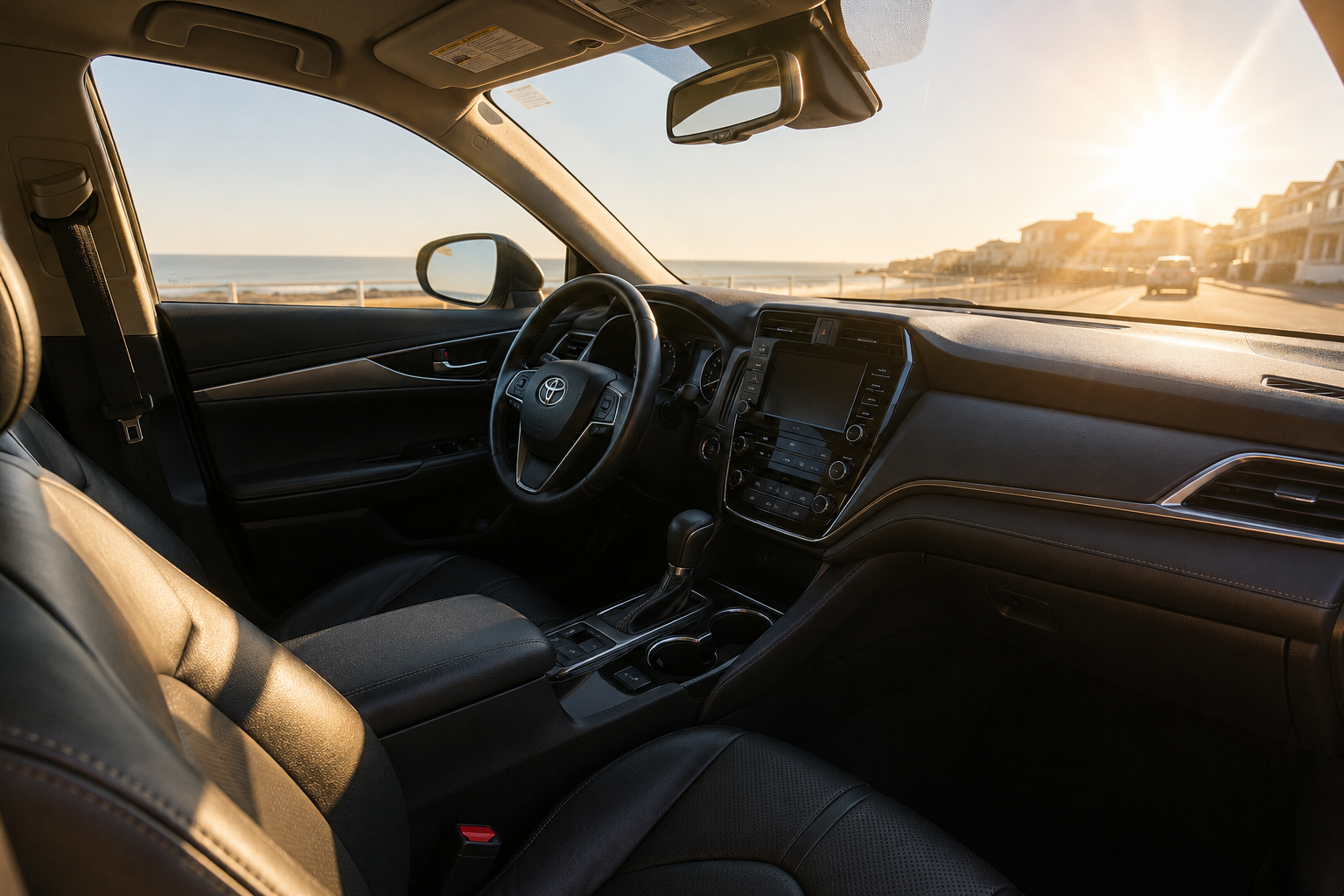
When summer arrives in South Jersey and the Philadelphia area, most drivers worry about keeping themselves cool. But while you're cranking the AC, your car's interior is taking a quiet, relentless beating. Sun and heat are the two most destructive forces a car cabin faces, and unlike a fender scratch or a coffee spill, the damage they cause builds up slowly and invisibly — until one day you notice your dashboard has cracked, your once-rich leather has gone stiff and pale, and your car suddenly looks years older than it is.
The good news is that nearly all of this damage is preventable with a little knowledge and the right care. Here's exactly what summer heat does to your car's interior, and a complete, practical guide to protecting it.
Just How Hot Does It Get Inside Your Car?
The numbers are genuinely shocking. A parked car acts like a greenhouse on wheels — sunlight passes through the glass, gets absorbed by the seats and dash, turns into heat, and gets trapped inside. Studies have found that within just one hour, the interior of a car parked in the sun on a 95°F day hits an average of 116°F, with the dashboard reaching 157°F and the steering wheel climbing to 127°F.
It gets worse for the specific surfaces that matter most. According to the National Weather Service, a dark dashboard or seat can easily reach temperatures in the range of 180 to more than 200 degrees Fahrenheit. And this isn't only a heat-wave problem — even on a mild 68°F day, the inside of a car in the sun can climb to over 118°F within an hour. Most of that temperature spike happens fast, with the interior gaining 10 to 20 degrees in the first 10 minutes alone.
Those are exactly the conditions that destroy interior materials over time.
What Summer Heat Actually Does to Your Interior
UV rays break down everything they touch
Sunlight streaming through your windows is the single biggest enemy of your interior. UV rays pass straight through the glass and sit on your surfaces for hours, and over time they break down the chemical bonds in plastics, leather, vinyl, and fabric. The result is faded colors, weakened fibers, and brittle surfaces.
Your dashboard takes the worst of it because it sits directly under the windshield. As one detailing expert explains, UV rays sit on the dashboard for hours, which is why dashboards usually crack before anything else in the cabin. The plastic loses its elasticity, becomes brittle, and eventually splits.
Leather dries out and cracks
Leather seats are particularly vulnerable. Prolonged sun and heat exposure strips away the natural moisture and oils in leather, leaving it dry, stiff, and prone to cracking like old skin. Once leather starts cracking, there's no easy fix — and replacement is expensive, with leather seat replacement running well over $2,000.
Heat cycling weakens materials over time
It's not just the peak temperature that does damage — it's the constant cycle. Materials expand as the cabin heats up during the day and contract as it cools at night. Repeating that heat cycle hundreds of times a year weakens the structure of interior materials and makes cracking far more likely. This is why even garaged cars eventually show wear; the daily expansion and contraction is relentless.
Your resale value takes a hit
Beyond comfort and appearance, there's a real financial cost. A sun-damaged interior — faded seats, a cracked dash, brittle trim — can significantly knock down your car's resale value. To a buyer, a worn interior signals a car that wasn't cared for, regardless of how well it runs.
How to Protect Your Car's Interior This Summer
The good news: protecting your interior is far easier and cheaper than repairing it. Here's a layered approach that actually works.
Park in the shade — it's free and it matters most
The simplest, most effective habit costs nothing. Every minute your car spends out of direct sunlight reduces UV exposure, surface wear, and heat buildup. Hunt for shaded spots under trees, in parking structures, or in your garage whenever possible. If no shade is available, try angling your car so the sun hits the back or side rather than blasting straight through the windshield onto the dash. It's worth noting that shade helps but isn't a complete solution — even shaded cars can reach 100°F inside within an hour — so combine it with the other steps below.
Use a windshield sunshade every time
A windshield sunshade is, short of never parking in the sun, one of the best ways to protect your dashboard. It blocks direct sunlight from hitting the dash and seats, cuts down interior heat, and folds away in seconds. They're inexpensive and one of the highest-return purchases you can make for your interior. For maximum protection, add side and rear window shades too.
Apply UV protectant to hard surfaces
UV-protectant sprays form a protective barrier on your dashboard, trim, and other hard surfaces that blocks harmful rays while keeping the material hydrated and flexible. One important tip: use a protectant formulated for dashboards and plastics on those surfaces, and save leather conditioners for your seats — they're different products for different materials. For best results during summer, reapply UV protectant every four to six weeks.
Clean and condition leather regularly
Leather needs moisture to stay supple. A quality leather conditioner maintains moisture levels and keeps the material soft, preventing the drying and cracking that heat causes. Regular cleaning matters too — dust and grit accumulate on surfaces, and combined with sun exposure, they accelerate wear. A gentle clean followed by conditioning keeps leather healthy through the hottest months.
One subtle but important point: keeping your interior fresh actually reduces damage indirectly. When a cabin smells clean and looks cared for, drivers tend to wipe lightly rather than scrubbing aggressively. Harsh, repeated scrubbing strips protective layers and dries out materials, so gentle, consistent care beats occasional deep scrubbing.
Consider window tinting
Window tint is one of the most effective heat-and-UV solutions available. High-quality automotive tint can block up to 99% of UV rays while also rejecting solar heat, protecting your upholstery and dashboard while keeping the cabin cooler and reducing strain on your AC. Just be sure any tint complies with New Jersey and Pennsylvania regulations on opacity, which differ by state — so check the local rules before having it installed.
Crack the windows slightly when safe
When you're parked somewhere secure, leaving the windows open about an inch allows trapped heat to escape, preventing extreme temperature buildup. This reduces the warping of plastic components and makes your car far more pleasant to climb into. Just use judgment about where you do this.
Use seat covers and a steering wheel cover
Physical barriers are highly effective because they take the UV hit so your original materials don't. Seat covers shield upholstery from direct sunlight, reducing the fade-and-crack cycle, and a steering wheel cover keeps the wheel from becoming too hot to touch. Look for covers made from UV-resistant, breathable materials so they protect without trapping heat against the surface.
The Case for Professional Interior Detailing
You can handle a lot of this yourself, but a professional interior detail offers a level of protection and restoration that's hard to match at home. Professional detailers use commercial-grade cleaners, conditioners, and protectants applied with the right technique to deep-clean, restore moisture, and shield every surface — leather, fabric, vinyl, dashboard, and trim. A typical professional interior protection service catches sun damage early, before it becomes serious and costly, which is far cheaper than replacing a cracked dashboard or worn-out seats.
For drivers who want the highest level of long-term protection, interior ceramic coatings are increasingly popular. These coatings bond to interior surfaces and provide years of defense against UV damage, stains, and wear, while making routine cleaning much easier. They effectively lock in protection so the daily summer assault does far less damage over time.
The financial logic is straightforward. When you weigh the cost of professional protection against the price of replacing damaged components — leather seats running $2,000 or more, dashboard repairs, and the resale value lost to a worn interior — preventative care is one of the smartest investments you can make in a car you plan to keep or eventually sell.
Catch Problems Early
Whatever approach you take, the key is consistency and early intervention. Keep an eye out for the early warning signs of sun damage: cracks forming in the dash, faded colors across trim or upholstery, warped or brittle plastic, and leather that looks dry or stiff. These build slowly, so spotting them early lets you address a small problem before it becomes a permanent one. That tiny dashboard crack or faded seat patch won't heal on its own — but a little attention now keeps your interior looking and feeling like new for years.
Summer in the Delaware Valley is long and hot, and your car's interior absorbs every degree of it. A combination of smart parking habits, UV protection, regular conditioning, and professional detailing will keep your cabin looking fresh, feeling comfortable, and holding its value through every heat wave.
Want your interior protected before the worst of summer hits? Underboss Detailing is South Jersey and Philadelphia's premier mobile detailing service — we come to your home or office to deep-clean, condition, and protect every surface of your interior, from leather conditioning and UV treatment to full ceramic coating. Beat the heat and preserve your investment.
Book your interior detail today →
Sources: Live Science, CBS News, Omni Calculator, AC Pro, Seat Cover Solutions, Auburn Toyota, Chemical Guys, Endurance Warranty, Gauge Magazine, Dennis Auto Details, Malibu Car Wash, Capital One, 248 Garage, Gannon Ceramic Coatings.
Frequently Asked Questions
How hot does the inside of a parked car really get in summer?
Hotter than most people realize. Within an hour on a 95°F day, a car parked in the sun averages 116°F inside, with the dashboard hitting 157°F. The National Weather Service notes a dark dash or seat can reach 180–200°F. Even on a mild 68°F day, the interior can climb past 118°F within an hour.
Why does my dashboard crack before anything else?
Because it sits directly under the windshield, taking the most concentrated UV exposure. UV rays break down the chemical bonds in dashboard plastics, making them brittle and prone to cracking. Regular UV protectant and a windshield sunshade are the best defenses.
What's the single most effective thing I can do?
Park in the shade and use a windshield sunshade. Shade is free and reduces UV exposure, surface wear, and heat buildup every time, and a sunshade is, short of never parking in the sun, one of the best ways to protect your dashboard. Combine the two for the biggest impact at almost no cost.
How often should I apply UV protectant to my interior?
During the summer months, every four to six weeks is recommended. Use a protectant formulated for dashboards and plastics on hard surfaces, and reserve leather conditioner for your seats — they're different products for different materials.
Does window tint actually protect my interior, or is it just for looks?
It genuinely protects. Quality automotive tint blocks up to 99% of UV rays while rejecting solar heat, shielding your upholstery and dash while keeping the cabin cooler and easing strain on your AC. Just make sure the tint complies with New Jersey or Pennsylvania opacity laws, which differ by state.
How do I keep my leather seats from drying out and cracking?
Clean and condition them regularly. A quality leather conditioner maintains moisture and keeps the material soft, preventing the heat-driven drying that leads to cracking. Once leather cracks it can't easily be repaired, and replacement runs well over $2,000 — so consistent conditioning is well worth it.
Will protecting my interior really affect resale value?
Yes. A sun-damaged interior — faded seats, cracked dash, brittle trim — significantly lowers resale value because it signals a car that wasn't cared for. A well-kept cabin commands a noticeably higher price on the used market.
Is professional interior detailing worth it over doing it myself?
For many drivers, yes. Professionals use commercial-grade products and technique to deep-clean, condition, and protect every surface, and a professional service catches sun damage early before it becomes costly. For the longest-lasting defense, interior ceramic coatings provide years of UV and stain protection while making everyday cleaning easier — far cheaper than replacing damaged components down the line.
Want your interior protected before the worst of summer hits? Underboss Detailing brings full interior cleaning, conditioning, and protection right to your home or office across South Jersey and Philadelphia.