Odor Elimination: How We Permanently Remove Bad Smells from Cars
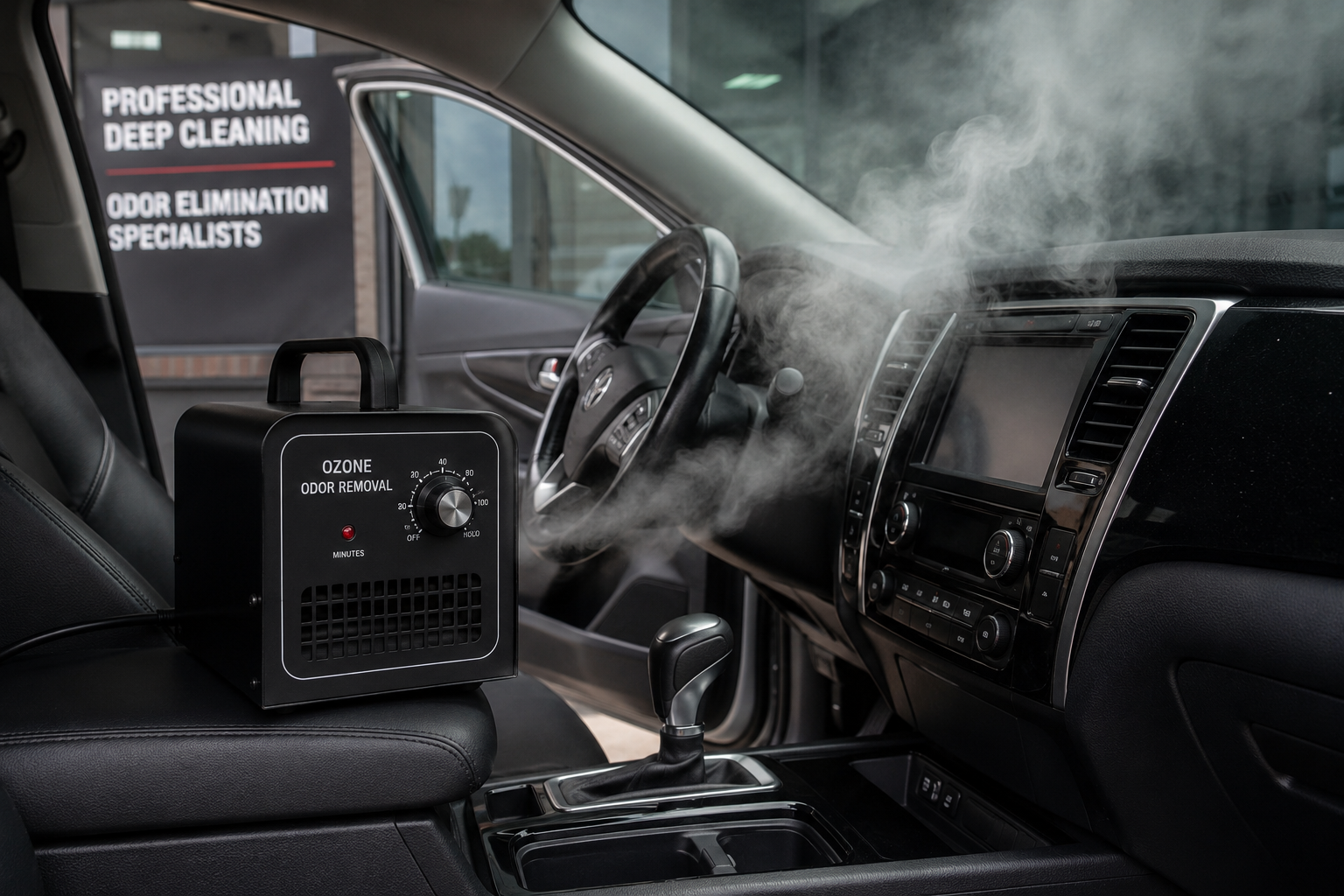
There's a stubborn myth in the car world: once a smell settles into your vehicle, it's there for good. Maybe it's years of cigarette smoke baked into the headliner, a pet accident that's soaked into the carpet padding, spilled milk that turned sour, or a musty mildew smell creeping out of the air vents. You've tried the air fresheners, the sprays, the little trees hanging from the mirror — and the bad smell always comes back.
Here's the truth: that myth is simply not true. The reason masking products fail is that they don't address the actual source. At Underboss Detailing, we don't cover up odors — we eliminate them at the molecular level so they don't return. Here's exactly how we do it.
Why Bad Smells Won't Go Away on Their Own
Car odors don't just sit on the surface. They penetrate deep into porous materials — upholstery foam, carpet padding, the headliner — and they circulate through your vehicle's air conditioning and ventilation system, hiding in places a vacuum and a scrub brush simply can't reach.
Different odors behave in different ways, which is why a one-size-fits-all approach rarely works:
Smoke leaves behind tar and nicotine molecules that embed themselves in every fabric surface and recirculate through the HVAC system.
Pet urine is especially challenging because it soaks deep into padding and can crystallize over time, releasing odor again and again.
Food and drink spills combine with moisture to create ideal conditions for bacteria growth, which makes the smell worse the longer it sits.
Mold and mildew thrive in damp areas like air conditioning vents, producing that persistent musty smell.
Because these odors live deep inside materials and air systems, surface cleaning alone gets you only part of the way there. You need a process that reaches everywhere the smell does.
The Core of Our Process: Why Masking Never Works
Traditional air fresheners only mask odors temporarily. Once the fragrance fades — usually within a week or two — the real odor comes right back. This is the trap a lot of quick-fix services fall into, and it's why buyers of "deodorized" used cars are often disappointed days later.
Our approach is built around a single principle: eliminate the source, then neutralize what remains at the molecular level. That requires more than just spraying something pleasant into the cabin.
Step One: Deep Interior Cleaning (The Step Too Many Skip)
This is the most important — and most frequently skipped — part of the entire process. You cannot simply blast a treatment at dirty surfaces and expect lasting results. Some companies offer ozone treatment alone, setting up a machine without cleaning the car first. That's easy money for them, but it's not a real solution, because the moment the source remains, the odor returns.
Our deep clean targets the origin of the smell directly. Depending on the vehicle and the type of odor, this includes:
Thorough vacuuming and debris removal
Shampooing and extraction of seats and carpets
Steam cleaning of upholstery, carpet, and headliner
Cleaning and sanitizing of the A/C system and air vents
For biological odors — pet urine, vomit, and similar — we go further. We remove any solid bio-matter, then apply an enzyme-based cleaner that breaks down the proteins responsible for the smell. This pre-treatment matters: the enzymes dismantle the urine and bio-matter compounds at their root, so the follow-up treatment has a clean foundation to work from. After enzyme application, surfaces are allowed to dry completely before we move on.
Step Two: Ozone Treatment — Eliminating Odor at the Molecular Level
Once the source is cleaned and dry, we deploy the most powerful tool in professional odor removal: ozone treatment.
Here's the science. Ozone (O₃) is a molecule made of three oxygen atoms, and it's a powerful oxidizer. We use a professional ozone generator to convert the oxygen in your car's air (O₂) into ozone (O₃). When released inside a sealed vehicle, ozone gas spreads into every crack, crevice, and fiber — following the same paths the odor took, including deep into upholstery foam, headliners, and air ducts that no brush can reach.
When an ozone molecule contacts an odor-causing compound, the third oxygen atom breaks off and oxidizes it, chemically destroying the odor molecule rather than masking it. Critically, ozone also kills the bacteria, mold spores, and mildew that cause many smells in the first place — so it sanitizes as it deodorizes.
When the treatment is finished, the ozone naturally reverts back to ordinary oxygen (O₂), leaving no chemical residue behind. A typical treatment runs roughly 30 to 90 minutes, though severe cases — like years of chain-smoking buildup or deep pet contamination — may call for a longer or repeated treatment.
Step Three: Ventilation and Finishing
After the ozone has done its work, the vehicle is aired out so the ozone fully converts back to oxygen. Once that's complete, the car is completely safe for passengers, pets, and children. We finish by confirming the air system is clear and the interior smells genuinely fresh — not perfumed over.
Is Ozone Treatment Safe?
Yes — when it's done by professionals, which is exactly why this isn't a DIY job. Ozone is highly effective, but it's a powerful oxidant that shouldn't be inhaled during application. According to the American Lung Association, ozone can be hard on people with asthma or cardiovascular conditions at high enough levels.
That's precisely why professional handling matters. The vehicle must be completely unoccupied during treatment, and it needs proper ventilation afterward before anyone gets back in. We manage the concentration, the timing, and the airing-out process so you get all the benefits — a fully sanitized, odor-free interior — with none of the risk. Handled correctly, ozone leaves your car safe and fresh; handled carelessly, it's a health hazard. We treat that distinction seriously.
A Realistic Word on Expectations
We believe in being straight with you. Ozone is remarkably effective — detailers report success rates around 89% for complete odor removal on properly prepped vehicles, and smoke odor in particular responds better to ozone than to any other method. We've seen vehicles that were smoked in for years brought back to a fresh state.
That said, the most extreme cases — for example, urine that has soaked all the way into deep padding — sometimes require multiple treatments or additional remediation to fully resolve. This is also why the deep-cleaning step is non-negotiable: ozone is the finishing blow, but only after the source has been physically removed. We'll always give you an honest assessment of what your specific situation needs.
Why It's Worth It
A fresh, clean-smelling interior isn't just more pleasant to drive in — it's healthier, since the same process that removes odors also eliminates bacteria and mold. And if you're thinking about selling, an odor-free interior makes your car far more appealing to buyers and protects its resale value. Lingering smells are one of the fastest ways to drive a buyer (and your asking price) away.
The Bottom Line
Bad car smells aren't permanent — but getting rid of them permanently takes the right process. Masking sprays fail because they ignore the source. Ozone alone fails when the source isn't cleaned first. The winning combination is a thorough deep clean and enzyme treatment to remove the source, followed by professional ozone treatment to destroy any remaining odor molecules at the level no scrub brush can reach.
That's the process we follow on every odor job — and it's how we turn "this smell will never come out" into a car that smells genuinely new again.
Ready to Breathe Easy Again?
Whether it's smoke, pets, spills, or that mystery musty smell you can't track down, Underboss Detailing will eliminate it at the source — not just cover it up. Stop wasting money on air fresheners that fade in a week and let us deliver a permanently fresh interior you'll actually enjoy.
Book your odor elimination treatment today → and get back to driving a car that smells as good as it looks.
Frequently Asked Questions
Can bad smells really be removed from a car permanently?
Yes. The myth that a smell is in your car for good simply isn't true. Odors linger because masking products like air fresheners only cover the smell temporarily while the source remains. When you remove the source through deep cleaning and then neutralize the remaining odor molecules with ozone treatment, the smell is eliminated for good — not just hidden until the fragrance fades.
How is ozone treatment different from using an air freshener?
Air fresheners add a pleasant scent on top of an existing odor, and once that scent wears off, the bad smell returns. Ozone treatment works at the molecular level: ozone (O₃) is a powerful oxidizer that chemically breaks down the compounds causing the odor and destroys them. It also kills the bacteria, mold, and mildew behind many smells. There's no masking involved — the odor molecules are gone.
Why do you clean the car before the ozone treatment?
Because ozone alone won't deliver lasting results if the source is still present. You can't blast a treatment at dirty surfaces and expect the smell to stay gone. Some services skip this step and just run a generator — it's easy for them, but the odor comes back. We deep clean, shampoo, steam, and (for biological odors) apply an enzyme treatment to remove the source first, so the ozone has a clean foundation to finish the job.
How long does the treatment take?
The ozone treatment itself typically runs about 30 to 90 minutes, but the full service takes longer because of the deep cleaning, enzyme pre-treatment, drying time, and post-treatment ventilation. Severe cases — like years of smoke buildup or deep pet contamination — may require a longer or repeated treatment.
Is ozone treatment safe for me and my passengers?
Yes, when handled by professionals. Ozone shouldn't be inhaled during application, so the vehicle stays completely unoccupied while it's treated and is properly aired out afterward. Once the ozone reverts back to ordinary oxygen, it leaves no chemical residue and the car is completely safe for passengers, pets, and children. This is exactly why it's not a DIY job — controlling the concentration, timing, and ventilation is what makes it both effective and safe.
Will it work on cigarette smoke?
Yes — smoke odor actually responds to ozone better than to almost any other method. Ozone breaks down the tar and nicotine molecules that cause persistent smoke smells, reaching into the headliner, upholstery, and HVAC system where the smell hides. Even vehicles smoked in for years can be brought back to a fresh state.
What about pet urine and other tough odors?
Pet urine is one of the most challenging odors because it soaks deep into padding and can crystallize, releasing smell over time. We pre-treat it with an enzyme cleaner that breaks down the urine proteins, let it dry, then finish with ozone. The most extreme cases — urine soaked deep into padding — can require multiple treatments or additional remediation, and we'll always give you an honest assessment of what your vehicle needs.
Does removing odors help my car's resale value?
Definitely. A fresh, odor-free interior makes your car far more appealing to buyers and protects your asking price. Lingering smells are one of the fastest ways to turn a buyer away — and the same treatment that removes odors also sanitizes the interior by killing bacteria and mold.
Sources
Detail King — How to Use an Ozone Generator for Car Detailing
Fresh Layer — Ozone Generators in Car Detailing: What You Need to Know
Dennis Auto Details — Ozone Treatment Services
ProzoneClean — Car Odor Removal Service
Oxidation Technologies — Ozone for Pet Odor Removal
LS Auto Detailing — Smoke & Mold Odor Removal / Ozone Treatment