Leather Conditioning for South Jersey Cars — Why It Matters
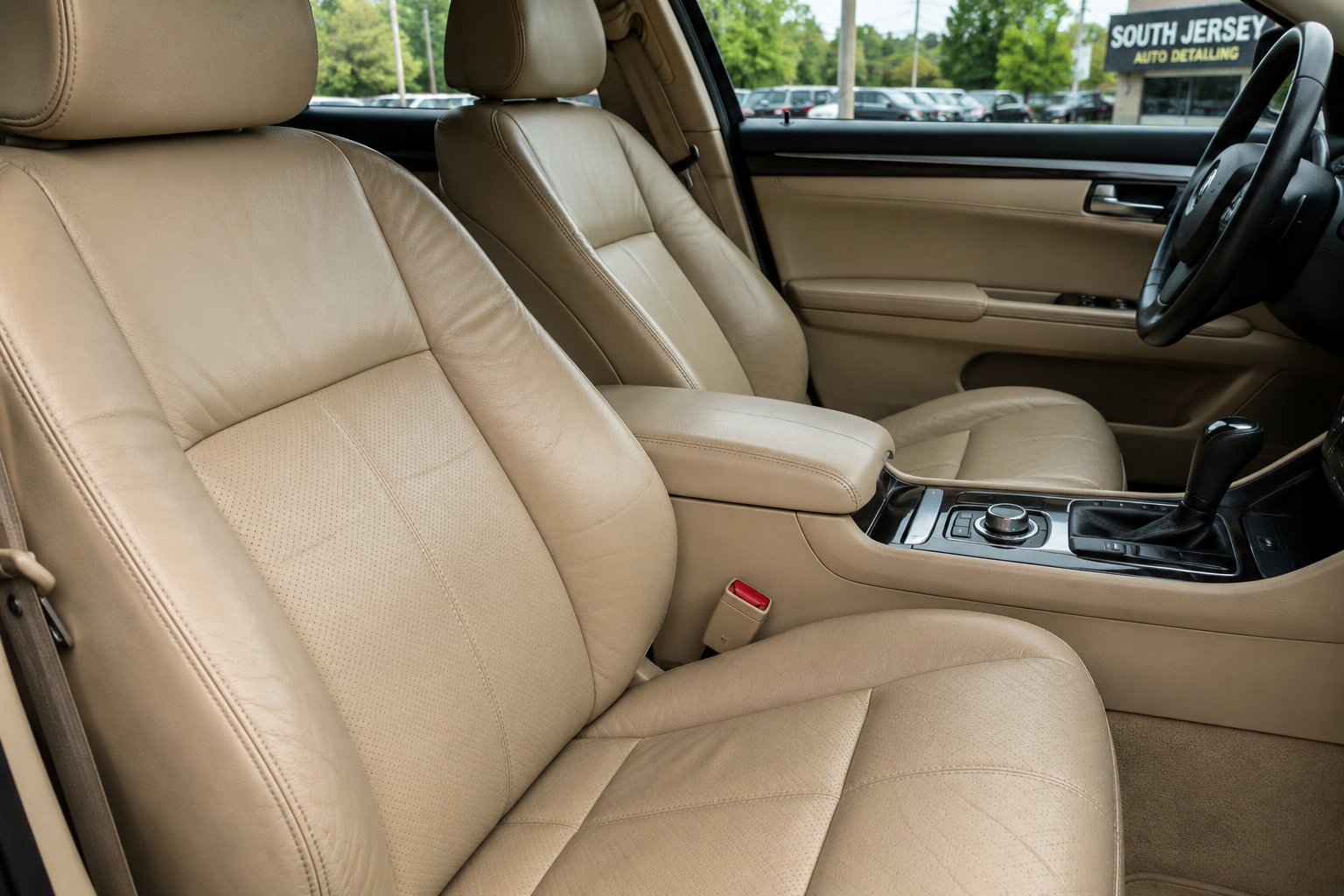
If you drive a car with leather seats in South Jersey, you've made an investment in comfort and style — but that investment is under constant attack, and most owners don't realize it until the damage is already done. Cracked, faded, stiff leather doesn't happen overnight. It's the slow result of a climate that's surprisingly hard on automotive leather, combined with a maintenance step that almost everyone skips: conditioning.
This isn't just a luxury detail or a "nice to have." Conditioning is what keeps leather alive. Here's why it matters so much for cars in our corner of New Jersey, what our local weather does to your seats, and how proper conditioning protects both your comfort and your car's value.
What Leather Actually Is — and Why It Needs Care
It helps to start with a simple truth: leather is a natural material, and like all natural materials, it can dry out, crack, and fade over time. The best way to think about it is skin — because that's essentially what it is. Conditioning leather is a lot like using lotion on dry skin. It keeps the material moisturized, supple, and protected.
Without regular conditioning, leather loses its natural oils. As those oils deplete, the fibers stiffen, the surface loses flexibility, and tiny stress cracks begin to form. Once cracks appear, they only spread — and unlike a fresh stain, cracked leather can't simply be cleaned away. It has to be repaired or recolored, which is far more expensive than prevention ever would have been.
The factors that strip leather of moisture and accelerate this breakdown are heat, UV exposure, body oils, sweat, sunscreen, lotions, and general environmental stress. And as it happens, South Jersey delivers a heavy dose of nearly all of these.
Why South Jersey's Climate Is Especially Tough on Leather
A lot of generic leather-care advice assumes a single, mild climate. South Jersey doesn't play by those rules. Our region sits in a humid subtropical climate, which means hot, humid summers and genuinely cold winters. That seasonal swing — and the moisture that comes with it — creates a one-two punch that's harder on leather than a steady, dry climate would be.
The summer assault: heat and sun. South Jersey summers are hot and often humid, with temperatures regularly climbing into the mid-80s and frequent stretches of 90°F-plus days. In fact, the southern part of the state typically sees roughly double the number of 90-degree days compared to central New Jersey. Now consider what that does inside a parked car: a closed cabin sitting in a summer parking lot can reach interior temperatures far above the outside air. Your leather seats bake.
Direct sunlight is the real culprit here. UV rays accelerate the drying, fading, and cracking of leather, and even brief exposure increases the stress on the surface. Every time you leave your car in an uncovered lot at the shore, at work, or at the mall, the sun is slowly pulling moisture out of your seats and breaking down their color. Over a few South Jersey summers, untreated leather can go from rich and supple to dull, stiff, and lined with hairline cracks.
The humidity factor. Our summers aren't just hot — they're humid, thanks to the maritime influence from the Atlantic. High humidity combined with heat creates a punishing cycle of moisture and drying that stresses leather surfaces, and the damp conditions also raise the risk of mildew and that musty smell setting into porous materials if the interior isn't cared for.
The winter swing: cold and salt. Then the seasons flip. South Jersey winters are cold, with January lows often dropping into the 20s and stretches well below freezing. Cold, dry winter air pulls humidity out of everything — including your leather, which can dry and stiffen in the cold just as it does in the summer heat. On top of that, the salt and grime tracked in on boots and clothing during our snowy, slushy months works its way into seats and carpets, adding another layer of wear.
This is the core issue: leather in South Jersey gets hit from both directions. Summer bakes and fades it; winter dries and stiffens it. There's never really an "off season" for leather stress here, which is exactly why a set-it-and-forget-it approach doesn't work for local cars.
What Conditioning Actually Does for Your Seats
A quality leather conditioner does several things at once, and understanding them explains why it's non-negotiable for cars in our climate.
It restores moisture and flexibility. Conditioner replenishes the oils that heat, sun, and cold strip away, keeping the leather hydrated and flexible so it bends and flexes with use instead of cracking under stress. This is the single most important function — supple leather resists cracking; dry leather invites it.
It creates a protective UV barrier. Many quality leather conditioners include UV protection that forms a barrier helping to prevent harmful UV rays from penetrating and damaging the leather underneath. Given how much sun South Jersey cars absorb in the summer, this protective layer is doing real work every single day the car is parked outside.
It guards against fading. By blocking UV penetration and nourishing the fibers, conditioning helps preserve the richness and evenness of your leather's color, keeping it from going patchy or washed-out.
It keeps the interior looking and feeling premium. Beyond protection, conditioning restores the richness of color and makes the leather look fresh, clean, and well cared for — the way it looked when the car was new.
How Often Should South Jersey Drivers Condition Their Leather?
The general industry guidance is to condition leather every three to six months. But that's the baseline for a mild, average climate — and South Jersey is harder on leather than average. The professional rule of thumb is to condition more frequently in hot, dry, or high-sun conditions, and never to let leather go longer than six months, because by that point it's already begun drying out and losing its suppleness.
For most South Jersey drivers, here's a sensible cadence:
Twice a year at minimum — a great approach is to condition once before summer begins, to arm your seats against the coming heat and UV, and again after winter ends, once the cold, dry season has taken its toll.
Every three months for high-use vehicles — daily drivers, family cars, and vehicles that live outdoors take more abuse and benefit from quarterly conditioning.
More often if your car parks in the sun — if your vehicle regularly sits in uncovered lots or driveways through our summers, lean toward the more frequent end of the schedule.
And if you've just bought a car with new leather, don't wait. Even new leather benefits from early conditioning — it helps "break in" the factory-stiff material and, more importantly, early protection is the best protection there is.
Why Product Choice and Technique Matter (and Why DIY Can Backfire)
Here's where a lot of well-meaning owners accidentally do harm. Not all leather products are created equal, and the wrong one can cause the very damage you're trying to prevent.
A few key principles:
Use dedicated automotive leather products — not household cleaners. Soaps and detergents strip leather's natural oils and can damage the finish. The leather has to be properly cleaned and fully dry before conditioning, or you simply seal dirt into the surface.
Avoid greasy, silicone-heavy "protectants." Some products marketed as leather protectants leave a shiny, almost plastic-like coating. That's usually silicone, and while it looks good at first, it prevents the leather from breathing and can actually cause cracking beneath the surface. A good conditioner absorbs fully and leaves the leather soft, not slick.
Look for pH-balanced formulas with UV inhibitors. Leather is naturally acidic, so a pH-balanced conditioner maintains its integrity without causing discoloration — and the UV inhibitors are essential given our sun exposure.
Skip the steam cleaner. High heat from steam can damage leather, so gentle methods are the safe route.
This is exactly where professional detailing earns its keep. The right product for your specific type of leather, applied with the right technique, makes all the difference — and application technique matters more than most people realize. A professional knows how to properly clean first, select a conditioner suited to your seats, work it in evenly, and avoid the over-application and wrong-product mistakes that DIY jobs often fall into.
The Payoff: Comfort, Longevity, and Resale Value
Regular conditioning isn't just about avoiding cracks — though that alone is worth it. It delivers three concrete returns:
Comfort. Supple, properly maintained leather simply feels better. It stays soft and pleasant to sit on through both summer heat and winter cold.
Longevity. Conditioned leather resists wear and holds up over years of daily use, while neglected leather degrades fast. Prevention costs a fraction of repair or reupholstery.
Resale value. This is the one owners underestimate most. Well-maintained leather seats significantly increase resale value — buyers and dealers consistently pay more for vehicles with pristine, well-kept interiors. A cracked, faded driver's seat is one of the first things a buyer notices and one of the fastest ways to knock down your asking price. Regular leather care is, in a very real sense, protecting your wallet.
The Bottom Line
Leather seats are one of the best features of any vehicle — but in South Jersey, they live a hard life. Our hot, humid, sun-drenched summers bake and fade them; our cold, dry winters stiffen them; and the constant seasonal swing means the stress never really lets up. Conditioning is the one maintenance step that fights all of it at once, replacing lost moisture, blocking UV damage, preserving color, and keeping your interior soft and valuable for the long haul.
Skip it, and the cracks will come. Stay on top of it, and your leather can look and feel new for years — through every Jersey summer and every Jersey winter.
Protect Your Leather Before the Damage Starts
Don't wait for the first crack to appear. Underboss Detailing uses professional-grade, pH-balanced conditioners with UV protection — matched to your specific leather and applied the right way — to keep your seats supple, rich, and protected through every South Jersey season.
Book your leather conditioning service today → and give your interior the protection our climate demands.
Frequently Asked Questions
Why does leather need conditioning at all?
Leather is a natural material — essentially a form of skin — and it dries out, cracks, and fades over time as it loses its natural oils. Conditioning works like lotion for dry skin: it replenishes moisture, keeps the fibers flexible, and forms a protective barrier against UV rays. Without it, leather stiffens, cracks, and fades, and once cracks form they can't be cleaned away — only repaired or recolored, which is far more expensive than prevention.
What makes South Jersey especially hard on leather?
Our humid subtropical climate hits leather from both directions. Hot, humid, sun-drenched summers — where the southern part of the state sees roughly double the 90-degree days of central New Jersey — bake and fade the leather, while UV rays pull out moisture every time the car sits in the sun. Then cold, dry winters stiffen the leather and bring salt and grime indoors. The seasonal swing means leather is under stress nearly year-round, so it needs more attention here than in a mild climate.
How often should I condition my leather seats?
The general guideline is every three to six months, but South Jersey's climate warrants the more frequent end of that range. A good plan is at minimum twice a year — once before summer to protect against heat and UV, and once after winter. High-use daily drivers or cars that park outdoors in the sun benefit from conditioning every three months. As a rule, never let leather go longer than six months, since it's already drying out by that point.
Do new leather seats need conditioning?
Yes. Even brand-new leather benefits from early conditioning — it helps break in the factory-stiff material and starts protecting the surface right away. Early protection is the best protection there is, so there's no reason to wait until you see signs of wear.
Can I just use a household cleaner or an all-in-one product?
It's not recommended. Household soaps and detergents strip leather's natural oils and can damage the finish. You also want to avoid greasy, silicone-heavy "protectants" that leave a shiny, plastic-like coating — that silicone prevents the leather from breathing and can actually cause cracking beneath the surface. The best choice is a pH-balanced product made specifically for automotive leather, ideally with UV inhibitors.
Will conditioning prevent my seats from fading?
It helps significantly. Many quality conditioners include UV protection that blocks harmful rays from penetrating the leather, which is what causes fading and cracking. Combined with the moisture conditioning restores, this preserves the richness and evenness of your leather's color — especially important given how much sun South Jersey cars absorb.
Does leather care really affect resale value?
Yes, and it's the benefit owners underestimate most. Well-maintained leather seats noticeably increase resale value, because buyers and dealers pay more for vehicles with pristine interiors. A cracked or faded driver's seat is one of the first things a buyer notices and one of the fastest ways to lower your asking price, so regular conditioning is effectively protecting your investment.
Should I get this done professionally or do it myself?
You can condition leather yourself, but it's easy to use the wrong product or apply it poorly — and application technique matters more than most people realize. A professional cleans the leather properly first, selects a conditioner suited to your specific seats, applies it evenly, and avoids the over-application and silicone-product mistakes common in DIY jobs. For leather that's already showing wear, or if you simply want it done right, professional service is the safer bet.
Sources
The Seat Shop — How To Keep Leather Seats From Cracking and Preventing Sun Damage and Fading on Leather Seats
Dr. Beasley's — How Often Should I Condition Leather Seats?
Steve's Detailing & Hand Car Wash — Leather Seat Care: Conditioning and Treatment for Longevity
Windsor Car Detailing — Leather Conditioning for UV Protection
Fibrenew — How to Fix Sun-Damaged Car Seats
The Final Touch Auto Detailing — The Importance of Conditioning Leather Seats
Office of the NJ State Climatologist (Rutgers) — State Climate Overview
Weather-US — New Jersey Climate