Exterior Hand Wash vs. Automated Car Wash: Why Hand Wins Every Time
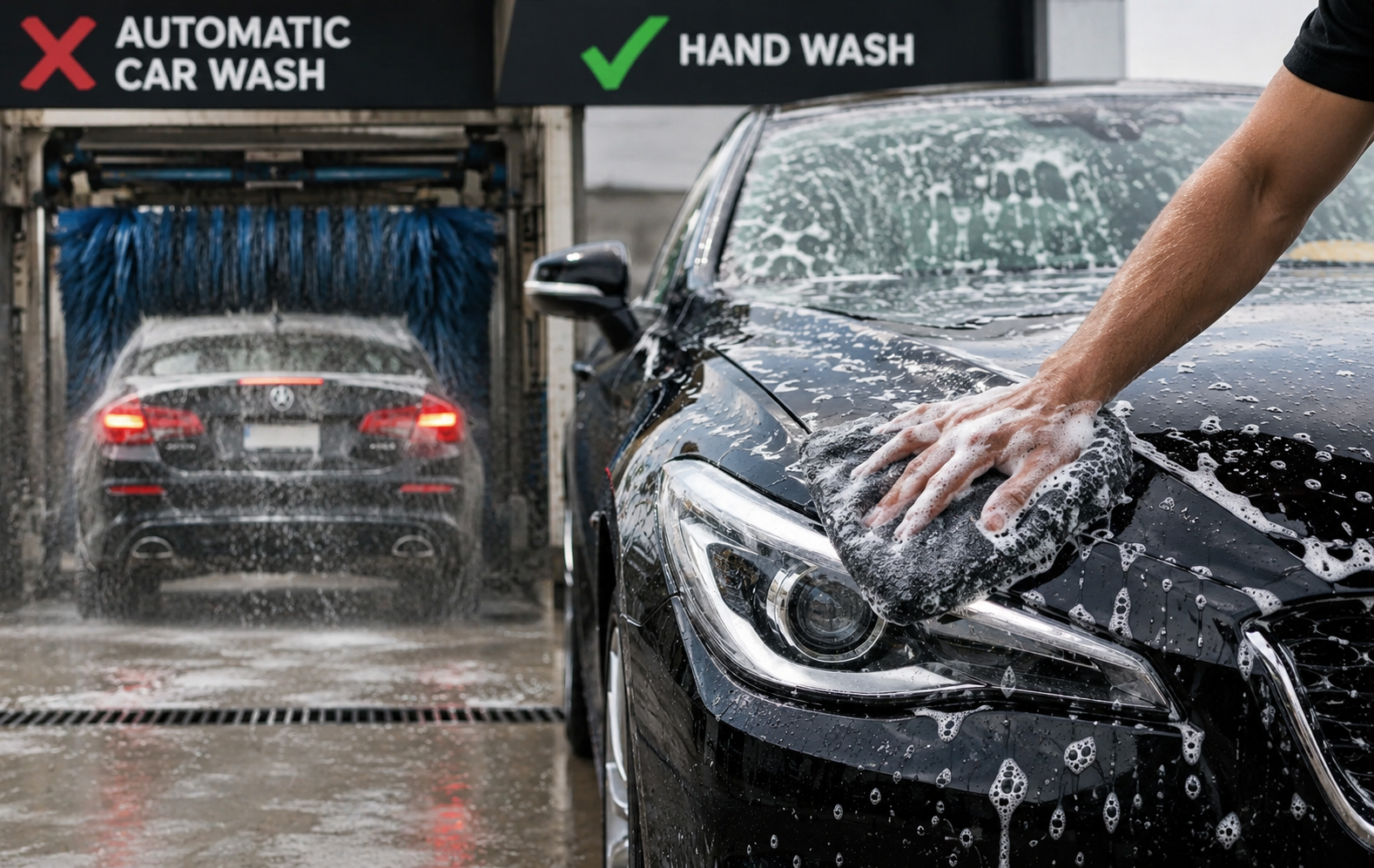
You've got two choices when your car gets dirty: pull into a drive-through automated wash and let the machines handle it in a few minutes, or have it washed by hand. The automated wash is faster and cheaper up front, so it's tempting to think it's the obvious pick. But when it comes to actually protecting your paint and keeping your car looking its best for years, a proper hand wash wins — and it isn't close.
There's an important nuance here that most "hand vs. machine" debates miss, so let's be upfront about it: what really matters is technique. A careless hand wash with the wrong tools can scratch your car worse than a machine. But a proper, professional hand wash is the safest, most thorough way to clean a vehicle there is. Here's the full breakdown.
The Real Problem With Automated Washes: Your Clear Coat
Most modern cars have a clear coat — a thin, transparent protective layer over the colored paint. It's what gives your car its gloss and depth, and it's surprisingly delicate. Once it's scratched, hazed, or worn down, that shine doesn't come back without paint correction. Protecting the clear coat is the whole game in paint care, and this is exactly where brush-style automated washes get you into trouble.
The brush problem. The biggest risk comes from brush-style automatic car washes that use large spinning bristles or cloth strips to scrub your car. Here's the issue most people never think about: those brushes don't get cleaned between vehicles. Every car that rolls through leaves behind a little dirt, grit, and debris embedded in the brush material. By the time your car goes through, you're essentially being scrubbed with whatever was on the previous hundred vehicles. That trapped grit creates a sandpaper-like effect that can scratch your paint and leave swirl marks. Over time, repeated trips wear down the clear coat and can lead to fading and premature deterioration. In some cases, even a single pass through a poorly maintained machine can leave a newer car with visible new swirl marks and fine scratches.
Swirl marks, explained. You've probably seen them — under direct sunlight they look like fine spider-webbing across the hood and roof, and they're especially obvious on dark-colored cars. Each "swirl" is actually a tiny scratch in the clear coat. Pile up enough of them and your finish goes from deep and glossy to hazy, dull, and tired-looking.
It's not just the brushes. Automated washes often use aggressive cleaning chemicals to speed up the process. Over time these can degrade protective coatings like ceramic coatings or paint protection film, diminishing the very protection you may have paid good money for. High-pressure jets, while useful for blasting off loose grime, can also drive contaminants into the paint or catch the edge of protective films and cause bubbling or peeling. And the physical machinery itself carries risk — anything from a snapped antenna to chipped paint, especially on older or poorly maintained equipment.
"But Aren't Modern Washes and Touchless Systems Safe?"
Fair question, and it's worth answering honestly rather than pretending there's no counterargument.
It's true that car wash technology has improved. Many modern washes have replaced the old stiff nylon brushes of the 1970s and 80s with softer closed-cell foam materials, and they've added water filtration and better detergent systems to reduce damage. Some in the industry even argue that a well-maintained modern wash is no more likely to swirl your paint than an imperfect hand wash.
Touchless washes are the safest automated option, since they skip brushes entirely and rely on high-pressure water and detergents — eliminating brush-contact scratching. For ceramic-coated cars, PPF, vinyl wraps, or matte finishes, touchless is the recommended automated choice if you must use a machine.
But here's the catch with touchless: no contact means no agitation, and some dirt simply needs physical contact to come off. Touchless washes struggle with baked-on mud, bird droppings, tar, and bug residue — and many skip a proper drying step, leaving water spots behind. They're fine for refreshing light, everyday dust and road film, but they don't deliver a truly thorough or complete clean.
So even at their best, automated washes force a tradeoff: brush washes are thorough but risk scratching, and touchless washes are gentle but leave dirt behind. A proper hand wash refuses that tradeoff — it's both safe and thorough.
Why a Proper Hand Wash Wins
When it's done correctly, hand washing beats automated washing on the things that actually matter for your car's long-term appearance and value.
1. Gentler on your paint. A proper hand wash uses soft microfiber wash mitts, paint-safe pH-balanced shampoos, and plenty of lubrication so dirt is lifted away from the surface rather than dragged across it. The key technique professionals rely on is the two-bucket method: one bucket of clean soapy water and a separate bucket to rinse the dirty grit out of the mitt before it goes back into the clean suds. A grit guard at the bottom of the rinse bucket traps those particles so they never touch your paint again. This systematic approach ensures the only thing meeting your clear coat is a clean mitt and clean, soapy water — dramatically reducing the chance of swirls and micro-scratches. (Many pros now go even further with foam pre-soaks and multiple towels to reduce contact risk further.)
2. Far more thorough. This is where hand washing really pulls ahead. Automated washes do a quick, general pass over the main body panels, but they can't precisely target the spots where grime actually builds up — wheel wells, door jambs, side mirrors, lower rocker panels, emblems, and seams. A hand wash cleans each section deliberately, top to bottom, reaching the intricate areas machines simply miss. A thorough hand wash is widely regarded as the most complete cleaning method available.
3. It allows spot treatment. Tar, tree sap, bug splatter, and bird droppings often need targeted attention and the right product to remove safely — something an automated wash can't do. Bird droppings in particular are acidic and can etch paint if left, so being able to address them directly matters.
4. It's a built-in inspection. Washing by hand puts a trained eye on every panel. That means catching paint chips, early scratches, rust spots, or other issues while they're small and cheap to fix — long before they become real problems.
5. It works with your protection, not against it. A proper hand wash uses products safe for waxed and ceramic-coated vehicles, preserving the protective layers rather than stripping them with harsh chemicals. And finishing with a fresh coat of wax or sealant keeps the clear coat protected from the elements going forward.
The Honest Caveat — and Why Professional Hand Washing Is the Answer
Here's the part too many hand-wash advocates leave out: hand washing is only safer when it's done correctly. Done poorly, it's actually one of the fastest ways to scratch a car. The common mistakes are well documented:
Using one bucket instead of two, which reintroduces dirt onto the paint with every pass of the mitt.
Using sponges, dish soap, or rough towels, which trap grit and strip protective coatings.
Rinsing inadequately, leaving soap residue that dulls the finish.
Drying with rough or dirty towels, which inflicts swirls right at the end — drying is one of the highest-risk moments for towel scratches.
This is the real reason a professional hand wash is the smart choice. The advantage of hand washing isn't magic in the human hand — it's in the correct technique, the right tools, and the experience to use them. A professional detailer brings premium microfiber, paint-specific products, the two-bucket (or modern foam-and-multi-towel) method, and trained knowledge of how to treat different paint finishes without marring them. You get all the upside of hand washing — the gentleness, the thoroughness, the spot treatment, the inspection — without the very real risk of doing it wrong yourself.
The Trade-Offs, Stated Plainly
We'll be straight with you about the costs, because there are some. A proper hand wash takes longer than a drive-through — typically 45 minutes to over an hour with setup, washing, drying, and cleanup — and a professional hand wash costs more than a quick automated pass. Automated washes win on raw speed and convenience: drive in, a few minutes, done.
But that convenience comes at a price you don't see immediately. Those quick washes either risk scratching your clear coat (brush systems) or leave your car only partially clean (touchless), and the cumulative damage shows up over months and years as a dull, swirled, aging finish. A car that's consistently hand washed is far more likely to keep its original luster, depth of color, and gloss — which protects not just how it looks, but its resale value.
The Bottom Line
Automated car washes are built for speed, and there's a place for that in a busy week. But if you care about your car's finish and what it's worth down the road, a proper hand wash wins every time. It's gentler on your clear coat, dramatically more thorough, allows targeted treatment of stubborn contaminants, doubles as a paint inspection, and protects rather than strips your coatings.
The catch is that "hand wash" only means "better wash" when it's done right. That's exactly what professional detailing delivers: the technique, tools, and care that turn hand washing from a risk into the gold standard.
Give Your Car the Wash It Deserves
Skip the brushes, the trapped grit, and the swirl marks. Underboss Detailing hand washes your vehicle with premium microfiber, paint-safe products, and proven swirl-free technique — for a finish that's genuinely clean, fully protected, and built to keep its shine.
Book your professional hand wash today → and see the difference real hand care makes.
Frequently Asked Questions
Is a hand wash really better than an automatic car wash?
When done correctly, yes. A proper hand wash is gentler on your clear coat, far more thorough, and lets you target stubborn spots and protective coatings that machines can't handle. The important caveat is technique: a careless hand wash with the wrong tools can scratch your car worse than a machine, which is why a professional hand wash — with the right method and materials — is the gold standard.
Why do automatic car washes scratch paint?
The main culprit is brush-style washes. The spinning brushes don't get cleaned between cars, so they pick up dirt and grit from every vehicle that passes through. By the time your car goes through, that trapped grit acts like sandpaper, creating fine scratches and swirl marks. Over repeated visits, this wears down the clear coat and can lead to a dull, hazy finish.
What are swirl marks?
Swirl marks are networks of tiny scratches in your car's clear coat. Under direct sunlight they look like fine spider-webbing across the hood and roof, and they show up most on dark-colored cars. Each individual swirl is a micro-scratch, and enough of them make your paint look hazy and lose its gloss and depth.
Aren't touchless car washes safe since they have no brushes?
Touchless washes are the safest automated option because they skip brushes and use high-pressure water and detergents instead, which eliminates brush-contact scratching. The downside is that without physical contact, they can't remove tougher dirt like baked-on mud, tar, bird droppings, or bug residue, and many skip proper drying, leaving water spots. They're fine for light, everyday grime but don't deliver a truly thorough clean.
What is the two-bucket method?
It's the technique professionals use to wash safely. One bucket holds clean soapy water and the other is used to rinse dirt and grit out of the wash mitt before it goes back into the clean suds. A grit guard at the bottom of the rinse bucket traps those particles. This keeps the only thing touching your paint a clean mitt and clean soapy water, which dramatically reduces swirls and scratches. Many detailers now also use foam pre-soaks and multiple towels to reduce contact even further.
Can hand washing damage my car too?
Yes, if it's done poorly. The most common mistakes are using a single bucket, using sponges or dish soap, rinsing inadequately, and drying with rough or dirty towels. Any of these can introduce swirls and strip protective coatings. The advantage of hand washing comes from correct technique and proper tools — which is exactly what professional detailing provides.
How long does a proper hand wash take?
A thorough hand wash typically takes 45 minutes to over an hour once you account for setup, washing, drying, and cleanup. An automated wash is faster — just a few minutes — but that speed comes with the tradeoff of either scratching risk (brush systems) or an incomplete clean (touchless).
Does washing method affect resale value?
It does. A car that's consistently hand washed is far more likely to keep its original gloss, color depth, and shine, while repeated automated washing can leave a swirled, dull finish over time. Since a clean, well-maintained exterior is one of the first things buyers notice, protecting your paint also helps protect what your car is worth.
Sources
Ceramic Pro — Hand Wash vs. Automatic Car Wash: Which Is Safer for Your Paint?
AutoZone — Are Car Washes Bad for Your Car? and Benefits of Handwashing Your Car vs Automatic Car Wash
Steve's Detailing & Hand Car Wash — Why Hand Car Washes Are Better for Paint Protection
Touchless Car Wash Finder — Touchless Car Wash vs Hand Wash: Which Is Better?
Topline Auto Spa — Touchless Car Wash vs Hand Wash
Panda Hub — 2 Bucket Car Wash Method
Tommy Car Wash Systems — Do Automatic Car Washes Cause Swirl Marks? (industry counterpoint)
Professional Carwashing & Detailing — The Truth About the Origins of Scratches and Swirls (industry counterpoint)