Engine Bay Cleaning 101: Benefits, Risks, and What to Expect
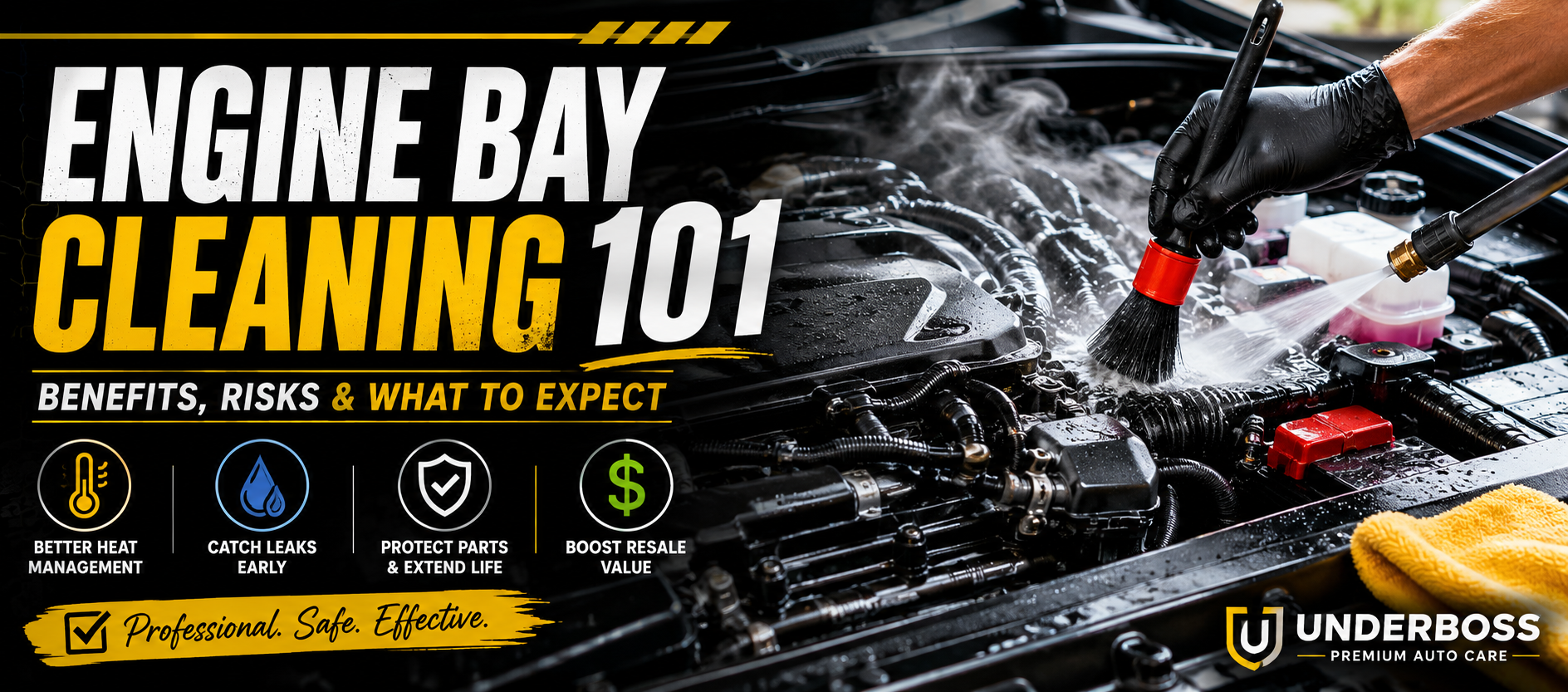
When most people think about keeping their car clean, they picture a glossy paint job, spotless wheels, and a vacuumed interior. The engine bay — the hardest-working part of your vehicle — almost always gets overlooked. Yet what's hiding under your hood plays a real role in how your car performs, how long its components last, and even what it's worth when you sell it.
This guide breaks down exactly what engine bay cleaning is, the benefits it delivers, the risks of doing it wrong, and what you should expect from a professional service.
Why the Engine Bay Deserves Attention
Your engine bay lives in a harsh environment. It's exposed to extreme temperatures, road grime, oil leaks, and a steady stream of contaminants every time you drive. Over time, dirt, grease, and road residue build up around critical components — and that buildup does more than look ugly.
When grime coats your engine, it acts as an insulating layer that traps heat. That heat stress can affect belts, hoses, and seals, causing components to run hotter than they should and accelerating wear. Beyond heat, the contaminants themselves are actively corrosive: road salt, moisture, and accumulated grease speed up the degradation of rubber hoses and plastic parts, making them crack and fail earlier than they otherwise would.
In other words, a dirty engine bay isn't a neutral state. It's a slow-motion maintenance problem.
The Benefits of a Clean Engine Bay
Better heat management. Removing the heat-trapping layer of grime helps your engine maintain its optimal operating temperature and reduces the risk of overheating. This is one of the most practical, performance-driven reasons to keep the bay clean.
Early leak and problem detection. A dirty engine hides leaks, cracks, and worn components. When surfaces are clean, oil seepage, coolant leaks, ruptured hoses, and loose wires become far easier to spot. Catching a small problem early — before it becomes a major failure — can save you thousands of dollars in repairs.
Longer component life. By removing grease and grime, cleaning helps prevent premature wear on rubber hoses and plastic parts, and reduces corrosion on wiring harnesses and connectors. That translates to a more reliable electrical system and fewer unexpected breakdowns.
Higher resale value. Potential buyers strongly associate a clean engine bay with a well-maintained vehicle. A gleaming engine bay signals pride of ownership and can help command a premium asking price, making it a smart addition to your prep list when selling or trading in — right alongside paint correction and interior detailing.
Easier maintenance. Whether you're checking oil levels or inspecting belts, a clean engine makes routine tasks less messy and more pleasant. Your hands and clothes stay grease-free, and accessing components is simpler.
The Risks (and Why They're Almost Always About Technique)
Here's the honest part: engine bay cleaning can cause damage — but only when it's done incorrectly. The risks come down to three avoidable mistakes:
1. High-pressure water. This is the cardinal sin of engine bay cleaning. A high-pressure jet washer can easily blast water past protective coverings and force it into sensitive electrical connectors, damaging delicate components. The only safe way to introduce water is a gentle, controlled rinse — think soft rain, not a fire hose. If water floods a computer module, you could be looking at an $800–$2,000 replacement cost, and a single soaked connector can trigger check-engine lights and sensor malfunctions running $100–$500 each.
2. Unprotected components. Sensitive electronics, the air intake, fuse boxes, the alternator, and exposed sensors need to be covered or wrapped before any liquid is applied. Skipping this step is where most DIY attempts go wrong.
3. Incomplete drying. Leaving water to sit invites corrosion. Thorough drying — ideally with compressed air to clear tight spots and electrical connections — is essential.
There's good news on the technique front: modern vehicles are designed with sealed electronics and protective covers, and they're built to handle exposure to elements like rain. When the work is done with proper products, controlled water pressure, and a methodical approach, engine cleaning is safe and highly effective.
A note on warranties: Professional engine bay cleaning does not void manufacturer warranties when performed properly. The Magnuson-Moss Warranty Act protects consumers from having warranty coverage denied based on routine aftermarket services. That said, improper cleaning that causes visible water damage can give a manufacturer grounds to deny a related claim — another reason technique matters.
DIY vs. Professional: What's the Real Difference?
You'll find no shortage of DIY tutorials online, and a careful enthusiast can absolutely clean their own engine bay. But it's worth understanding the tradeoffs.
A DIY job typically takes 3–4 hours and relies on consumer-grade products that often lack the effectiveness or safety profile of professional formulations. Even careful DIYers sometimes miss covering a critical component, and there's no insurance protecting you if something goes wrong.
Professional detailers, by contrast, bring expertise, specialized equipment, and a few key advantages:
Proper protection and products — automotive-specific degreasers that remove grease without damaging plastic, rubber, or paint, plus water-based dressings to finish.
Low-pressure steam and controlled rinsing — tools designed to clean without flooding electronics.
Speed — most professional engine bay cleanings take 30–60 minutes versus a half-day DIY effort.
Insurance and guarantees — protection in the unlikely event of damage.
It's especially worth going professional if your engine bay is heavily soiled, you're not comfortable working around the engine, or you simply want the best possible result.
What to Expect From a Professional Service
A proper professional engine bay detail follows a consistent, careful process:
Cool-down and preparation. The vehicle sits for 20–30 minutes after driving so the engine cools completely. Applying cold water to hot metal creates thermal shock risk, so professionals never start on a hot engine. Loose debris like leaves and twigs gets cleared away first.
Component protection. Sensitive electronics, the air intake, fuse boxes, and exposed sensors get covered or wrapped before any liquid touches the bay. This is the single step that most separates professional work from DIY guesswork.
Degreasing and agitation. Engine-safe degreasers are applied and worked into grimy surfaces with brushes to break down built-up grease and oil.
Low-pressure rinsing. Controlled amounts of water — or steam — remove the loosened grime without oversaturating anything.
Thorough drying. Compressed air clears water from tight spots and connectors, preventing corrosion and water spots.
Dressing and finishing. A water- or silicone-based dressing restores plastic and rubber surfaces, protects against UV exposure, and leaves a clean, satisfying finish under the hood.
Professionals clean all accessible surfaces — plastic covers, exposed metal, and visible areas around the engine — but they don't disassemble or deep-clean internal engine components.
How Often Should You Clean Your Engine Bay?
There's no single universal schedule, but most guidance lands in a similar range. A common recommendation is roughly twice a year — once before winter to prep for salt season, and once in spring to clear away salt and road residue. Many detailers suggest every 6–12 months for typical drivers, while those in harsher conditions benefit from a more frequent cadence.
Adjust based on your situation. City driving, outdoor parking, winter road salt, dusty climates, frequent off-roading, and high-mileage use all accelerate buildup and call for more frequent cleaning. A good rule of thumb: if your engine bay looks dusty or greasy when you pop the hood, it's already time.
The Bottom Line
Engine bay cleaning is far more than a cosmetic touch-up. Done correctly, it improves heat management, makes leaks and problems easy to catch early, extends the life of your components, and boosts your car's resale value. The risks people worry about — water damage, electrical issues — come almost entirely from improper technique: high pressure, unprotected parts, and poor drying. Professional service eliminates all three.
Ready to See What's Under Your Hood?
Your engine works hard for you — give it the care it deserves. At Underboss Detailing, we use safe, professional-grade products and proven low-pressure techniques to bring your engine bay back to life without putting your vehicle's sensitive components at risk.
Book your engine bay detailing today → and let us handle the dirty work, so you can drive with confidence.
Frequently Asked Questions
Is engine bay cleaning really necessary?
Yes. Cleaning removes the heat-trapping grime that builds up around critical components, helps prevent corrosion, and supports your engine's performance, cooling, and long-term reliability. It also makes leaks and worn parts far easier to spot before they turn into expensive repairs.
Can engine bay cleaning damage my car?
Not when it's done correctly. Damage almost always comes from three avoidable mistakes: using high-pressure water, failing to protect sensitive components, and incomplete drying. Professional services eliminate all three by using low-pressure rinsing or steam, wrapping electronics before any liquid is applied, and drying thoroughly with compressed air. Modern vehicles are also built with sealed electronics and protective covers, which adds another layer of safety.
How often should I clean my engine bay?
There's no universal schedule, but most drivers do well cleaning every 6–12 months. A common approach is twice a year — once before winter to prep for salt season and once in spring to clear away salt and road residue. If you drive in dusty conditions, park outdoors, deal with road salt, off-road frequently, or rack up high mileage, you'll want to clean more often. A good rule of thumb: if it looks dusty or greasy when you pop the hood, it's time.
How long does engine bay detailing take?
A professional engine bay cleaning typically takes 30–60 minutes, depending on the vehicle and how much buildup is present. A DIY attempt, by comparison, often takes 3–4 hours.
Does engine bay cleaning void my warranty?
No. Professional engine bay cleaning does not void manufacturer warranties when performed properly. The Magnuson-Moss Warranty Act protects consumers from having coverage denied based on routine aftermarket services. Keep in mind, though, that improper cleaning causing visible water damage could give a manufacturer grounds to deny a related claim — another reason proper technique matters.
Should I clean my engine bay myself or hire a professional?
A careful enthusiast can clean their own engine bay, but the tradeoffs are real. DIY takes longer, relies on consumer-grade products, and carries no insurance if something goes wrong — and it's easy to miss covering a critical component. Professionals bring engine-safe degreasers, low-pressure steam tools designed not to flood electronics, faster turnaround, and insurance protection. Going professional makes the most sense if your engine bay is heavily soiled, you're not comfortable working around the engine, or you simply want the best result.
Will a high-pressure washer clean my engine bay faster?
No — and you should never use one. The force can blast water past protective coverings and into sensitive electrical connectors, causing serious damage. A flooded computer module alone can cost $800–$2,000 to replace. The only safe way to introduce water is a gentle, controlled rinse. Self-service car washes also frequently prohibit engine cleaning due to environmental rules around degreaser runoff.
What does a clean engine bay do for resale value?
Quite a bit. Buyers strongly associate a clean engine bay with a well-maintained vehicle, so it signals pride of ownership and can help command a higher asking price. If you're preparing to sell or trade in, engine bay detailing belongs on your prep list alongside paint correction and interior cleaning.
Sources
ALPHASHINE — Engine Cleaning & Detailing Guide and Engine Bay Cleaning Service
Dennis Auto Details — Engine Bay Cleaning Benefits, Complete Engine Bay Detailing Guide, and DIY vs Professional
Drew's Auto Detailing — Engine Bay Cleaning: Why It's Important
AutoZone — How to Clean Your Engine Bay
AutoLaundry — Is It Safe to Detail an Engine Bay?
HCS Repair — The DOs and DON'Ts of Cleaning Your Engine Bay
Credit Acceptance — How to Clean an Engine Bay
Cara Ace Detailing — The Complete Guide to Engine Bay Detailing