How to Get Rid of Pet Hair in Your Car's Interior
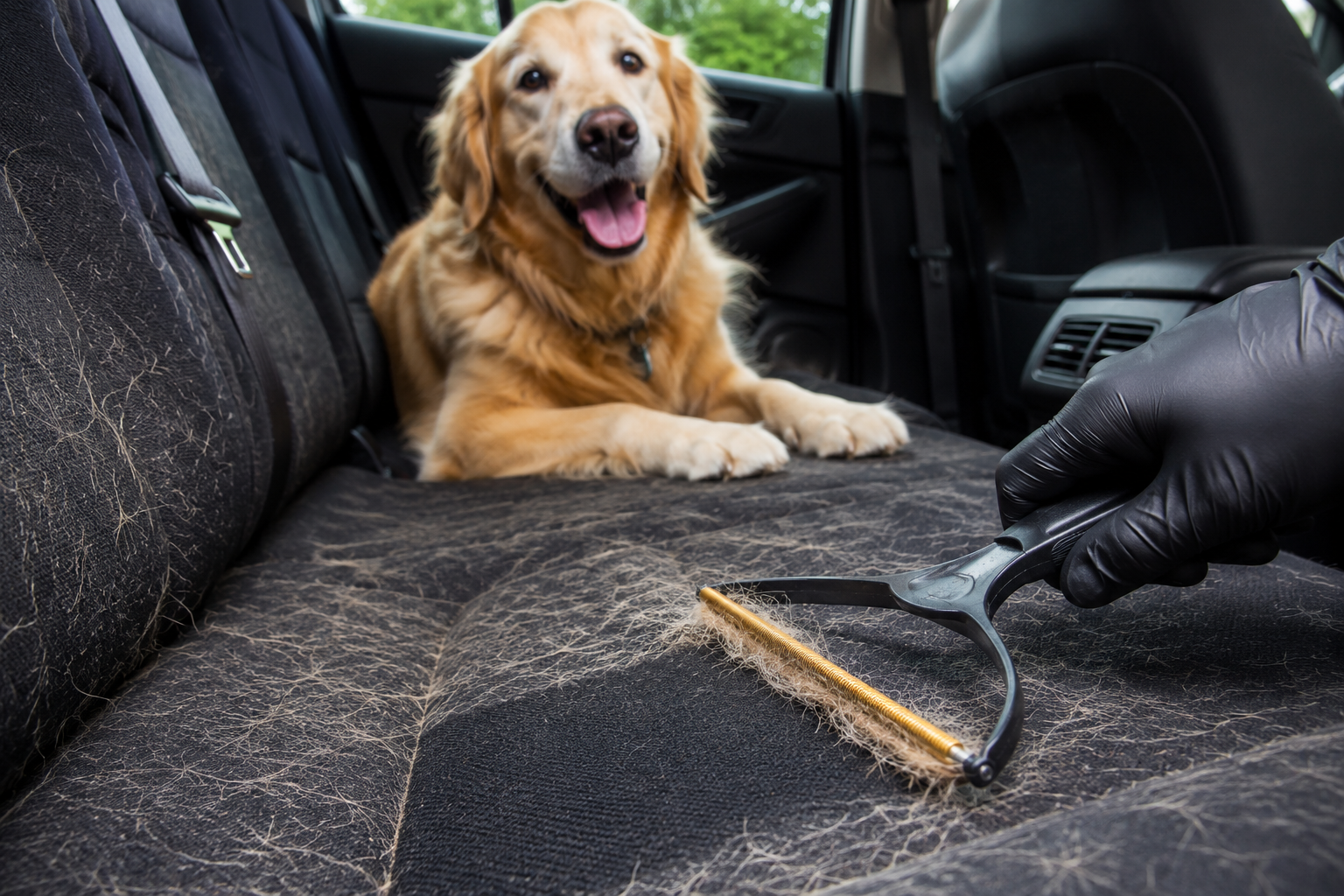
The Problem Every Pet Owner Knows
You took the dog to the park. You brought the cat to the vet. You let your kid's hamster ride shotgun once — just once — and now your entire back seat looks like it belongs to a golden retriever with separation anxiety.
Pet hair in cars is one of the most universally frustrating cleaning problems out there. It's stubborn, it gets everywhere, and the more you try to deal with it the more you realize your vacuum was not built for this. Standard cleaning approaches barely touch it. Meanwhile the hair just keeps accumulating — in the seat fibers, between the seat cushions, in the carpet loops, in every vent and crevice that your car seems to have an endless supply of.
The good news is that there's a right way to do this. Understanding why pet hair sticks the way it does changes how you approach removing it — and once you have the right sequence down, the results are dramatic. This guide walks through the full process, from the science behind the problem to the step-by-step removal method that professional detailers actually use.
Why Pet Hair Is So Stubborn — The Science Behind It
Before you can beat the problem, it helps to understand why it's a problem in the first place.
Unlike smooth human hair, pet hair is covered in overlapping microscopic scales. These scales form a cuticle layer that acts like tiny barbs, making hair cling and embed in fabric. The effect is similar to Velcro, which is why fur is so tricky to pull away once it has settled into upholstery or carpet. Stoner Car Care
On top of that physical structure, there's an electrical component. There is actual physics involved in the struggle between dog hair and your car's interior. The main culprit is static electricity. When your dog moves around on fabric seats or carpet, the friction generates a static charge. Love My Car Carwash
Pet hair is generally thicker than human hair, contains more proteins, and absorbs static electricity greater than several other animal furs. Interior carpets and fabrics are likewise quite static, so the two naturally gravitate toward each other — creating the challenge we all face for removing pet hair from car seats, trunk fabric, and other materials. Additionally, pet hair has a unique way of penetrating the nooks and crannies in seams of seats and interior pieces. AvalonKing
Humidity in the air can also contribute to static electricity. That's why it's especially likely for pet fur to stick during winter months when there is less moisture in the air. For South Jersey and Philadelphia drivers — where winters are dry and cold — this makes the problem noticeably worse from November through March. Animalhairhq
The practical takeaway: you can't just vacuum pet hair out. You have to first break or overcome the static bond and the barbed grip before vacuuming can be effective. That's the key insight most people miss.
What You're Actually Dealing With Beyond the Hair
Before jumping into removal, it's worth understanding that pet hair is only part of what your car interior is accumulating when your animals ride along.
Pet dander contains proteins found in animal saliva, urine, and skin cells that cause allergic symptoms. Unlike pet hair itself, which is not an allergen, dander sticks to hair and spreads throughout your environment on clothing, furniture, and air currents. The proteins in dander can remain potent for months, even after a pet leaves the environment. Wyndly
Dogs, cats, and most indoor pets bring allergens into a space through their hair, oily secretions from their sebaceous glands, and their saliva. This dander — most of it smaller than human dandruff — sheds constantly and sticks to everything they contact. SPARKLE Surface Care
This matters for a practical reason: a car that looks clean after you've removed visible pet hair may still have significant allergen levels embedded in the upholstery and carpet. If anyone in your vehicle has allergies or asthma, surface removal of hair is not enough. A thorough professional interior detail addresses both the visible fur and the microscopic dander that standard cleaning can't reach.
Step 1: Don't Vacuum First — Loosen the Hair First
This is where most people go wrong and why they get frustrated.
Pet hair clings to fabric because of static electricity and friction. Standard vacuum attachments glide over the surface, lifting loose dirt but leaving hair embedded deep in the fibers — especially in carpet, cloth seats, and trunk areas. That's why brushing or rubbing alone rarely works. You need a tool that can pull hair loose, not just move it around. Before vacuuming, it's important to loosen the hair trapped in the fabric. This is where most people go wrong — they vacuum too early. The Rag Company Europe
There are several effective ways to loosen pet hair before the vacuum comes out:
Rubber gloves (dampened): This is one of the most effective low-cost methods available. The rubber material of the gloves generates static electricity when rubbed against fabric, literally pulling the hair out of the fibers and clumping it together for easy collection. Dampen the gloves slightly — just enough that they're not dripping — and rub across the seats and carpet in circular motions. The hair will ball up into clumps you can pick up by hand before vacuuming. Yahoo!
Rubber or silicone pet hair brushes: Purpose-built tools with rubber bristles that create friction against carpet and upholstery fibers. Lightweight and highly effective, these brushes are designed to grip and pull hair from even the deepest fibers of your car's upholstery. For hard-to-reach areas, flexible rubber pet hair brushes bend and flex to navigate crevices, seams, and other tricky spots. Chemical Guys
Rubber squeegee: Often overlooked, a basic rubber squeegee dragged across carpet and fabric seats generates enough friction to pull embedded hair to the surface in ribbons. Work in short strokes and collect the accumulated hair between passes.
Fabric softener spray: A diluted fabric softener spray helps neutralize the static charge and loosen embedded fur. Mix a small amount of softener with water in a spray bottle, lightly mist the upholstery, and wipe with a microfiber cloth. Use a gentle spray, not a soak, and always test on a hidden area first to make sure it does not affect your fabric. Once applied, hair wipes away more easily. Stoner Car Care
Work in small sections rather than trying to tackle the whole car at once. Loosen and gather the hair into visible clumps before moving on.
Step 2: Vacuum Thoroughly — With the Right Attachment
Once the hair is loosened and clumped, now the vacuum becomes effective.
Use a vacuum cleaner with a brush attachment to lift stubborn hair from fabric surfaces. Move in multiple directions for better pickup. Going in one direction only misses hair that's oriented differently in the weave of the fabric. Cross-hatching — vacuuming first in one direction, then perpendicular — pulls up significantly more than a single-direction pass. Gtechniq
Use a wide nozzle attachment for a quick initial clean focusing on removing loose debris and the top layer of pet hair. Pre-vacuum dampening — lightly misting the upholstery with water before vacuuming — helps clump the hair together, making it easier to remove. Work in sections and empty the vacuum regularly. A full canister loses suction, and lost suction means the hair you worked to loosen stays right where it is. Chemical Guys
Pay specific attention to:
Seat seams and crevices — Pet hair accumulates here in dense pockets that a wide attachment will skip entirely. Use a crevice tool and work slowly.
Under the seats — The floor area directly beneath seats traps hair that falls from the seat above, compounded by foot traffic pushing it further into the carpet loops.
The cargo area — For dog owners especially, the trunk or cargo area of an SUV often has the heaviest accumulation and requires multiple passes.
Door pocket interiors — Easy to forget, but dogs and cats lean against doors constantly during rides.
Step 3: Address the Carpet Separately
Carpet fibers hold pet hair differently than upholstery fabric and need a slightly different approach.
Start with a quick pre-vacuum to get rid of any big debris or loose hair from the carpet. If you have an air compressor, follow up with a full blow-out to loosen up the hairs in the carpet. After this, take your desired pet hair tool and start working the hair out of the carpet, going in small sections and working the hair into big clumps. After a few passes, try a variety of different tools and see what works and what doesn't. CB Detailing
For stubborn carpet accumulation, a stiff rubber brush worked against the grain of the carpet fibers — pulling toward you in short, firm strokes — brings embedded hair to the surface more effectively than any vacuum attachment can manage on its own. Follow each section with the vacuum before the hair settles back in.
Floor mats should come out completely, be shaken vigorously outside the car, treated with a rubber tool on a flat surface, and vacuumed separately before being reinstalled.
Step 4: Lint Roller for the Final Pass
After vacuuming, there will still be stray hairs on seat surfaces, headrests, and door panels that the vacuum left behind. A lint roller handles these efficiently.
This is the step where lint rollers actually belong — not as the primary removal tool (they're ineffective on embedded hair) but as the finish pass to catch surface-level strays after the real work is done. Press firmly and roll slowly for best contact. Change the sheet frequently; a used-up sheet becomes less adhesive and starts redistributing hair rather than collecting it.
For regular maintenance between deeper cleans, a lint roller kept in the glove compartment is genuinely useful — a quick pass before passengers get in keeps the interior looking presentable without requiring a full cleaning session every time.
Step 5: Treat the Odor — Not Just the Hair
Pet odor and pet hair are two separate problems that require separate solutions. Removing the hair does not remove the odor. Odor in a car with regular pet passengers comes from dander, oils from the pet's coat, and microscopic biological material embedded in fabric and carpet that no amount of vacuuming touches.
Professional detailing services don't just mask odors — they eliminate them. With the use of enzymatic cleaners and steam cleaning, professional detailers can remove pet-related odors at their source, leaving your car smelling fresh and clean. Delta Sonic Car Wash
A steam cleaner uses vaporized water to penetrate deep into fabrics, breaking down visible stains and hidden odor-causing particles. It's important to avoid oversaturating the area, as excessive moisture can cause car mold. Nanoworxcarcare
Professional-grade steam cleaners reach temperatures above 200°F, effectively breaking down protein structures in dander while extracting embedded particles. This is the key distinction between a surface clean and a true deep clean — steam gets into the fabric in a way that dry vacuuming simply cannot, and the heat neutralizes the biological compounds responsible for pet odor rather than just covering them up. Wyndly
For DIY odor management between professional details, baking soda is a legitimate tool. Sprinkle it liberally across seats and carpet, let it sit for 15 to 30 minutes, then vacuum thoroughly. It won't eliminate deep-seated odor, but it neutralizes surface odors effectively and is safe for all interior surfaces.
Step 6: Clean the Hard Surfaces and Vents
Pet hair and dander don't stay on seats and carpet. They migrate.
Pet hair doesn't just stick to carpets. It also builds up on hard surfaces. A quick wipe with a clean microfiber towel helps remove leftover hair and dust from hard surfaces. The Rag Company Europe
Dashboard surfaces, door panels, the center console, and the areas around seat tracks all accumulate a layer of fine pet hair and dander that's invisible until light catches it. A damp microfiber cloth wiped across these surfaces — a single direction, then flipped to a clean side — picks up what's settled there.
The vents deserve specific attention. Pet dander circulates through the cabin air system and deposits in the vent louvers. A small detailing brush or even a clean paintbrush worked through the vent slats dislodges the buildup. This matters more than it might seem — every time you run the heat or AC, those vents blow dander back into the cabin air.
How Often Should You Deep Clean a Car with Pets?
For a vehicle with regular pet passengers, the honest answer is more often than most people do it.
According to recent surveys, 67% of pet owners struggle with removing stubborn fur from their vehicle interiors. Most of that struggle comes from letting the accumulation build over months before addressing it. Hair that's been sitting in carpet and upholstery for a week is dramatically easier to remove than hair that's been there for three months with additional layers compressing it deeper into the fibers. Fresh Layer
A practical maintenance schedule for active pet owners:
Weekly or after every pet trip: Quick lint roller pass on seats and a wipe-down of hard surfaces. Takes five minutes and prevents buildup from getting ahead of you.
Monthly: Full vacuum session with the loosening step included. Remove and shake floor mats. Address any odor with baking soda treatment.
Every 3 to 4 months: Professional interior detail. This is the only way to fully address embedded dander, deep carpet contamination, and odor that's worked into the upholstery over time. Regular interior detailing helps preserve upholstery, prevents permanent stains, and maintains resale value. Branfordcarwashandexpresslube
Prevention: Reduce the Problem Before It Starts
The best pet hair removal is the hair that never gets embedded in the first place.
Groom your pet before car trips. One of the simplest ways to reduce the amount of hair and dander your pet sheds in the car is by grooming them before the trip. Brushing your pet removes loose fur and prevents it from ending up all over your car's seats and floors. Five minutes of brushing in the driveway removes the loose, shed hair that would otherwise transfer directly to your upholstery. Delta Sonic Car Wash
Use seat covers or a cargo liner. A washable, pet-specific seat cover on the back seat or cargo area creates a removable, cleanable surface that takes the punishment your upholstery would otherwise absorb. Using a seat cover or blanket is a great way to protect your car's interior from pet hair, dirt, and moisture. It's a preventive measure that makes cleaning up after a trip with your pet significantly easier. Delta Sonic Car Wash
Keep a basic kit in the car. Keeping a pet hair removal kit in your car allows you to handle messes on the go. Include essentials like a lint roller, rubber gloves, a spray bottle of solution, and some disposable cleaning cloths. Catching the hair immediately after a trip — while it's still surface-level and hasn't been compressed into the fabric — is dramatically easier than dealing with it later. Delta Sonic Car Wash
Apply fabric protectant to seats and carpet. Protective treatments applied to fabric surfaces reduce the grip that pet hair gets on the fibers in the first place. After a deep clean, detailing experts can apply protective sprays to fabric or leather to guard against future stains or moisture damage. This is one of the underrated benefits of a professional interior detail — the protection applied afterward makes the next cleanup significantly easier. Branfordcarwashandexpresslube
When to Call in a Professional
There are two situations where DIY methods hit their ceiling: heavy long-term accumulation and odor.
If your car has been a regular pet vehicle for months or years without a deep clean, the hair has been compressed into fibers repeatedly, dander has built up in layers, and odor has worked into the foam padding beneath the upholstery. No rubber glove and shop vacuum gets to all of that.
Professional detailers use specialized vacuums and tools designed to pull out deeply embedded pet hair from your car's upholstery and carpet. They have experience cleaning hard-to-reach areas like between seats and tight corners, ensuring a thorough clean. Professional detailing services eliminate odors — not just mask them — using enzymatic cleaners and steam cleaning to remove pet-related odors at their source. Delta Sonic Car Wash
High-powered vacuums, steam cleaners, and specialty brushes target even the most stubborn areas. Ozone treatments, enzymatic cleaners, and HEPA filters help eliminate rather than just mask bad smells — these methods break down odor-causing particles at the source. Cleaning vents, filters, and surfaces removes pet dander and allergens, creating a cleaner and healthier cabin environment for both humans and pets. Branfordcarwashandexpresslube
A professional interior detail is also the starting point for protective treatments that make all future cleanups easier. Getting the interior fully clean once — properly — then staying on top of it with regular maintenance is significantly more effective than repeated DIY sessions on a car that's never been fully reset.
Let Underboss Detailing Handle It
If your car needs a full reset — or if you're just tired of fighting the fur — Underboss Detailing brings professional-grade interior care directly to your driveway. We serve South Jersey and the greater Philadelphia area with mobile detailing services that cover everything from deep pet hair extraction and odor elimination to full interior restoration, leather conditioning, and protective coating application.
No shop visit. No waiting. We come to you, handle the details, and leave your car smelling and looking like it belongs to someone without three dogs.
Book your interior detail today at underbossdetailing.com — and stop fighting the fur on your own.
Frequently Asked Questions
Why does pet hair stick so badly to car seats?
Pet hair is covered in overlapping microscopic scales that act like tiny barbs, making it cling and embed in fabric similarly to Velcro. Static electricity compounds the problem, especially during dry winter months when there's less ambient moisture to dissipate the charge. Stoner Car Care
What is the best way to remove pet hair from car seats?
The most effective approach is a two-step process: loosen the hair first using dampened rubber gloves, a rubber pet brush, or a squeegee to break the static bond and surface the embedded strands, then vacuum thoroughly using a brush attachment and crevice tool. Vacuuming before loosening is the most common mistake and dramatically reduces effectiveness.
Does a regular vacuum work for pet hair in cars?
Standard vacuum attachments are not well suited for embedded pet hair because they glide over the surface rather than pulling hair out of fibers. A vacuum is most effective as a second step after the hair has been loosened with a rubber tool. Pet-specific brush attachments improve performance but still benefit from the loosening step first.
How do I get rid of pet odor in my car, not just the hair?
Pet odor requires more than vacuuming to eliminate — it's embedded in the foam and fabric at a level that surface cleaning can't reach. Enzymatic cleaners break down the biological compounds responsible for the odor at the source. Steam cleaning at high temperatures penetrates deeply into upholstery and carpet to extract and neutralize odor-causing particles. Baking soda treatments help with surface odors between professional cleans.
How often should I deep clean my car if I travel with pets regularly?
A professional interior detail every 3 to 4 months is recommended for vehicles with regular pet passengers. In between, a weekly lint roller pass on seats and a monthly vacuuming session with the loosening step significantly reduce accumulation and make each professional detail easier and faster.
Can I prevent pet hair buildup in my car?
Yes — significantly. Brushing your pet before car trips removes loose fur before it transfers. Seat covers and cargo liners create a washable barrier between your pet and the upholstery. Keeping a basic hair removal kit in the car for immediate post-trip cleanup prevents fresh hair from compressing into fibers. And protective fabric treatments applied after a professional detail reduce the grip that pet hair gets on seat and carpet surfaces.
Is professional pet hair removal worth it?
For vehicles with significant accumulation or persistent odor, professional detailing is the only way to fully address the problem. DIY methods remove surface and moderately embedded hair but can't match the suction power, steam penetration, and enzymatic odor treatment that professional equipment provides. The protective treatments applied afterward also reduce how quickly the problem returns.