How Engine Bay Cleaning Extends the Life of Your Vehicle
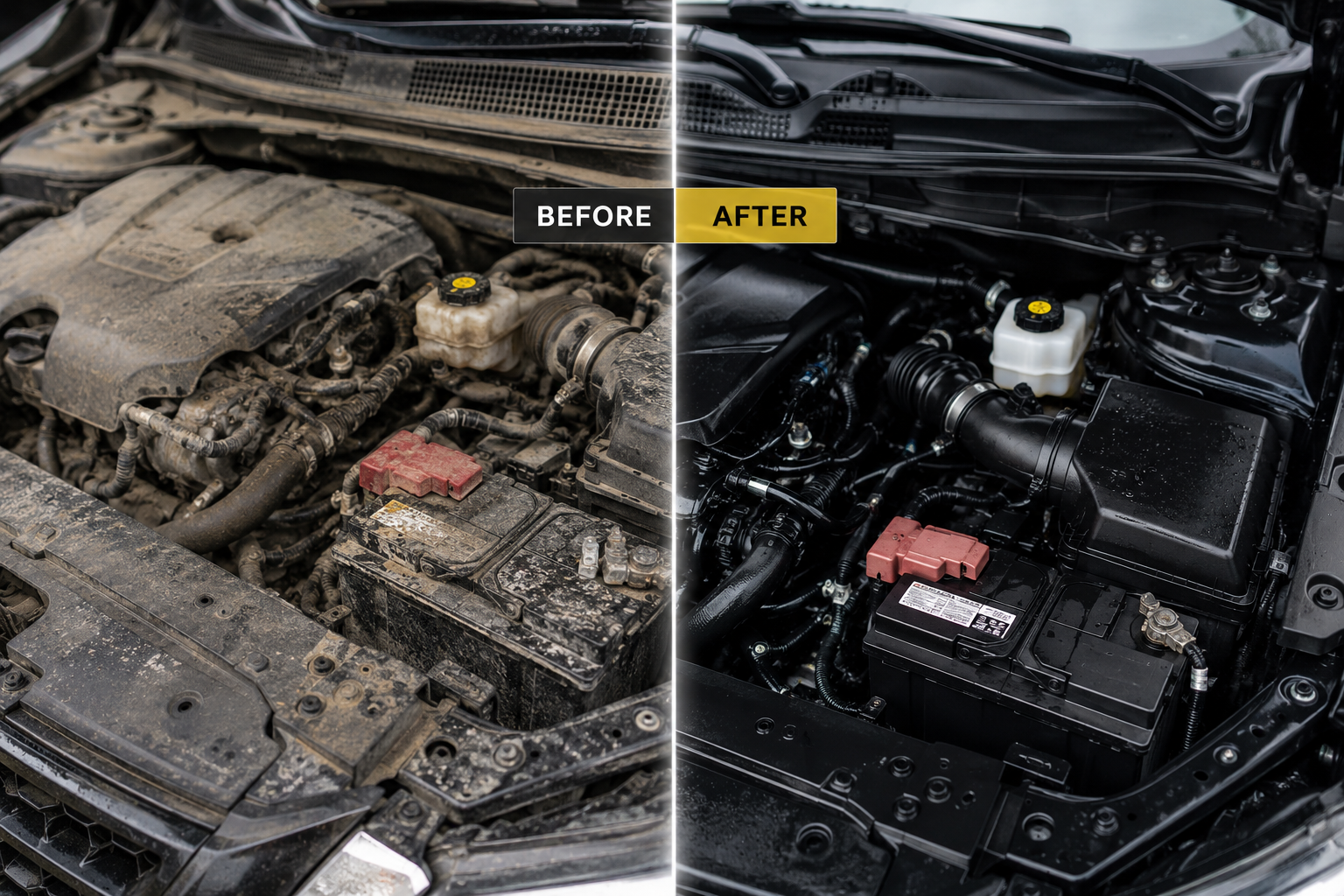
The Most Neglected Part of Car Care
Pop the hood on most cars and you'll find the same thing: a grimy, grease-coated compartment that hasn't been cleaned since the vehicle rolled off the dealer lot. The exterior gets washed, the interior gets vacuumed, and the engine bay — the most mechanically critical space in the entire vehicle — gets completely ignored.
It's understandable. The engine bay isn't visible in day-to-day driving. Nobody notices it unless they're specifically looking under the hood. And for a lot of drivers, what's under the hood feels intimidating enough that opening it seems like something better left to the mechanic.
But here's the reality: a dirty engine bay isn't just aesthetically unpleasant. It actively shortens the life of your vehicle. It creates conditions for overheating, corrosion, electrical failures, and fire risk. It hides the early signs of problems that, caught promptly, would cost almost nothing to fix — and ignored, cost thousands.
Engine bay cleaning is one of the most impactful and least discussed aspects of vehicle maintenance. This guide breaks down exactly what's happening under your hood when it doesn't get cleaned, and what professional cleaning actually does to protect the life of your vehicle.
What Builds Up in Your Engine Bay Over Time
Before understanding why cleaning matters, it helps to understand what accumulates in the engine bay between cleanings — because it's more than just dust.
Oil and grease residue is the primary culprit. Small seeps from gaskets, valve covers, and hose connections are common on any vehicle with mileage on it. These seeps coat surrounding components in a sticky film that then attracts road dirt, brake dust, and debris into a thick, baked-on layer. Oil attracts dirt and debris, creating an abrasive paste that accelerates wear on moving parts and damages seals. Fresh Layer
Road salt and corrosive chemicals work their way into the engine bay through the grille and wheel wells. For South Jersey and Philadelphia drivers, this is a year-round concern — winter road salt enters the engine compartment and sits on metal brackets, wiring harnesses, and electrical connections long after the roads dry out. Dirt and moisture, especially with the salt from winter roads, create a corrosive mixture that can eat away at the metal components in your engine bay. This corrosion can lead to expensive repairs and even structural failure of parts. More dangerously, it can damage electrical wiring and connections, leading to a host of frustrating and difficult-to-diagnose electrical issues. Hybrid Valeting
Leaves, debris, and organic material accumulate in corners and around the base of the windshield where the engine compartment vents. These materials trap moisture and, combined with oil residue, create conditions that accelerate both rust and fire risk.
Battery acid and corrosion spreads outward from the terminals if left unaddressed. Corrosion on battery terminals shortens battery life by 20 to 30%. A battery that should last five years dies in three. The same corrosion spreads to nearby electrical connections and metal housing, compounding the damage. Dennis Auto Details
All of it builds up invisibly. Until it doesn't.
Reason 1: Heat Management and Preventing Overheating
Your engine generates enormous heat during normal operation. The entire engineering of the engine bay — the spacing of components, the design of the cooling system, the placement of fans and air channels — is designed to manage and dissipate that heat efficiently.
Buildup undermines all of it.
When the engine bay is cluttered with grime, dust, and oil buildup, it can create insulation that traps heat around sensitive components. Over time, excessive heat buildup can lead to engine parts deteriorating more quickly, reducing the vehicle's overall performance. Keeping the engine bay clean allows air to flow more freely, and heat dissipation becomes more efficient, helping prevent overheating and extending the life of critical components. USA Wire
When grease, dirt, and debris coat your engine, they trap heat and cause components to run hotter than they should. That heat stress can affect belts, hoses, and seals. A clean engine bay helps maintain optimal operating temperature and reduces the risk of overheating. Drewsautodetailingllc
This matters enormously for component longevity. Rubber belts and hoses have rated service lives — but those ratings assume they're operating within designed temperature ranges. An engine bay insulated by years of grime runs consistently hotter than designed, and every degree of excess heat accelerates the deterioration of every component exposed to it. Belts crack sooner. Hoses soften and fail. Seals dry out. What would have been a $30 belt replacement on schedule becomes a $400 emergency repair when the belt snaps unexpectedly.
Reason 2: Fire Prevention
This is the one most drivers never think about — and it may be the most serious.
Leaves, paper, and other debris can accumulate in the engine bay along with oil and grease buildup on component surfaces. All these items can be very flammable and can easily catch fire from hot engine components or electrical sparks. When you clean your engine bay, these substances are removed, reducing the risk of them igniting. CRC Industries
Industry data shows that a staggering 46% of vehicle engine fires are tied to problems with electrical wiring or the ignition of flammable buildup like oil. That contributes to over 17,500 vehicle fires every year in the U.S. alone. Themobilebuff
Over time, your engine bay accumulates a flammable mixture of oil, grease, debris, and dry leaves. A cracked hose, a faulty wire, or an overheating component can create a spark. When that spark meets this buildup of flammable material, you have the perfect conditions for a serious engine fire. Hybrid Valeting
This isn't a remote theoretical risk. It's a documented, statistically significant cause of vehicle fires. Regular engine bay cleaning removes the accumulated fuel for those fires before they have a chance to ignite.
Reason 3: Corrosion Protection — Especially Critical in New Jersey
For South Jersey and Philadelphia area vehicles, corrosion is the enemy that never takes a season off. Winter road salt is the obvious culprit, but coastal humidity, acid rain, and the general damp climate of the Mid-Atlantic region keep corrosive conditions active year-round under the hood.
The engine bay is prone to accumulating water, oil, and other corrosive substances. Without proper cleaning, these elements can begin to break down the engine's metal components, leading to rust and corrosion. USA Wire
Contaminants not only make inspection difficult but also trap moisture, accelerating corrosion on metal surfaces like brackets, bolts, and wiring harnesses. Alibaba
The wiring harness deserves particular attention. Modern vehicles are densely wired — sensors, actuators, and control modules throughout the engine bay communicate constantly through harnesses that run along every surface. Corrosion on wiring connectors creates resistance, intermittent faults, and eventually shorts that trigger check engine lights, sensor failures, and drivability issues that are notoriously expensive and time-consuming to diagnose. Oil that seeps into electrical connectors creates corrosion and short circuits. A simple spill can lead to check engine lights, misfires, or worse. Fresh Layer
Regular cleaning removes the corrosive substances before they compromise wiring and connectors. It's significantly cheaper than the diagnostic and repair bills that corroded electrical components eventually generate.
Reason 4: Early Detection of Problems That Would Otherwise Be Invisible
This may be the most financially valuable benefit of engine bay cleaning — and it's the one mechanics most consistently cite.
A clean engine bay allows you to easily spot any oil, coolant, or fluid leaks. Identifying leaks in their early stages is crucial for preventing potential damage to engine components and ensuring the longevity of your vehicle. Beachford
When an engine bay is coated in years of grime, a fresh oil leak is invisible. It blends right into the existing layer of residue. A coolant seep looks like old staining. A cracked hose doesn't stand out because nothing stands out. Problems that would cost almost nothing to fix when caught early become serious, expensive failures because they develop undetected in an engine bay where nothing new is visible.
Clean components reveal fluid drips immediately. You'll spot a $20 gasket leak before it becomes a $500 repair. Transmission fluid, coolant, and oil leaks show clearly against clean surfaces. Dennis Auto Details
A clean engine bay makes it easier to spot potential problems like oil or coolant leaks, worn-out belts, or corroded components. Early detection allows for prompt repairs, preventing small issues from becoming major problems. A clean engine bay is also easier to work on, reducing the time it takes to perform a repair and potentially reducing labor costs. CRC Industries
The math on this one is straightforward. A small coolant leak caught during or after an engine bay cleaning costs $50 to $150 to fix. The same leak missed for another year because the engine bay is too dirty to reveal it can lead to an overheated engine and repairs in the $1,500 to $3,000 range. Engine bay cleaning pays for itself every time it helps catch one of these early.
Reason 5: Electrical System Protection
Modern vehicles are far more electrically complex than vehicles from even ten years ago. Engine management systems, emissions sensors, fuel injection controllers, ignition coils, and dozens of other electronic components all live in the engine bay — exposed to the same heat, moisture, oil, and corrosion that affect every other component under the hood.
Corrosion can damage electrical wiring and connections, leading to a host of frustrating and difficult-to-diagnose electrical issues, from a simple dead battery to a complete engine shutdown. Hybrid Valeting
The challenge with electrical failures is that they're often the most expensive and time-consuming problems to diagnose. A mechanic troubleshooting an intermittent misfire or a phantom check engine light in a dirty, corroded engine bay can spend hours chasing a fault that, in a clean bay, would have been immediately visible as a corroded connector or a chafed wire.
Dirt and moisture can accelerate the corrosion process, leading to rust and damage to metal components. Regular cleaning helps remove these corrosive elements, protecting your engine bay from rust and corrosion. Many engine bay cleaning products include protective coatings that can further prevent corrosion and extend the life of engine components. Qarservice
Reason 6: Resale Value — Under the Hood Matters More Than You Think
Most sellers focus on their paint, their interior, and their service history when preparing a vehicle for sale. They overlook what every experienced buyer — and every dealer — checks first: the engine bay.
A study by Kelley Blue Book indicates that vehicles with well-maintained engine bays can fetch up to 10% more in resale value compared to those with dirty or neglected engine compartments. MyEngineSpecs.com
The reason is simple psychology. When a potential buyer or appraiser opens the hood and sees a clean, well-maintained engine bay, it communicates the same thing a neat, organized house communicates to a home buyer — this has been cared for. Everything visible has been attended to. The things that aren't visible have likely been attended to as well.
When it comes time to sell or trade in your vehicle, a clean and well-maintained engine bay can positively impact its resale value. Conversely, a buyer who lifts the hood and sees a decade of accumulated grime, oil residue, and corrosion immediately discounts the vehicle — and their offer. The engine bay is the most honest signal of how a vehicle was maintained. Sellers who neglect it pay for that neglect at transaction time. Lords of detailing
How Professional Engine Bay Cleaning Is Done
Engine bay cleaning isn't a simple hose-down. Done incorrectly, it can cause the exact problems it's meant to prevent — water in electrical connectors, moisture in sensors, thermal shock from cold water on hot metal. Professional engine bay cleaning follows a specific process that addresses all of these risks.
The engine is allowed to cool completely before any cleaning begins. Spraying cold water onto hot metal can cause rapid thermal contraction and potentially crack aluminum components or exhaust manifolds. The engine must be completely cool to the touch before any work begins. Engineer Fix
Sensitive components are protected. Alternators, batteries, fuse boxes, ignition coils, and exposed wiring connectors are all covered before any moisture is introduced to the engine bay. This is where professional technique diverges most significantly from DIY attempts — knowing exactly what needs to be protected and ensuring that protection is thorough before any cleaning agent or water touches the engine. Fresh Layer
Degreaser is applied and allowed to dwell. An automotive-grade degreaser is worked across all surfaces, concentrating on areas with heavy oil and grease buildup. Soft brushes are used to agitate the degreaser into crevices and around components. The dwell time matters — the degreaser needs to break down the baked-on residue before it can be safely removed.
Rinsing is done at low pressure. High-pressure washing can force water into sensitive areas, causing damage. Always use low pressure when washing the engine bay. A controlled, low-pressure rinse removes the degreaser and the dissolved contamination without driving moisture into connectors and sensors. Fusion Carwash
Thorough drying follows immediately. The most efficient drying method is to use compressed air or a leaf blower to blast water out of crevices, electrical connectors, and hard-to-reach areas, followed by wiping down all accessible surfaces with a clean towel. Leaving moisture in the engine bay after cleaning creates new corrosion risk and the possibility of electrical issues when the vehicle is started. Engineer Fix
Protective dressings are applied to plastic components, rubber hoses, and exposed surfaces to restore their appearance and provide a barrier against future contamination and heat damage.
The entire process on a typical vehicle takes 30 to 60 minutes when done properly — and the transformation is often dramatic.
How Often Should You Clean Your Engine Bay?
Professional engine bay cleaning every 6 to 12 months protects your vehicle, helps prevent costly repairs, and maintains resale value. Dennis Auto Details
For South Jersey and Philadelphia area vehicles, the annual minimum is a reasonable starting point — but the timing matters. The best window is spring, after the winter salt season ends and before summer heat begins. At that point, a year's worth of road salt, moisture accumulation, and grime from wet winter roads is sitting in the engine bay. Cleaning it out in spring removes the corrosive material before it has another season to do damage, and puts the engine bay in the best condition to manage summer heat.
Vehicles that are driven more aggressively, parked outdoors year-round, or operated in particularly heavy traffic corridors — the I-95 corridor, Route 42, the AC Expressway — accumulate contamination faster and benefit from twice-yearly cleaning.
The signal to watch for in between: if you see spots on your driveway and can't identify the source when you look under the hood, the engine bay needs attention. Fluid leaks that are undetectable because the bay is too dirty to reveal them are actively causing damage.
The Bottom Line: What Gets Neglected Gets Expensive
Every component in your engine bay operates within designed parameters — temperature ranges, contamination tolerances, lubrication conditions. Accumulated grime, oil buildup, corrosion, and trapped moisture push everything outside those parameters simultaneously, across every component, every mile you drive.
Engine bay cleaning resets those conditions. It removes the insulation that causes overheating. It removes the corrosive material that attacks wiring and metal. It removes the flammable buildup that creates fire risk. And it creates visibility — the ability to see what's happening under the hood so that problems get caught when they're small rather than when they're catastrophic.
The vehicles that reach 200,000 miles without major mechanical failures aren't the ones that got lucky. They're the ones that got maintained. Every part of them — including the engine bay.
Book Your Engine Bay Cleaning with Underboss Detailing
Underboss Detailing is South Jersey and Philadelphia's premier mobile detailing service. We bring professional-grade engine bay cleaning directly to your driveway — no shop visit, no drop-off, no waiting. Our engine bay service includes full degreasing, safe low-pressure rinse, compressed-air drying, and protective dressing application on plastics and rubber, performed by professionals who know exactly which components to protect and how.
Add it to a full detail or book it as a standalone service. Either way, you leave with a cleaner, safer, better-protected engine — and the ability to actually see what's going on under your hood.
Book your appointment today at underbossdetailing.com and take care of the part of your car that takes care of everything else.
Frequently Asked Questions
Does engine bay cleaning actually extend the life of my car?
Yes — in several direct, measurable ways. Removing grime and buildup improves heat dissipation, which reduces thermal stress on belts, hoses, and seals. Removing corrosive road salt and moisture protects wiring and metal components. And creating visibility under the hood allows for early detection of leaks and wear that, caught promptly, cost very little to fix.
Is engine bay cleaning safe — won't water damage the electronics?
When done correctly, yes — it's completely safe. The key is proper preparation: allowing the engine to cool completely, covering sensitive electrical components before introducing any moisture, and using low-pressure rinsing rather than high-pressure spraying. Professional detailers know exactly which components require protection and ensure thorough drying before the vehicle is started. Golden-horse
How often should I have my engine bay cleaned?
Once a year is the minimum recommendation for most vehicles, with spring being the ideal timing to remove winter salt accumulation. Vehicles driven in heavy traffic, parked outdoors year-round, or operated in the South Jersey/Philadelphia corridor may benefit from twice-yearly cleaning. If you can't identify the source of a fluid leak when you look under the hood, the engine bay needs cleaning.
Can a dirty engine bay cause a fire?
Yes. Leaves, debris, and oil and grease buildup can accumulate in the engine bay and are very flammable. They can easily catch fire from hot engine components or electrical sparks. Industry data links nearly half of all vehicle engine fires to electrical faults or flammable buildup igniting under the hood. Regular cleaning removes this accumulated fuel source. CRC Industries
Will a clean engine bay help me sell my car for more?
Meaningfully so. Research indicates that vehicles with well-maintained engine bays can fetch up to 10% more in resale value. The engine bay is one of the first things experienced buyers and dealers inspect, and a clean engine bay signals genuine care and maintenance — which translates directly into buyer confidence and willingness to pay. MyEngineSpecs.com
What's the difference between DIY engine cleaning and professional cleaning?
The primary differences are component protection, product selection, and technique. Professionals know which sensors, connectors, and electrical components require protection before moisture is introduced, use automotive-grade degreasers formulated for engine bay materials, and apply controlled low-pressure rinsing rather than a high-pressure spray that drives water into sensitive areas. The drying step with compressed air is also something most DIY attempts skip — and moisture left in the engine bay after cleaning creates new problems.
Can engine bay cleaning help my mechanic?
Directly. A clean engine bay is easier to work on, reducing the time it takes to perform a repair and potentially reducing labor costs. Mechanics diagnosing problems in clean engine bays work faster, spot issues more readily, and spend less time cleaning before they can even begin the work you're paying them to do. CRC Industries