Why You Should Detail Your Car After a South Jersey Winter
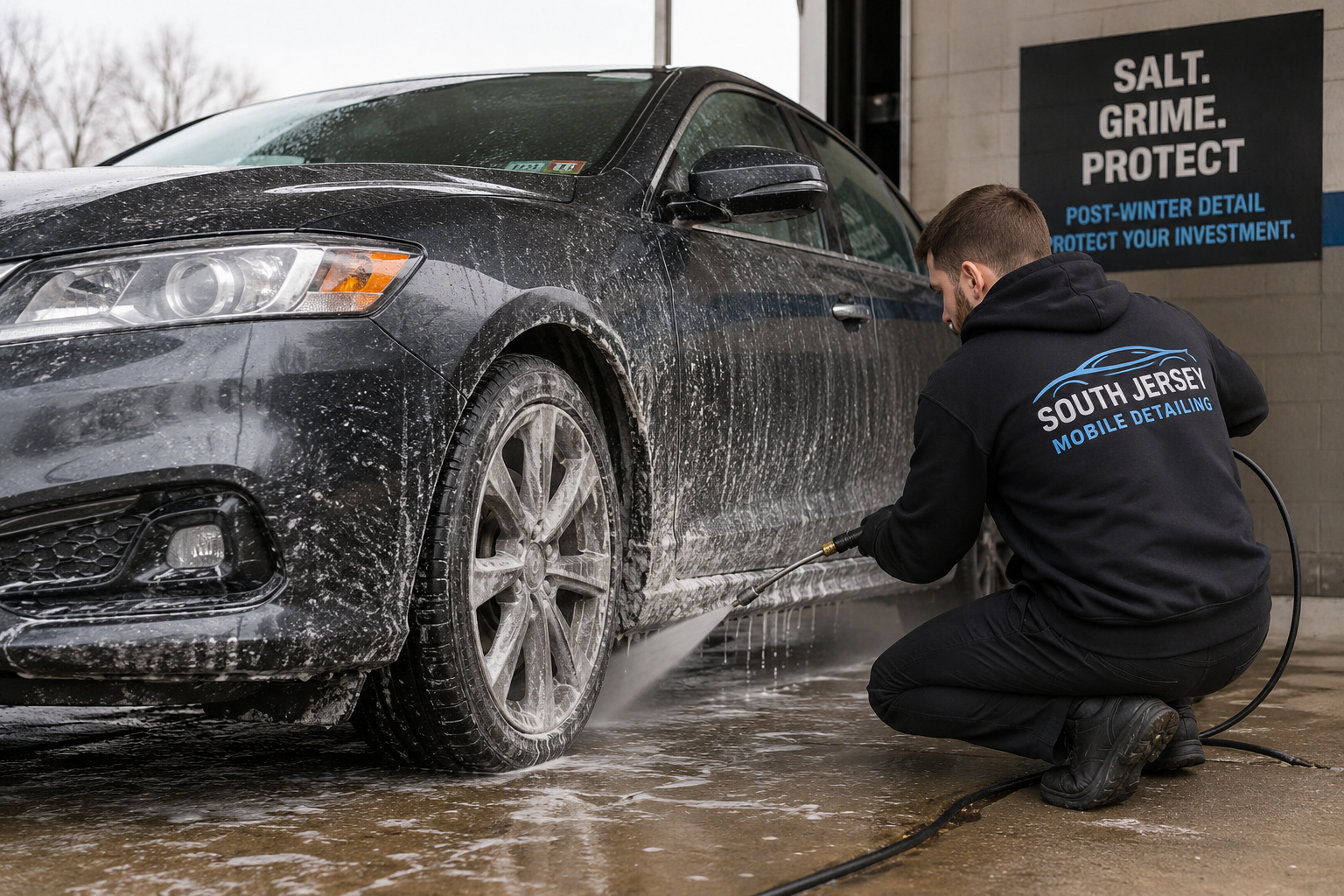
If you've spent a winter driving around Washington Township, Cherry Hill, or anywhere else in South Jersey, your car has been through a lot more than you might realize. Between the snowstorms, the slush, and the constant layer of road salt coating every highway and back road, the months from December through March quietly do real damage to your vehicle — most of it where you can't see it. By the time spring rolls around, your car isn't just dirty. It's carrying a chemical load that's actively working against the metal, paint, and interior you paid good money for.
The good news is that this damage is almost entirely preventable, and the single best thing you can do about it is a thorough post-winter detail. Here's exactly why that matters, what's happening under the surface, and what a proper detail actually accomplishes.
What Road Salt Is Actually Doing to Your Car
New Jersey is a heavily salted state. The practice of de-icing roads has grown enormously over the decades — nationally, what started as roughly 5,000 tons spread annually in the 1940s and '50s has ballooned to about 20 million tons each year, roughly 123 pounds for every American. NJDOT alone operates 68 salt storage facilities statewide and can store up to 228,000 tons of salt plus over a million gallons of anti-icing liquids. That's the stuff your tires are kicking up onto your car every single day you drive in winter.
Road salt is mostly sodium chloride, sometimes blended with calcium or magnesium chloride to work in colder temperatures. It keeps roads safe — but it's highly corrosive to vehicle paint and the metals on your vehicle. The mechanism is straightforward and nasty: salt accelerates oxidation. When it sticks to your car and combines with moisture, it kicks off a chemical reaction that eats away at metal far faster than it would rust on its own.
The undercarriage takes the worst of it. According to Maaco, the undercarriage is particularly vulnerable as salt accumulates and remains in contact with metal surfaces, and over time this exposure leads to rusting and deterioration of the car's frame and components. Common damage includes rusted brake rotors, corroded exhaust systems, damaged suspension parts, and weakened electrical connections — these aren't cosmetic problems, they're safety and reliability problems.
It Happens Faster Than You Think
A lot of drivers assume rust is a slow, multi-year process they don't need to worry about. That's a costly misconception. Mercury Insurance notes that salt can begin causing corrosion within days when moisture is present. In dry conditions salt is relatively harmless, but South Jersey winters bring exactly the wrong combination — humidity, melting snow, and slush. That moisture activates the salt's corrosive properties.
Here's a detail most people get backwards: parking your salty car in a warm garage actually makes it worse. As Mercury explains, a heated garage can speed up rust because the heat accelerates the chemical reaction of corrosion. So if you've been pulling your slush-covered car into a heated garage all winter thinking you're protecting it, you may have been speeding up the very problem you wanted to avoid.
Modern cars do have defenses — automakers use galvanized steel, zinc-rich primers, e-coatings, and durable clear coats to slow rust. But as Chemical Guys points out, salt still finds places to hide, and tiny paint chips or scratches allow salty water to reach bare metal where corrosion begins quickly. Some of the most damaging buildup happens in spots you never see: rocker panels, door seams, and clogged drainage channels that trap moisture for weeks.
Your Paint Is Under Attack Too
While the undercarriage gets the worst of the corrosion, your paint isn't safe either. Salt combined with winter road grit acts like sandpaper on your finish, dulling it, causing scratches, and wearing down the clear coat. Once that clear coat is compromised, salt reaches the paint layer and eventually the metal underneath.
The early warning signs are worth knowing so you can catch trouble before it spreads. According to detailing experts, salt damage often first appears as pale, chalky blotches or uneven fading in the paint finish, especially on lower body panels and around the wheels. You may also spot rust starting along the edges of doors, the hood, and the trunk lid — these often begin as small bubbles under the paint before breaking through as reddish-brown patches. If you see bubbling paint or rust stains, that's your cue to act immediately, because rust spreads fast once it takes hold.
The Damage Inside Your Car
Salt doesn't stay outside. Every time you climb in during winter, you track in snow, slush, and salt on your shoes. That moisture seeps into your carpets and mats, leaving behind that chalky white residue you've probably noticed. It's not just ugly — over time it damages interior surfaces and can create long-term issues with rust and odor.
The longer it sits, the worse it gets. Salt bonds deeper with carpet fibers the longer it's left untreated, making stains progressively harder to remove and leaving behind stiff fibers and a musty smell. At-home cleaning can buy you time, but it often only treats the surface while hidden salt continues damaging the interior underneath. This is where professional equipment makes a real difference — steam cleaners and hot water extractors reach the salt deposits buried in the carpet that a vacuum and a spray bottle simply can't touch.
Why a Professional Detail Beats a Quick Car Wash
You might be thinking a few trips through the automatic car wash should handle this. Unfortunately, those drive-through washes often miss the single most important area. As one detailing service puts it, a fast automated wash often misses the undercarriage, leaving a hidden layer of salt that keeps eating away at the metal. And cleaning it yourself comes with its own risks — using the wrong brushes or soap can scratch your paint, and those scratches let even more salt and moisture reach the metal, which actually makes rust grow faster.
Even Consumer Reports, which generally recommends touchless washes for routine winter upkeep, notes that the underbody spray is usually an added charge that's a worthwhile upgrade to remove salt, and that the end of winter is the ideal time for a thorough hand-wash and detail. A professional detail goes much deeper than a rinse: it uses paint-safe products that are tough on salt, dedicated undercarriage cleaning that reaches brake lines and suspension components, proper decontamination and clay bar treatment to lift bonded salt and grime off the paint, and interior extraction to pull salt out of carpets and upholstery.
Frequency matters during the season too. Most experts recommend washing — including the undercarriage — every 10 to 14 days during winter months in salted areas, and sooner after heavy snow. But the most important wash of all is the deep recovery detail at winter's end, which removes the full season's salt accumulation inside and out and restores a protective coat.
Protection That Lasts: Wax and Ceramic Coating
Cleaning off the winter's damage is half the job. The other half is putting down a barrier so next winter does less harm. A coat of wax creates a barrier on painted surfaces that makes it harder for salty slush to stick and slows corrosion, though it needs reapplication every few weeks.
For longer-lasting protection, ceramic coating is the gold standard. Unlike wax, a ceramic coating chemically bonds with your paint and can last anywhere from two to five years when professionally applied. Its hydrophobic surface means water beads up and rolls off, carrying contaminants including salt with it and preventing corrosive materials from settling into the paintwork. It's the difference between salt clinging to your finish and salt sliding right off.
It's Really About Protecting Your Investment
Beyond avoiding repair bills, there's a straightforward financial case here. Rust and paint damage can significantly cut your car's resale value — a vehicle that looks neglected, even if mechanically sound, can lose thousands of dollars. On the flip side, according to Carfax data cited by detailers, well-maintained vehicles can have resale values 10 to 20% higher than neglected ones. A clean, salt-free interior tells a buyer the car was cared for; salt-stained carpets and a musty smell instantly drag down its appeal.
It's also worth knowing that this kind of corrosion is on you, not your insurer. AAA confirms that undercarriage corrosion counts as normal wear and tear, meaning your insurance won't cover the damage. A regular washing and detailing routine is, in effect, the cheapest protection plan you'll find — spending a bit on prevention versus thousands of dollars to replace rusted and damaged components down the road.
Don't Wait for the Rust to Show
Here's the bottom line for any South Jersey driver: by the end of winter, your car is carrying a full season's worth of corrosive salt on its paint, packed into its undercarriage, and ground into its carpets. Salt damage is totally manageable with the right routine — but you shouldn't skip winter care or wait until spring once damage is already underway. The longer that salt sits, the more it costs you in repairs, appearance, and resale value.
A thorough post-winter detail strips away every bit of that accumulated salt, catches early rust before it spreads, restores your paint and interior, and lays down protection to make next winter easier on your vehicle. It's one of the smartest things you can do for a car you plan to keep — or eventually sell.
Ready to undo winter's damage? Underboss Detailing is South Jersey and Philadelphia's premier mobile detailing service — we come to your home or office and handle everything from undercarriage salt removal and paint decontamination to interior extraction and ceramic coating. Don't let another season of salt eat away at your investment.
Book your post-winter detail today →
Sources: New Jersey Conservation Foundation, NJDOT, Mercury Insurance, Maaco, Chemical Guys, AAA, Consumer Reports, Cilajet, Jimbo's Detailing, CarZone Auto Detailing, Ride and Shine Detail, CCA Detailing, Spark Armor, Gibby Car Wash, Rydell, autonocion.
Frequently Asked Questions
How soon after winter should I detail my car?
As soon as the roads are consistently clear of salt — typically late February through early April in South Jersey. The longer salt sits on your paint, undercarriage, and carpets, the deeper it bonds and the harder it is to remove. Salt bonds deeper with carpet fibers and paint the longer it's left untreated, so don't wait for warm weather to act.
Isn't a quick run through the car wash good enough?
Not really. Automatic drive-through washes often miss the undercarriage, leaving a hidden layer of salt that keeps eating away at the metal. Even Consumer Reports notes the underbody spray is usually an extra charge that's a worthwhile upgrade to remove salt. A professional detail reaches the brake lines, suspension, and seams a basic wash can't, and pulls salt out of your carpets with extraction equipment.
How fast does road salt actually damage a car?
Faster than most people expect. Salt can begin causing corrosion within days when moisture is present — and South Jersey winters bring exactly the humidity and slush that activate it. It's not a slow, multi-year problem; it's an active chemical reaction happening all season.
Does parking in a heated garage protect my car?
Counterintuitively, it can make things worse. A heated garage can speed up rust because the heat accelerates the chemical reaction of corrosion on a wet, salty car. The fix isn't to stop using your garage — it's to get the salt washed off regularly so there's nothing for the heat to accelerate.
What are the early signs of salt damage I should watch for?
Look for pale, chalky blotches or uneven fading on lower body panels and around the wheels, and check the edges of doors, hood, and trunk for rust that starts as small bubbles under the paint before breaking through as reddish-brown patches. Inside, stiff carpet fibers, white residue on mats, and a musty smell are all signs salt has set in.
How often should I wash my car during winter, not just after?
Most experts recommend washing — including the undercarriage — every 10 to 14 days during winter in salted areas, and sooner after heavy snow. The deep recovery detail at winter's end is the most important, but regular washes throughout the season keep salt from building up in the first place.
Will my insurance cover rust from road salt?
No. AAA confirms that undercarriage corrosion counts as normal wear and tear, which insurance won't cover. That's exactly why prevention through regular detailing is so worthwhile — it's far cheaper than the repairs you'd otherwise pay for entirely out of pocket.
Is ceramic coating worth it for winter protection?
For many drivers, yes. Unlike wax, ceramic coating chemically bonds with your paint and lasts two to five years when professionally applied. Its hydrophobic surface causes water and salt to bead up and roll off rather than settling into the paintwork, making each winter easier on your finish and your wallet.
Does detailing actually affect resale value?
Significantly. Rust and salt-stained interiors can cost thousands in lost value, while well-maintained vehicles can hold resale values 10 to 20% higher than neglected ones. A clean, protected car signals to buyers that it was cared for.
Ready to undo winter's damage? Underboss Detailing is South Jersey and Philadelphia's premier mobile detailing service — we come to your home or office and handle everything from undercarriage salt removal to ceramic coating.