Mobile Ceramic Coating in Philadelphia — Done at Your Location
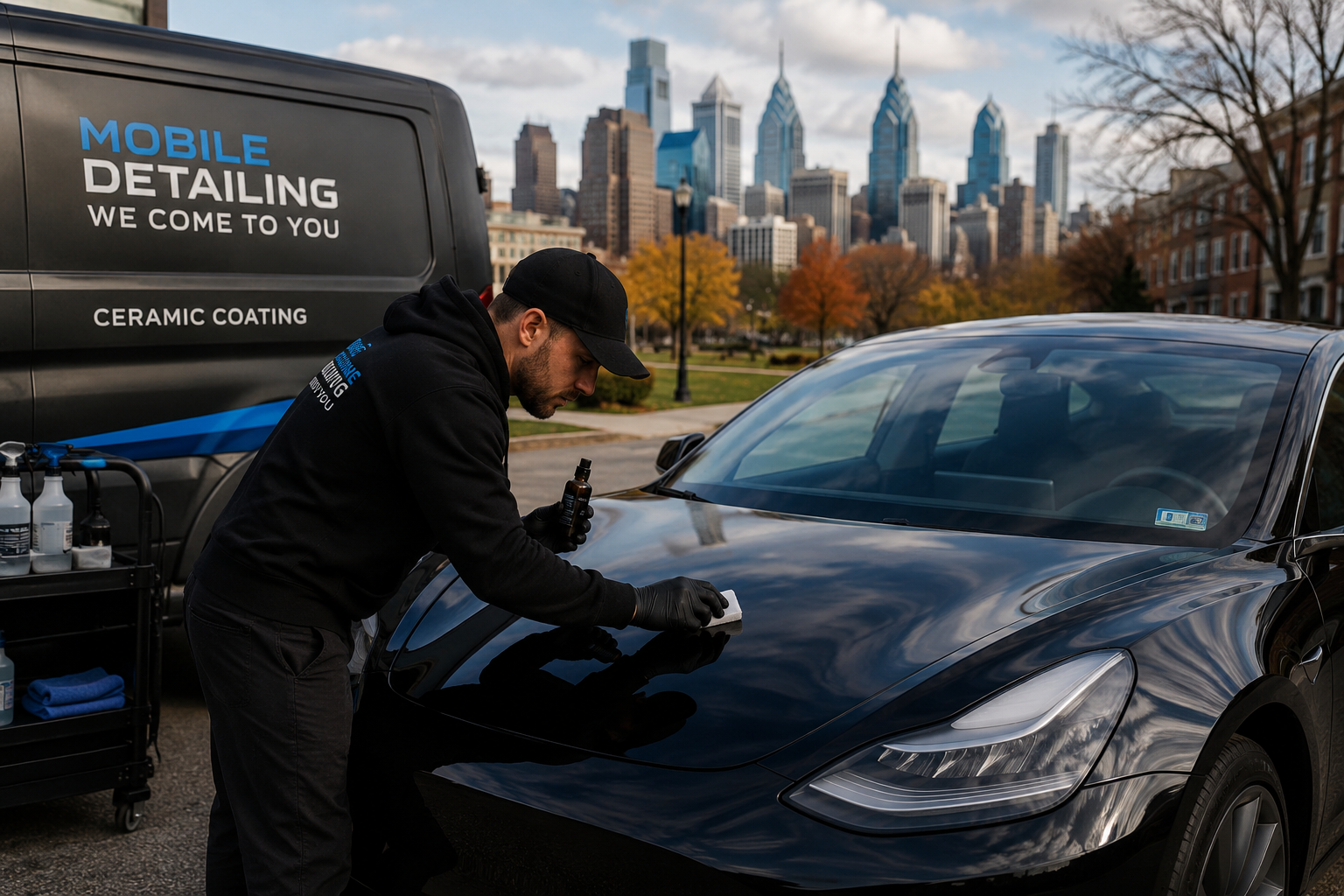
Philadelphia is brutal on car paint. Between the chemically aggressive road brine of our winters, the UV and humidity of our summers, acid rain, and the industrial fallout that comes with city driving, your vehicle's finish is under attack nearly year-round. Ceramic coating is one of the most effective defenses against all of it — and now you can get it applied without ever leaving your driveway.
Mobile ceramic coating brings professional-grade paint protection directly to your home or workplace in the Philadelphia area. No dropping the car off, no waiting at a shop, no rearranging your day. Here's what ceramic coating actually is, why it matters so much for Philly drivers, and how the mobile process works.
What Ceramic Coating Actually Is
Ceramic coating is a liquid polymer — typically built on a high concentration of silicon dioxide (SiO₂) — that chemically bonds to your vehicle's clear coat to form a durable, glass-like protective layer. This is the key distinction from wax: where wax simply sits on top of the paint and washes away over a matter of weeks, a ceramic coating bonds at the molecular level and becomes a semi-permanent layer that can't be washed off. It only comes off through abrasion or polishing.
Once applied, the coating cures and cross-links into a hard, slick surface that repels water, dirt, and contaminants while dramatically enhancing gloss. Properly applied, a quality ceramic coating typically lasts two to five years, far outlasting any wax or sealant.
Why Philadelphia Drivers Need It
Generic ceramic coating advice ignores climate. Philadelphia's specific conditions make a strong case for coating that milder regions simply don't face. Your paint here gets hit from every direction:
Chemically aggressive winters. This is the big one for our region. Pennsylvania winters are chemically harsh — road salt and calcium chloride brine cling to your vehicle's surfaces and penetrate microscopic imperfections in the paint, accelerating corrosion and rust when left untreated. A ceramic coating creates a hydrophobic barrier that makes it far harder for these contaminants to bond, so salt and brine rinse away more easily and do less damage.
Year-round UV exposure. Many drivers assume UV damage is a summer-only problem. It isn't. Ultraviolet rays penetrate cloud cover and even reflect off snow in winter, gradually breaking down the molecular bonds in your paint and causing oxidation, fading, and dullness. Ceramic coating works like sunscreen for your car, shielding the finish against UV year-round.
Humidity, acid rain, and industrial fallout. Philly's seasonal humidity and city air raise the risk of paint oxidation, and most rain carries acids and minerals that bond to your paint as the water evaporates — etching water spots into the clear coat if left to sit. High humidity compounds the problem, and urban industrial fallout lands on your panels and reacts with the finish over time. A coating's slick, contaminant-resistant surface helps fend off all of it.
The practical payoff: with a coating in place, contaminants struggle to bond, so routine washing removes buildup more effectively and with less risk of scratching. That's a real advantage through our messy winters and pollen-heavy springs.
The Benefits You'll Notice
Beyond the protection science, here's what ceramic coating delivers day to day:
A deep, mirror-like gloss. The coating forms a clear, glass-like layer that locks in and amplifies your paint's natural shine, giving it a wet-look, showroom finish.
Hydrophobic, self-cleaning behavior. Water beads up and sheets off, carrying dirt with it. Your car stays cleaner longer and gets easier to wash.
Easier maintenance. Because grime doesn't bond as easily, regular washes are quicker and more effective — and a pH-neutral shampoo with a soft microfiber mitt is usually all you need to maintain it.
Resistance to swirls and light scratches. A coated surface adds resistance to minor scuffs and the swirl marks that come from rushed washes, keeping your finish sharper for longer.
Long-term value. By preserving your paint and that glossy finish for years, a coating protects both your car's appearance and its resale value.
Why "Mobile" Is a Real Advantage — Not a Compromise
The obvious appeal of mobile service is convenience, and that alone is significant. Instead of carving time out of your day to drive to a shop and wait, the coating experts come to you — your driveway, your office parking lot, wherever your vehicle is. In a city as busy and parking-challenged as Philadelphia, having the work done where your car already sits is a genuine relief.
But there are advantages beyond saving a trip:
You oversee the process. With the work happening at your location, you can ask questions, raise specific concerns, and communicate directly with the people doing the work.
You inspect the results on the spot. When the coating's done, you assess the finish immediately and give feedback before the professionals leave — no driving home first and hoping it looks right. That hands-on involvement helps ensure you're fully satisfied with the outcome.
Importantly, mobile doesn't mean cutting corners. Trained mobile detailers bring portable lighting, clean water, and power sources to complete the full process — paint decontamination, machine polishing, and coating application — right on site, maintaining the same standards you'd expect from a dedicated facility.
How the Process Works
Ceramic coating is precise work, and the prep is just as important as the coating itself. A professional mobile application generally follows these steps:
Vehicle assessment. The detailer evaluates your car's size, paint condition, and any existing defects to determine what the job requires.
Thorough wash and decontamination. The surface is washed and clay-treated to strip away dirt, grime, old wax, and bonded contaminants. This is critical — the coating can only bond properly to a clean, smooth surface.
Paint correction (when needed). Many vehicles benefit from machine polishing first to remove swirl marks, light scratches, and oxidation. Because the coating locks in whatever is underneath it, correcting defects beforehand ensures the coating bonds to a flawless surface and the finish looks its best.
Surface prep. A prep spray removes any leftover polishing oils so the coating bonds cleanly.
Coating application. The liquid polymer is applied by hand in a controlled crosshatch pattern, then buffed with microfiber to level it evenly across the paint.
Curing. The coating is left to cure and cross-link into its hard, protective layer.
One important note on conditions: ceramic coatings are sensitive to temperature, humidity, and cleanliness during application and curing. Professionals understand how these factors affect bonding and curing, and they control for them — which is exactly why expert application matters and why streaking or uneven coverage (hard to fix once cured) is a real risk with inexperienced or DIY application.
A Few Honest Things to Know
We believe in setting clear expectations. Ceramic coating is an outstanding protective upgrade, but it isn't a magic force field. It resists swirls and light scratches, but it won't stop rock chips, deep scratches, or dents — for maximum impact protection, paint protection film (PPF) is the stronger option. Coatings also require a brief curing window: typically you'll want to keep the vehicle away from water for around 4 hours (often longer is recommended) after application so the curing process isn't disrupted. And while a coating makes upkeep easier, it's not "no maintenance" — gentle, regular washing with the right products is what keeps it performing for years.
Ceramic coating also costs more than wax up front, reflecting the materials, prep, and skilled labor involved. But viewed as multi-year protection for a major asset — versus reapplying wax every few weeks — it's a sound long-term investment, especially given what Philadelphia's climate would otherwise do to unprotected paint.
The Bottom Line
Philadelphia's road salt, UV, humidity, acid rain, and city grime make serious paint protection less of a luxury and more of a necessity. Ceramic coating delivers that protection with a years-long, glass-like shield that keeps your car glossy, easier to clean, and better protected against everything our climate throws at it. And with mobile service, you get professional-grade results applied right at your home or office — full prep, correction, and application included — without ever sacrificing convenience or quality.
Protect Your Paint — We'll Come to You
Skip the shop and the wait. Underboss Detailing brings professional mobile ceramic coating directly to your driveway or workplace anywhere in the Philadelphia area — complete with full paint decontamination, correction, and expert application for a finish that lasts for years.
Book your mobile ceramic coating today → and give your car the protection Philly demands.
Frequently Asked Questions
What is ceramic coating and how is it different from wax?
Ceramic coating is a liquid polymer, usually based on silicon dioxide (SiO₂), that chemically bonds to your car's clear coat to form a durable, glass-like protective layer. Unlike wax — which sits on top of the paint and washes away within weeks — a ceramic coating bonds at the molecular level and becomes a semi-permanent layer that can't simply be washed off. That's why it lasts years instead of weeks.
How long does ceramic coating last?
A quality professional ceramic coating typically lasts two to five years. The exact lifespan depends on factors like how the car is maintained, exposure to harsh chemicals, and weather conditions. Gentle, regular washing with a pH-neutral shampoo helps the coating perform for its full life.
Why is ceramic coating especially worth it in Philadelphia?
Philadelphia's climate is hard on paint from every direction. Winters bring chemically aggressive road salt and calcium chloride brine that accelerate corrosion; UV rays break down paint year-round, even reflecting off snow in winter; and humidity, acid rain, and city industrial fallout all promote oxidation and etching. A ceramic coating creates a hydrophobic barrier that resists these contaminants, making your paint far easier to protect through our seasons.
Does mobile ceramic coating compromise on quality?
No. Trained mobile detailers bring portable lighting, clean water, and power sources to complete the full process — decontamination, machine polishing, and coating application — right at your location, maintaining the same standards as a dedicated shop. Mobile service actually adds advantages: you can oversee the process, ask questions directly, and inspect the finished results on the spot before the team leaves.
What does the ceramic coating process involve?
It generally includes a vehicle assessment, a thorough wash and clay decontamination, paint correction (machine polishing to remove swirls and defects) when needed, a surface prep to remove leftover oils, careful hand application of the coating in a crosshatch pattern, and a curing period. The prep work is just as important as the coating itself, since the coating can only bond properly to a clean, smooth, corrected surface.
How soon can I get my car wet after coating?
You'll typically want to keep the vehicle away from water for around four hours after application — often longer is recommended — so the curing process isn't disrupted. Your detailer will give you specific guidance for the product used on your car.
Does ceramic coating protect against rock chips and scratches?
It resists swirl marks and light scratches, but it's not a force field. Ceramic coating won't stop rock chips, deep scratches, or dents. If maximum impact protection is your priority, paint protection film (PPF) is the stronger option, and it can be combined with a coating.
Is ceramic coating worth the cost compared to wax?
For most owners, yes. It costs more up front than wax because of the materials, prep, and skilled labor involved. But viewed as multi-year protection for a major asset — versus reapplying wax every few weeks — it's a sound long-term investment, especially considering the damage Philadelphia's road salt, UV, and humidity would otherwise do to unprotected paint. It also helps preserve your car's gloss and resale value.
Do I need paint correction before the coating?
Often, yes. Because the coating locks in whatever is underneath it, any existing swirls, light scratches, or oxidation should be polished out first so the coating bonds to a flawless surface. Your detailer will assess your paint and recommend whether correction is needed for the best result.
Sources
Chemical Guys — What Does Ceramic Coating Do?
Night N Day Detailing — Ceramic Coating Explained
Prestige Auto Appearance — How Ceramic Coating Protects Your Car From Pennsylvania's Harsh UV & Winter Road Chemicals
Galaxy Auto Detailing — Understanding Mobile Ceramic Coating and Why Choose Mobile Ceramic Coating
Black Diamonds Detailing — What Is Ceramic Coating on a Car?
Xometry — Ceramic Coating: Purpose, How It Works, Benefits, and Downsides
Fort Worth Auto Detail — The Science Behind Ceramic Coating
Mudgett's Auto Body — How Weather Conditions Affect Your Car's Paint