How to Remove Road Salt Damage from Your Car's Paint (NJ Winters)
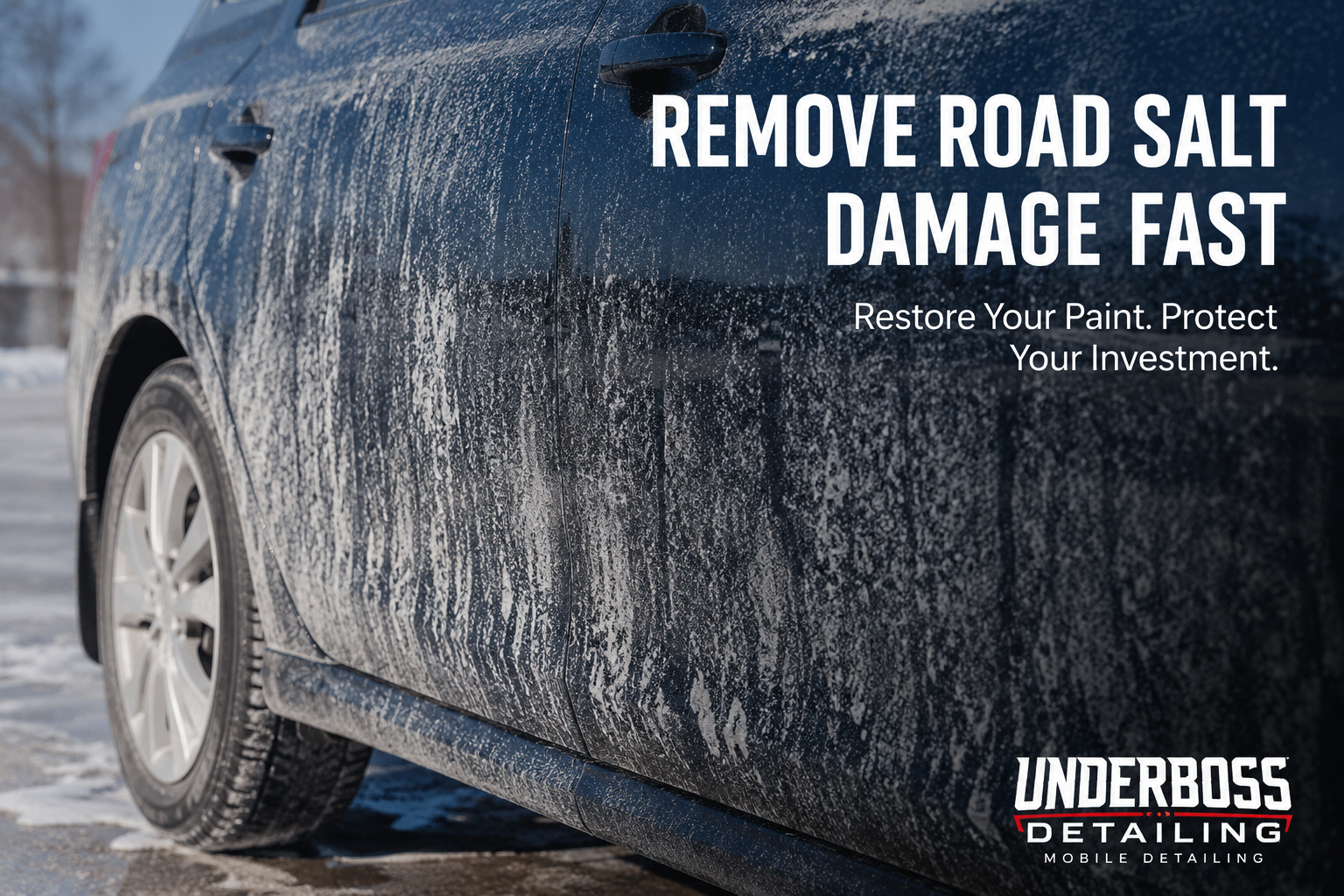
The Winter Enemy You Can't See Coming
Every winter in New Jersey, the same thing happens. The snow falls, the plows come out, and road salt gets laid down across every highway, back road, and parking lot from Cherry Hill to Cape May. You get where you're going safely — which is the point — but your car pays a price that most drivers don't notice until it's too late.
Road salt is one of the most damaging things your vehicle encounters all year. The problem isn't just that it's corrosive. It's that it works silently, hiding in wheel wells and door jambs and the undercarriage long after the roads dry out, eating away at your paint and metal while you go about your day completely unaware.
This guide covers exactly what road salt does to your car, how to identify the damage, how to remove it properly — and how to make sure it doesn't happen again next winter.
What Road Salt Actually Does to Your Car
Before you can fix the problem, it helps to understand what's happening at the surface level.
Road salt accelerates rust formation by penetrating the clear coat — the protective layer over your paint. When salt sticks to your car's surface and mixes with moisture, it works through that clear coat over time, leading to bubbling, peeling, and eventually exposing bare metal underneath, which corrodes. The longer salt is left on the car, the more damage it causes, especially in hard-to-reach areas like wheel wells and the undercarriage. M&G Body Shop
What makes it particularly insidious is the timeline. Salt begins damaging your paint in as little as 24 hours, and once the process starts, every day of winter accelerates the breakdown. Salt is also hygroscopic — meaning it attracts and holds water. Even on a dry day, salt traps moisture against your paint, causing damage you won't see immediately, but the breakdown has already begun. LPMDLPMD
If your car's paint is already damaged in any area, rust can begin to develop within four to five days. For New Jersey drivers who deal with some of the heaviest road salt applications on the East Coast, this isn't a slow, years-long process — it's something that compounds every single week you don't address it. Neighbor
How to Spot Road Salt Damage Early
The earlier you catch salt damage, the easier and cheaper it is to fix. Here's what to look for:
Early signs of road salt damage include discoloration and fading of your car's paint. As the damage progresses, you may notice bubbling or peeling, especially around the wheels and undercarriage. If left untreated, these small blemishes can lead to larger patches of rust and corrosion, significantly reducing your car's lifespan and value. M&G Body Shop
Beyond visible signs, pay attention to how your paint feels. Run your hand across the hood or door panel after washing. If it still feels rough or gritty, that's embedded contamination — salt and other corrosive particles bonded to your clear coat that a basic wash won't remove.
The areas to inspect most carefully:
Wheel wells and fenders — Salt spray concentrates here from road splash. Check inside the wells, not just the visible surfaces.
Door edges and jambs — Salt-laced water runs down and pools in door edges, sitting there undisturbed long after you've driven off salted roads.
Lower body panels and rocker panels — The lowest points of your car take constant direct spray from the road surface.
Undercarriage — The most vulnerable and most overlooked. Salt can also damage protective coatings applied to the undercarriage to prevent rust. Once these barriers are compromised, rust and corrosion can spread more quickly, affecting everything from the exhaust system to fuel lines. Elmer's Auto Body
Step 1: Rinse Immediately After Salt Exposure
The single most impactful thing you can do is also the simplest — rinse your car as soon as possible after driving on salted roads.
After each snowy commute, rinse your car as soon as possible to remove salt residues. Use a hose with warm water and start from the top of the car, working your way down. This approach washes away salty grime to reduce long-term damage. Rivernorthcollisionrepair
Focus extra attention on the undercarriage, wheel wells, and lower panels where salt accumulates heaviest. A good rinse won't undo embedded damage, but it breaks the cycle of buildup before salt has time to bond to your clear coat and begin the corrosion process.
One important note: use a foam cannon or pump sprayer to pre-soak the vehicle and let it dwell for 3 to 5 minutes to break down salt buildup, then rinse thoroughly from top to bottom with high pressure — repeating in high-salt areas like wheels, fenders, and rockers. Jimbo's Detailing
Step 2: Proper Wash with pH-Neutral Soap
Rinsing alone won't cut it once salt has begun to dry and adhere to your paint. A full wash with the right products is required.
Begin by thoroughly washing the vehicle to remove loose dirt and debris using a pH-neutral car wash soap and a soft wash mitt. Rinse thoroughly with clean water. Avoid dish soaps or household cleaners — they strip protective wax and sealant, leaving your paint more exposed after washing than before. Caracedetailing
The two-bucket wash method matters here more than it might for a summer dust-off. One bucket with clean soapy water, one with clean rinse water. Dip your mitt, wash a section, rinse it in the clean bucket before reloading with soap. This keeps abrasive particles — including salt crystals — from grinding back into your paint on the next pass.
Don't skip the undercarriage. The underside of your vehicle is filled with nearly endless nooks and crannies where road salt can accumulate. Road salt on car parts that is allowed to sit is what causes trouble — and the undercarriage is where it tends to sit the longest. NAPA Auto Parts
Step 3: Paint Decontamination — The Step Most People Skip
Here's where the process gets serious, and where most DIY winter washes fall completely short.
Even after a thorough wash, microscopic salt particles and iron fallout remain bonded to your clear coat. You can't see them, you can't remove them with soap, and they keep working against your paint even after the car looks clean. This is what a paint decontamination treatment is designed to address.
Washing removes loose dirt, road grime, and surface debris. Claying removes what's bonded to your paint. If your vehicle still feels rough after a wash and dry, that's your signal that contamination is embedded in the clear coat and needs deeper decontamination. Chemical Guys
A full decontamination typically involves two stages:
Chemical decontamination comes first. An iron remover spray is applied to the paint surface, where it reacts with and dissolves embedded iron particles — the same particles that come off brake dust and road fallout all winter. IronX-type products are sprayed onto the car and break down iron contamination so it can be removed. Be aware that this process, while effective, really smells — only do it in a well-ventilated area. WingsMobileDetailing
Clay bar treatment follows. Clay bar treatment uses engineered detailing clay and a dedicated lubricant to remove bonded contaminants from your vehicle's clear coat. These particles stick to the paint over time and cannot be removed with shampoo alone. The clay works by safely grabbing and lifting those particles away from the surface while gliding smoothly over the lubrication. Chemical Guys
Most vehicles benefit from 1 to 2 clay bar treatments per year. Spring is a great time to remove winter road salt and grime, and fall preps your car before the harsh conditions of winter return. Carzoneautodetailing
One important warning: clay bar treatment must be done carefully — improper technique can cause scratches or paint damage. This is why clay bar decontamination is best handled as part of a professional detailing process, not a rushed DIY job. Details Matter
Step 4: Address Any Paint Chips or Scratches
Once your paint is clean and decontaminated, inspect it carefully for chips and scratches — especially on the lower body panels, door edges, and hood leading edge. These are priority areas because exposed metal is where rust forms fastest.
For minor scratches or chips, use a touch-up paint kit to seal the damaged area. For extensive damage, consult a professional to restore the car's paint and prevent further corrosion. M&G Body Shop
Don't underestimate small chips. A chip the size of a pinhead on an unprotected lower panel can begin rusting within days in the damp, salt-heavy conditions of a New Jersey winter. Seal them before they compound.
Step 5: Polish to Restore Paint Clarity
If your paint has been exposed to a full New Jersey winter without protection, it likely looks dull or hazy — even after washing and decontaminating. That's oxidation setting in on the clear coat. Polish addresses it.
Paint polish contains mild abrasives that remove a microscopic layer of the clear coat, taking the damaged, oxidized surface with it and revealing the fresher paint underneath. The result is restored gloss, depth, and clarity that no amount of washing can achieve on its own.
This step is where professional-grade equipment and products make the biggest difference. Machine polishers apply consistent, controlled pressure that hand polishing can't replicate, and the wrong technique or abrasive level can create swirl marks that are worse than the oxidation you started with. If the paint has significant dullness or visible swirl damage, this is a job for a professional detailer.
Step 6: Apply a Protective Coating
You've washed, decontaminated, addressed paint damage, and polished. Now you lock in all of that work with a protective coating — because without it, the next round of salt exposure starts attacking bare clear coat immediately.
Your best approach is to be proactive about protecting your car's paint. Start before the winter season by pre-treating your vehicle with a protective coating. A wax or gel-wax is a great option for fast, cost-friendly protection. An even better choice is ceramic graphene paint protection. Ceramic with graphene coatings are stronger than gels or waxes and are typically applied by a professional — the coating effectively bakes onto the paint to form a hard clear shield that protects from the elements. Cilajet
Clay barring removes contaminants but also strips away existing wax and sealant, so freshly decontaminated paint needs immediate protection. Apply a quality carnauba wax or synthetic sealant within 24 hours of claying. Painted OEM Parts
For New Jersey drivers who want longer-lasting protection, ceramic coating is worth the investment. It bonds chemically to your clear coat, creating a durable, hydrophobic layer that causes water and salt to bead off rather than sit and penetrate. A professional ceramic coating applied in fall means every winter rinse actually works — salt can't bond the way it does to unprotected paint.
What Happens If You Ignore the Damage
Some drivers assume salt damage is just cosmetic. It isn't.
Salt can damage protective coatings applied to the undercarriage to prevent rust. Once these barriers are compromised, rust and corrosion can spread more quickly, affecting everything from the vehicle's exhaust system to fuel lines. What begins as surface discoloration or a small rust spot near the wheel well can, over multiple winters of neglect, become a structural issue that affects the frame, brake lines, and suspension components. Elmer's Auto Body
While visible rust might take a few weeks to months to appear, the underlying damage begins as soon as salt contacts your car. Regularly washing your vehicle, especially the undercarriage, after exposure to salted roads is the most effective way to prevent long-term damage. Panda Hub Car Care
The cost difference between prevention and repair is stark. A professional detail with decontamination and coating costs a fraction of what paint correction, rust treatment, or undercarriage repair runs. In severe cases, salt damage that's been ignored for years can require panel replacement or professional bodywork — costs that dwarf anything a consistent detailing schedule would have run.
The South Jersey Winter Detailing Calendar
For NJ drivers, here's the practical schedule that keeps salt damage from gaining a foothold:
Before first snowfall (October/November): Full detail with clay bar decontamination and protective coating applied. This is your most important appointment of the year — it determines how well your paint weathers everything that follows.
After each salt event during winter: Rinse the car within 24 to 48 hours, focusing on the undercarriage and wheel wells. Don't let salt sit for a week between washes.
Every 2 to 3 weeks during active winter weather: Full wash with pH-neutral soap and undercarriage rinse.
Spring (March/April): Full post-winter detail. This is the decontamination appointment — clay bar treatment, paint inspection, chip sealing, and a fresh protective coating to carry you through spring and summer.
Two full professional details — fall prep and spring recovery — combined with regular winter washes in between is the minimum standard for a South Jersey vehicle that you want to keep in good condition.
Don't Let NJ Winters Win
Road salt is unavoidable in New Jersey. The damage it causes is not. The difference between a car that shows its age after five winters and one that still looks sharp after ten comes down to how consistently it's been protected and treated.
You don't have to do it all yourself. That's what Underboss Detailing is here for.
Book Your Post-Winter or Pre-Winter Detail with Underboss Detailing
Underboss Detailing is South Jersey and Philadelphia's premier mobile detailing service. We come to you — your driveway, your office, wherever works — with professional-grade products and the expertise to remove salt damage, restore your paint, and protect your vehicle before the next season hits.
Our services include full paint decontamination, clay bar treatment, exterior hand washing, ceramic coating, and complete interior care. Every vehicle is handled like it's our own.
Stop letting road salt win. Book your detail today at underbossdetailing.com and protect the investment you drive every day.
Frequently Asked Questions
How long does it take for road salt to damage car paint?
Salt begins damaging your paint in as little as 24 hours. Once the process starts, every day of winter accelerates the breakdown. Visible rust may take longer to appear, but the underlying deterioration of your clear coat begins almost immediately on contact. LPMD
Can a regular car wash remove road salt?
A regular wash removes surface salt but won't address salt that has bonded to your clear coat. Washing removes loose dirt, road grime, and surface debris — but claying removes what's bonded to your paint. For full salt removal, you need a proper decontamination treatment, not just a rinse. Chemical Guys
What areas of my car does road salt damage most?
The longer salt is left on the car, the more damage it causes, especially in hard-to-reach areas like wheel wells and the undercarriage. Door edges, lower body panels, rocker panels, and brake lines are also highly vulnerable. M&G Body Shop
Is ceramic coating worth it for New Jersey winters?
Yes — significantly so. Ceramic coating creates a hydrophobic barrier that causes salt and water to bead off rather than sit against your paint. It doesn't make your car bulletproof, but it dramatically slows the bonding and penetration process that causes corrosion, and it makes every winter wash far more effective.
How often should I wash my car in winter in NJ?
Every 2 to 3 weeks at minimum during active salt season, and ideally within 24 to 48 hours after any significant snow event or drive on heavily salted roads. The undercarriage should be rinsed every time.
When is the best time to get a professional detail for salt damage?
Spring — typically March or April once the salt season has ended — is the ideal window for a full post-winter decontamination detail. Fall, before the first freeze, is the ideal time for a protective pre-winter detail. Both appointments together give your paint the best chance of surviving repeated NJ winters intact.