How to Choose the Right Detailing Package for Your Vehicle
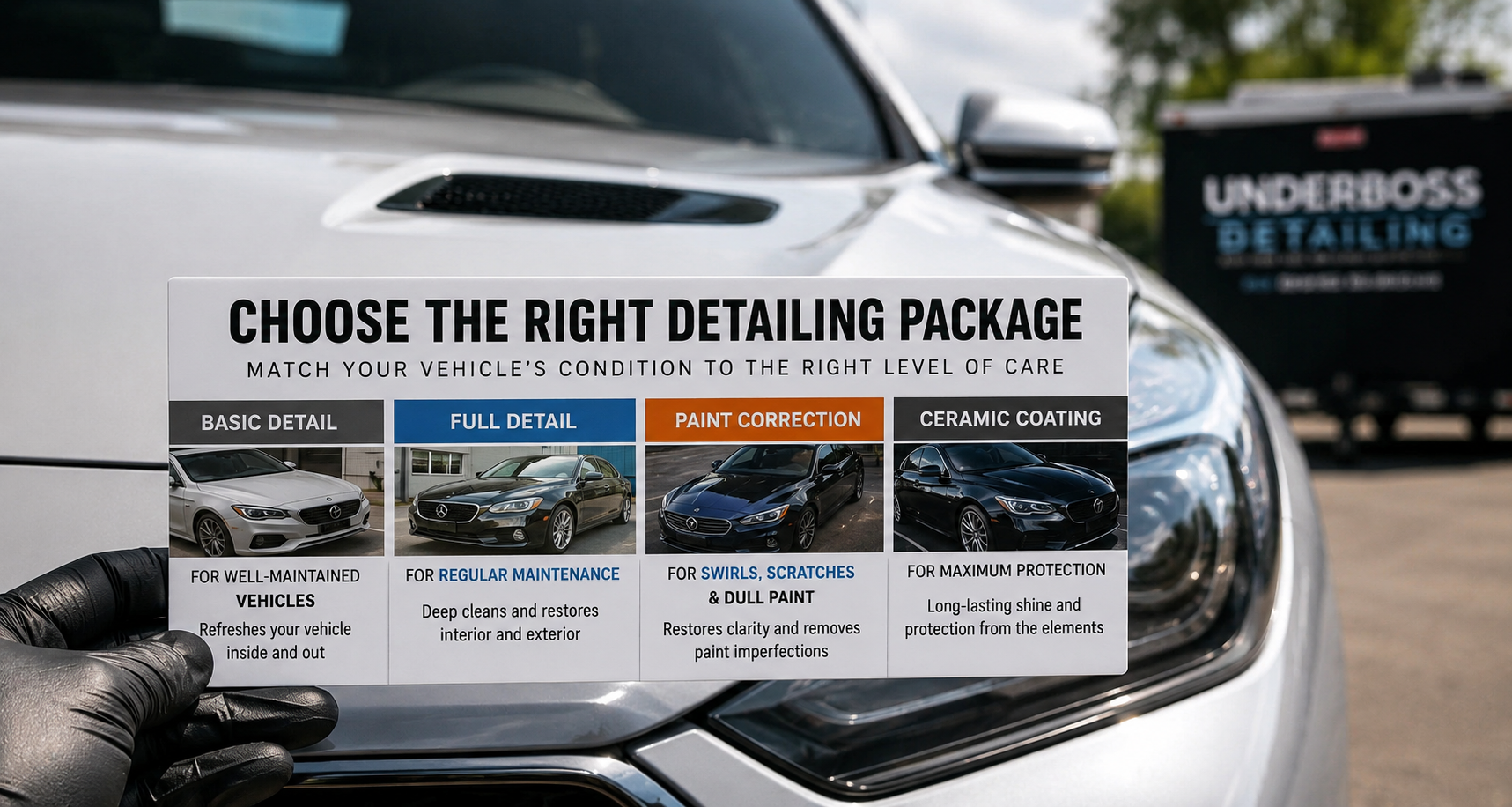
The Decision Most Drivers Get Wrong
Walk into any detailing service — mobile or shop — and you'll see some version of the same menu: a basic package, a mid-tier package, a premium package. Sometimes they're given names like Bronze, Silver, and Gold, or Maintenance, Full Detail, and Executive. The pricing is spread across a wide range, and the descriptions use words that sound impressive without always being clear about what's actually included.
Most drivers default to the middle option. It feels like the safe, reasonable choice — not too cheap, not too extravagant. But "middle of the menu" is not the same as the right package for your vehicle. The car that just came out of a good garage and gets washed every week needs something fundamentally different from the car that's been sitting outside for two years accumulating salt, pollen, and sun damage. Treating them the same way wastes money on one and under-serves the other.
Choosing correctly starts with understanding what the different tiers of service actually do — and then honestly assessing what your vehicle needs. This guide walks through both.
The Tier System: What Each Level of Detailing Actually Includes
Regardless of what a specific detailer calls their packages, professional car care services cluster into a few distinct tiers based on the scope of work and the tools involved. Understanding those tiers gives you a framework for evaluating any menu you encounter.
Tier 1: Maintenance Detail
The entry-level service is built for vehicles that are already in reasonably good condition and need regular upkeep, not restoration. A proper maintenance detail includes:
Exterior hand wash, wheel and tire cleaning, glass cleaning, and a single-stage wax or sealant application on the exterior. On the interior side: vacuuming all surfaces, wiping down hard surfaces, cleaning glass, and addressing door jambs and pockets.
A simple package often includes a thorough exterior wash, tire cleaning, and interior vacuuming. This is perfect if you want a quick refresh that improves the look and feel of your vehicle. CRC Industries
This tier is designed to maintain what's already there — it's the detail equivalent of regular oil changes. It keeps contamination from building up, maintains whatever protection is already on the paint, and keeps the interior fresh. It is not designed to correct problems or restore neglected surfaces.
Best for: Vehicles detailed regularly every 4 to 6 weeks, vehicles in generally good condition, and drivers who want to maintain their car's appearance between more thorough seasonal details.
Tier 2: Full Detail
The full detail is the most widely applicable service — the one that covers both exterior and interior comprehensively, including steps that address moderate contamination and condition all surfaces.
Mid-level packages usually expand on basic service with waxing, interior shampooing, and more detailed surface treatments. CRC Industries
A true full detail typically adds to the maintenance service: paint decontamination (iron removal and clay bar treatment), more thorough interior extraction and shampooing, leather cleaning and conditioning, odor treatment, and a higher-grade protective coating on the exterior. This is the service that actually resets a vehicle's condition rather than just maintaining it.
Best for: Daily drivers that haven't been professionally detailed in 3 to 6 months or more, vehicles showing moderate dullness or surface contamination, and any car being brought back to a clean baseline before a protection treatment is applied.
Tier 3: Paint Correction
Paint correction is a specialized service that goes beyond cleaning and protecting — it addresses defects in the clear coat itself. This is where polishing machines, cutting compounds, and refinishing pads are used to physically remove a microscopic layer of the clear coat, taking the damage with it.
A car needs paint correction when its clear coat shows visible defects such as swirl marks, haze, oxidation, or fine scratches that cannot be removed through washing, waxing, or basic polishing. These imperfections distort reflections and reduce gloss, making the paint look dull even when the vehicle is clean. CRC Industries
Paint correction ranges from a single-stage polish — which addresses light swirl marks and restores gloss — to a multi-stage correction that uses more aggressive compounds followed by refining polishes to remove deeper defects and restore maximum clarity. The process typically includes compounding to remove deeper defects, polishing to refine the paint and remove smaller imperfections, and further enhancement to restore the clarity and gloss. Fresh Layer
Best for: Vehicles with visible swirl marks, hazy or dull paint, oxidation, etching from bird droppings or tree sap, or any car being prepared for ceramic coating where defects need to be corrected before they're locked in permanently.
Tier 4: Ceramic Coating
Ceramic coating is the longest-lasting protective treatment available in professional detailing — a liquid polymer that chemically bonds to the clear coat and creates a durable, hydrophobic layer that protects against UV, road salt, chemical contaminants, and environmental fallout for years at a time.
When a ceramic coating is applied to your car, it effectively locks in the present condition of your paintwork. So, if your paint has visible imperfections, swirl marks, or minor scratches, applying a ceramic coating without addressing these issues first would mean preserving these blemishes beneath the protective layer. This not only makes those imperfections more permanent but also makes them stand out, diminishing the aesthetic value you hoped to achieve with the ceramic coat. Golden-horse
This is why ceramic coating almost always follows paint correction as part of the same service — the correction establishes a flawless surface that the coating then protects for years. Deciding between paint correction and ceramic coating isn't about choosing one over the other — it's about understanding how they work together in an effective car care strategy. If your car's finish shows signs of age or damage, beginning with paint correction lays the groundwork for an effective coating application afterward. Themobilebuff
Best for: Vehicles in good condition whose owners want maximum long-term protection, vehicles being fully restored with the intent to maintain them, and anyone who wants to minimize the maintenance burden of keeping their car clean and protected.
How to Assess Your Vehicle's Actual Condition
The right package starts with an honest assessment of where your vehicle is right now — not where you'd like it to be. Here's how to evaluate each category.
Exterior Paint Assessment
Take your car into direct sunlight on a clear day. This is the only lighting condition that reveals the full picture of what's happening on your paint.
What you're looking for:
If you notice swirl marks, scratches, or a lingering haze after washing, correction is likely required. If the surface is only dirty or slightly rough without visible defects, a quick detail should be enough. Dennis Auto Details
Swirl marks appear as circular, spider-web-like patterns most visible when light catches the paint at an angle. They're primarily caused by automatic car washes, improper washing technique, and abrasive drying cloths. If the scratch doesn't catch your fingernail when lightly run across it, it's likely in the clear coat and can be corrected. Rolfsimport
Oxidation shows as a dull, hazy, chalky appearance — paint that looks flat rather than deep and reflective, often accompanied by a slightly rough texture when you run your hand across it. Paint oxidation happens when UV rays break down the clear coat over time, causing the finish to look chalky, dull, or faded. The oxidized layer creates a barrier that prevents wax and sealants from properly bonding to the paint surface. Dennis Auto Details
Etching appears as dull spots or irregular marks that don't wash off — the result of acidic bird droppings, tree sap, or industrial fallout chemically attacking the clear coat. Water spot etching creates circular mineral deposits that sit below the paint surface and can't be washed away.
The diagnosis:
No visible defects in direct sun, paint feels smooth on the baggie test → Full detail or maintenance detail is appropriate.
Visible swirl marks, haze, or dullness that persists after washing → Paint correction needed before any protective coating.
Severe oxidation, deep scratches, or significant etching → Multi-stage paint correction; consult with a professional on realistic expectations.
Interior Condition Assessment
Interior packages should be matched to what the interior actually needs — which varies dramatically between a recently cleaned car and one that's been hauling kids, pets, groceries, and takeout for six months without a detail.
The right package for you often depends on how and where you use your vehicle. If you commute daily and spend hours in traffic, your interior may need more frequent deep cleaning to remove dust, odors, and buildup from constant use. CRC Industries
Light interior — no stains, no odor, surfaces recently cleaned: A maintenance detail's vacuum and wipe-down is sufficient.
Moderate interior — visible staining on carpet or seats, buildup on hard surfaces, mild odor: Full detail with shampooing and extraction. Leather should be cleaned and conditioned if present.
Heavy interior — significant staining, pet hair, persistent odor, sticky or grimy surfaces: Deep interior detail with steam cleaning, enzymatic treatment for odor, and potentially ozone treatment. This is the reset-level service.
How Long Since the Last Professional Detail
This is often the simplest guide for South Jersey and Philadelphia area drivers who aren't sure what they need:
4 to 6 weeks since last maintenance detail: Maintenance detail is appropriate to maintain the baseline.
3 to 6 months since last full detail: Full detail — paint decontamination, interior extraction, fresh protective coating.
6 months to 1 year or more: Full detail with assessment for paint correction. The longer the gap, the more likely contamination and UV exposure have created surface issues that simple cleaning won't address.
Never been professionally detailed or more than a year: A professional assessment is the starting point. Most vehicles in this category need at minimum a full detail with clay bar decontamination, and many will benefit from a correction stage as well.
Vehicle-Specific Factors That Change the Recommendation
Vehicle Age and Mileage
Newer vehicles — particularly those under three years old — with paint that hasn't developed significant defects can often be maintained with regular full details and a ceramic coating to protect the clear coat proactively. The sooner protection is applied, the less correction is needed later.
Older vehicles or those with mileage-accumulated exposure require honest assessment. A car that's seven years old and been driven and parked outdoors through seven New Jersey winters may have oxidation, salt damage history, and accumulated swirl marks from years of car washes that no amount of waxing addresses. Skipping the correction stage on a vehicle like this and going straight to protective coating locks in the existing problems rather than resolving them.
Paint Color
Dark paint — black, dark blue, dark grey, dark green — shows swirl marks and fine scratches significantly more than lighter colors. Light directly reveals spider-web patterns on dark paint that would be nearly invisible on silver or white. Dark-painted vehicles almost always benefit from paint correction if they've had any history with automatic car washes, and they require more careful maintenance afterward.
Light colors tend to hide swirl marks more effectively but show contamination and water spots more readily. They're generally more forgiving in the correction-versus-detail decision but may need more frequent decontamination treatments for visible tar spots and mineral deposits.
Daily Driver vs. Weekend or Low-Mileage Vehicle
If your car is in good condition, a basic exterior-only or interior-only package may be sufficient. If your car has more serious issues such as deep scratches or oxidation, a premium package may be necessary to bring it back to its best condition. Ezclean-mobile
A daily commuter vehicle driven on I-295 or Route 42 accumulates brake dust, road salt, and interior wear at a pace that a weekend or garage-kept vehicle simply doesn't. The commuter vehicle justifies more frequent full details and is more likely to need paint correction on a regular schedule. The low-mileage vehicle may maintain well on twice-yearly full details with maintenance washes in between.
Vehicles with Leather Interiors
If you have leather seats, look for a detailer who uses appropriate cleaning and conditioning products. Not all interior packages treat leather correctly — many basic packages include wiping down leather surfaces without the pH-balanced cleaning and proper conditioning that leather actually requires. If your vehicle has leather, confirm that any interior package you book explicitly includes leather cleaning and conditioning as separate, distinct steps from general surface treatment. Alibaba
Preparing to Sell
If you're planning to sell your car, investing in a more comprehensive detailing package can significantly improve its appeal and increase its resale value. A clean, polished exterior and a fresh-smelling, well-maintained interior make a strong impression on potential buyers. Fusion Carwash
A vehicle being prepared for sale benefits from the most comprehensive package the paint's condition justifies. Paint correction followed by a sealant or coating, combined with a full interior deep clean, produces the first impression that commands the highest buyer confidence — and the highest offer. This is one scenario where investing in the most thorough service delivers direct, measurable financial return.
Common Mistakes When Choosing a Package
Choosing based on price alone. The cheapest option rarely produces results that last. The cheapest option may not be the best value for your money in the long run. Cheapest isn't always the best — focus on value. A slightly higher price often reflects better quality products, more experienced technicians, and a more comprehensive service. Beachford
Choosing the same package every time regardless of the car's current condition. A car that's been detailed every month doesn't need a full correction. A car that's been neglected for a year doesn't need a maintenance wash. Match the service to the current condition, not habit.
Applying ceramic coating without correction. Applying a ceramic coating without addressing paint imperfections first would mean preserving these blemishes beneath the protective layer, making those imperfections more permanent and making them stand out. Ceramic coating is a long-term commitment — what you lock in at application stays locked in for years. Golden-horse
Skipping interior or exterior because one looks okay. Most professional detailers recommend assessing both independently and only booking what's needed rather than assuming one side is fine. An interior that looks acceptable often has embedded odors, contamination, and early leather deterioration that aren't visible but are actively progressing.
Not communicating specific concerns to the detailer. The detailer cannot see inside your door jambs, under your seats, or into your HVAC vents from a booking form. Mention specific issues — a stain, an odor, a paint problem — so the service can be appropriately targeted and priced.
How Underboss Detailing Approaches Package Selection
At Underboss Detailing, we don't believe in selling the package — we believe in recommending what your vehicle actually needs. When you book with us, we assess the vehicle's current condition before recommending services, and we're transparent about what each service includes and why it's relevant to your specific situation.
Our services cover the full spectrum: maintenance details for vehicles we service regularly, full exterior and interior details for seasonal or one-time resets, paint decontamination and clay bar treatment as a core step before any protective coating, and ceramic coating application for drivers who want the highest level of long-term protection.
We come to you across South Jersey and the greater Philadelphia area — your driveway, your office, wherever works. One detailer, one vehicle, full professional attention from start to finish.
Not sure what your car needs? That's exactly what we're here to help with. Book a consultation or your first detail today at underbossdetailing.com and we'll make the right call together.
Frequently Asked Questions
How do I know if my car needs paint correction or just a full detail?
Inspect the paint in direct sunlight. If you notice swirl marks, scratches, or a lingering haze after washing, correction is likely required. If the surface is only dirty or slightly rough without visible defects, a full detail should be enough. The key distinction: a full detail cleans and protects the paint surface; paint correction removes defects within it. Dennis Auto Details
Should I get ceramic coating, and what does my car need beforehand?
Ceramic coating is worthwhile for any driver who wants long-term protection and reduced maintenance. If your paint has visible imperfections, swirl marks, or minor scratches, applying a ceramic coating without addressing these issues first would mean preserving these blemishes beneath the protective layer. Paint correction before coating ensures the protected surface is actually flawless. Golden-horse
How often should I have my car professionally detailed in South Jersey?
Daily drivers should plan for a full detail every 3 to 6 months, with maintenance details in between as needed. The spring and fall windows are the most important — spring to address winter salt damage and fall to apply fresh protection before salt season begins. Vehicles driven less frequently or garaged can often maintain well on twice-yearly full details.
What's included in a full interior detail vs. a basic vacuum?
A full interior detail includes complete vacuuming of all surfaces including under seats and in seat tracks, shampooing or steam extraction of carpet and fabric upholstery, leather cleaning and conditioning (for leather interiors), full wipe-down of all hard surfaces including vents and crevices, glass cleaning, and odor treatment. A basic maintenance package typically covers vacuuming and a surface wipe-down without the extraction, shampooing, or leather conditioning.
Does vehicle size affect which package I need?
Vehicle size affects pricing but not necessarily which package tier is appropriate. A larger SUV requires more time and product for the same scope of work as a sedan — which is reflected in the price — but the tier selection should still be based on condition, not size.
Is it worth detailing a car I'm about to sell?
Investing in a more comprehensive detailing package can significantly improve your car's appeal and increase its resale value. A clean, polished exterior and a fresh-smelling, well-maintained interior make a strong impression on potential buyers. The return on investment is typically strong — a full detail and paint correction on a vehicle being sold usually recovers multiple times its cost in the final sale price. Fusion Carwash
What if I'm not sure which package my car needs?
Book with us and we'll assess the vehicle before recommending services. At Underboss Detailing, we'd rather tell you that your car only needs a maintenance detail than sell you a correction it doesn't need — that's how we build the kind of relationship where our clients come back.