How Leather Conditioning Prevents Cracking in Hot NJ Summers
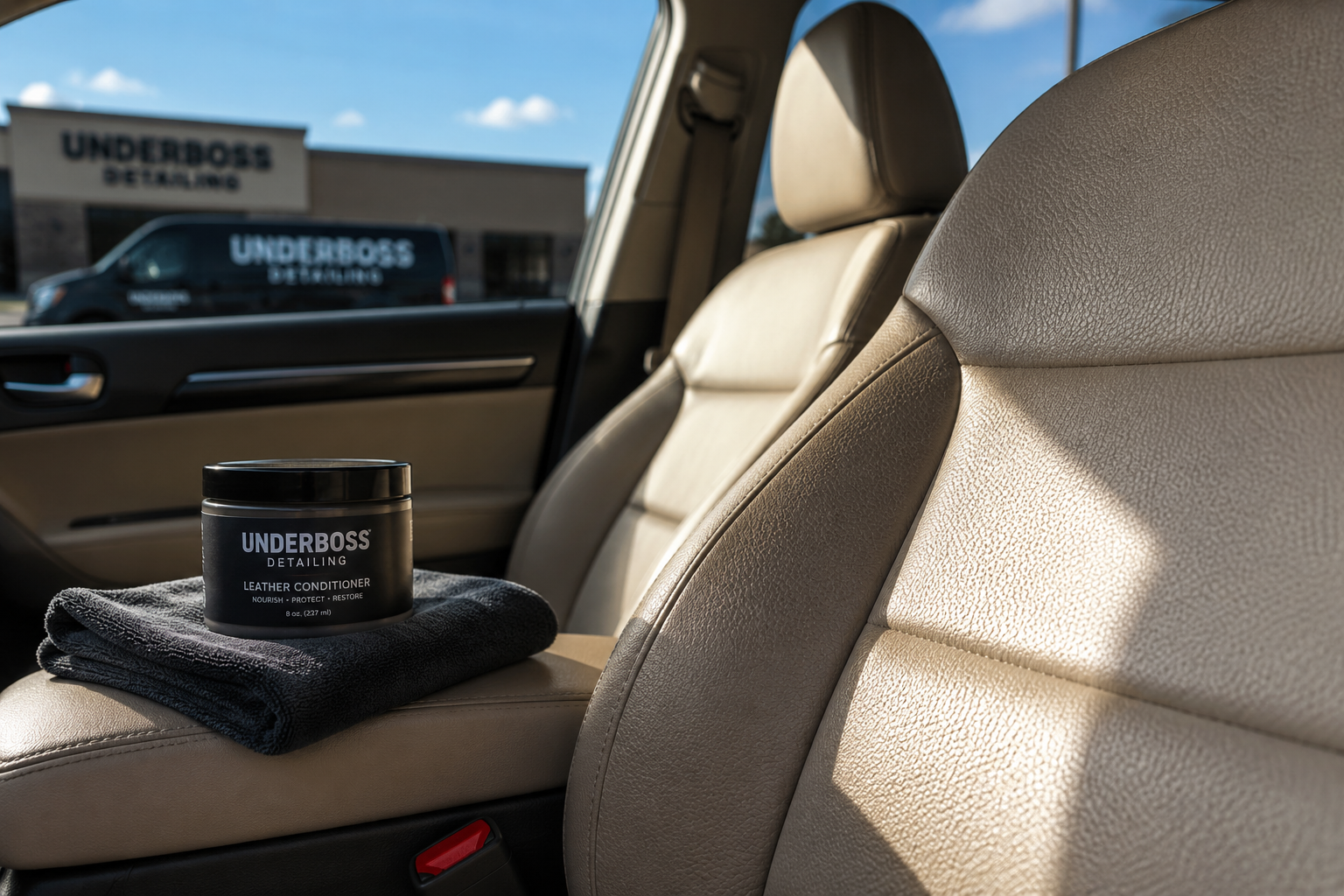
The Quiet Damage That Happens Every Time You Park
You pull into the parking lot at work, lock the car, and walk inside. The car sits in the sun for eight hours. Comes back to you at the end of the day radiating heat, the steering wheel barely touchable, the seats hot enough to feel through jeans.
You think nothing of it. It's summer — that's just what happens.
But under the surface of those leather seats, something is happening that accumulates invisibly over weeks and months of those same parking lot days. Oils are evaporating. Natural moisture is baking out. Fibers that give leather its flexibility and softness are slowly losing the properties that keep them from cracking under stress. And by the time the cracks appear — usually in the seat bolster, on the armrest, at the crease where the seat folds — the damage has been progressing silently for an entire season.
New Jersey summers are particularly hard on leather interiors. This guide explains exactly what happens to leather in the heat, why conditioning is the only thing that interrupts it, and what the professional process looks like when it's done correctly.
What Summer Heat Actually Does to Leather
Leather is a natural material — tanned animal hide — that requires moisture and oils to maintain the flexibility and tensile strength that keep it from cracking. Those properties don't disappear immediately. They deplete gradually, through repeated cycles of heat exposure that cook out the natural oils a little more with every day the car sits in the summer sun.
Parked vehicle interiors can exceed 140°F during peak summer afternoons. When sunlight enters through a windshield, ultraviolet radiation and infrared heat begin attacking interior materials almost immediately. Ceramic Pro
After just 20 minutes on an 80-degree day, the inside of a car can hit 109 degrees Fahrenheit. After 40 minutes, it hits 118 degrees, and after an hour, it can hit 123 degrees. Jimbo's Detailing
For South Jersey and Philadelphia area drivers — where summer temperatures regularly push into the high 80s and 90s, and parking lots offer little shade — this isn't an edge case. It's the reality of every weekday from June through September. Your leather seats are sitting in a 120-plus degree environment for hours at a time, day after day.
Sunlight entering the car interior carries UV radiation that penetrates leather and attacks the collagen fibers that give leather its flexibility and tensile strength. As these fibers degrade, the leather loses its ability to flex repeatedly without cracking at stress points. This accelerates inside a parked vehicle, where the greenhouse effect amplifies UV and heat intensity for hours beyond what outdoor exposure delivers. Finddetailing
The mechanism matters here: it's not just that the leather gets hot. It's that the combination of heat and UV radiation degrades the structural proteins inside the leather — the same proteins that allow it to flex when you sit down and spring back when you get up — while simultaneously evaporating the oils and moisture that keep those fibers from snapping under repeated stress.
Leather is a natural material that contains oils and moisture. Over time, exposure to sunlight, heat, and dry conditions can cause the leather to lose its moisture content, making it dry and brittle. This dehydration leads to cracking. HyperClean Store
Leather exposed to prolonged heat and UV rays loses its natural oils, causing it to become rough, stiff, and less flexible. This makes the leather uncomfortable to sit on and more susceptible to further damage, as dried-out leather has a higher risk of cracking under stress. Without proper conditioning, stiff leather will eventually become fragile and brittle. As moisture levels deplete, leather loses its elasticity and forms small cracks, especially in high-contact areas like seat edges, armrests, and headrests. Over time, these cracks can deepen and lead to peeling, exposing the underlying material and compromising the structural integrity of the leather. New Again
Why New Jersey Summers Accelerate the Problem
New Jersey sits in a climate zone that's particularly aggressive for leather interiors — and it's not just the heat.
The state's summer humidity creates a cycle that compounds the damage. High ambient humidity might seem like it would protect leather from drying out, but inside a parked vehicle, the dynamics are different. Interior temperatures routinely reach 140 to 180°F during summer months, even with windows cracked. At those temperatures, moisture evaporates rapidly regardless of outdoor humidity — and as moisture cycles rapidly in and out of leather with the daily pattern of heating and cooling, it accelerates the breakdown of the natural oils that hold the fibers together. Brilliatech
The UV component is equally significant. South Jersey's long summer days — with direct sun exposure often exceeding six to eight hours on vehicles parked in open lots — deliver cumulative UV radiation that degrades leather's protective finish and attacks the collagen beneath it. UV radiation penetrates leather and attacks the collagen fibers that give leather its flexibility and tensile strength, and this accelerates inside a parked vehicle where the greenhouse effect amplifies the intensity for hours beyond outdoor exposure. Finddetailing
The result is a seasonal progression that most drivers don't catch until it's advanced. The leather feels fine in spring. By midsummer it's subtly stiffer. By the time fall arrives, the crease lines that form when you sit down aren't bouncing back the way they used to — and by the following summer, those crease lines have become visible cracks.
Where Cracking Starts — And Why Those Spots First
Leather doesn't crack uniformly. It fails at stress points first — the places where the material is flexed and compressed most often and where heat and UV exposure concentrate.
The seat bolsters — the raised sides of the seat cushion — are the most common first failure point. Every time you get in or out of the car, those bolsters flex under your weight. When leather is properly conditioned, it flexes and returns to shape. When it's dried out, each flex creates micro-stress that accumulates until the surface cracks.
Small cracks form especially in high-contact areas like seat edges, armrests, and headrests. Over time, these cracks can deepen and lead to peeling, exposing the underlying material and compromising the structural integrity of the leather. Cracking can become irreversible and require leather replacement instead of straightforward repairs if not addressed. New Again
The headrest and rear seat edges follow, along with the driver's side seat edge where you pivot getting in and out. The dashboard leather — if your vehicle has a leather-wrapped dash — is exposed to the most direct UV and heat of any interior surface and often shows fading and stiffening before the seats do.
Heat, friction, and everyday use gradually dry out the material. Once leather becomes stiff, cracks begin to form. Sunlight plays a major role in fading and surface damage. Ultraviolet rays break down the protective coating on leather seats, causing color loss and weakening the leather structure. Panda Hub Car Care
What Leather Conditioning Does — The Science Behind It
Conditioning isn't a cosmetic treatment. It's maintenance that replaces what heat and UV exposure remove from leather over time.
Regular conditioning replenishes what UV and heat cycling strip from leather fibers — which is the difference between seats that crack and ones that stay supple for years. Finddetailing
A quality leather conditioner works by penetrating the porous surface of the leather and depositing lubricating compounds into the fiber structure — compounds that perform the same function as the natural oils the heat has been evaporating. With those oils restored, the leather regains its flexibility. Fibers that were becoming brittle can flex again without cracking. The surface softens, recovers its color depth, and regains the smooth, slightly yielding feel that properly maintained leather has.
Leather conditioners work by replenishing lost moisture and oils. They help restore flexibility and maintain a smooth texture. Regular conditioning prevents dryness and surface cracks. Panda Hub Car Care
The UV protection component that quality conditioners include matters specifically for South Jersey summer conditions. If your vehicle is often parked in direct sunlight, choose a conditioner with added UV protection. This will help shield the leather from the sun's harmful rays, preventing fading and cracking. Chariotz
What conditioning cannot do is reverse cracking that's already significant. Once leather has cracked — not just stiffened, but cracked — the structural damage is done. Conditioning can slow the progression of existing small cracks and prevent new ones from forming, but deep cracking requires professional repair. Cracks are almost impossible to fully repair. Regular maintenance interrupts the cycle. When you condition leather seats, you're replacing the moisture and oils that keep the leather flexible and resistant to cracking. Titan Coatings
This is why the timing matters so much. Conditioning before visible damage appears is maintenance. Conditioning after cracking has set in is, at best, management.
The Correct Professional Conditioning Process
Conditioning applied incorrectly — over dirty leather, with the wrong products, in the wrong sequence — can actually accelerate damage rather than prevent it. Understanding the correct process matters whether you're doing it yourself or evaluating what a detailer does.
Step 1: Thorough Cleaning First
Leather cleaning should come before conditioning, as it seeps deep into the pores of the leather to draw out dirt and old oils that would otherwise be sealed in by the conditioner. You want those out, lest they clog up the leather and prevent it from breathing properly. Qarservice
Body oils, sweat residue, sunscreen, and everyday grime accumulate on leather surfaces and, if sealed in by a conditioner application on top of them, accelerate deterioration from beneath. A dedicated automotive leather cleaner — pH-neutral and formulated for the leather's finish type — is applied with a soft brush or microfiber applicator and worked gently into the surface before any conditioning begins.
Avoid household cleaners, soap, and general all-purpose cleaners. Household cleaners, soaps, and detergents can strip natural oils and damage the finish. Always choose products made specifically for automotive leather care. Dynax Detailing Co.
Step 2: Allow the Leather to Dry Completely
Conditioning applied over wet or damp leather doesn't penetrate correctly and can trap moisture in a way that promotes mold and mildew rather than protecting the material. The leather needs to be fully dry before any conditioner is applied.
Step 3: Apply Conditioner in Sections with Proper Technique
A quality conditioner is applied in small amounts to a clean microfiber applicator — not poured directly onto the seat — and worked into the leather in gentle circular motions, panel by panel. The circular motion ensures the product penetrates the grain evenly rather than sitting on top of the surface.
Apply a small amount of designated leather conditioner to a soft cloth. Begin rubbing the leather in circular motions with the cloth. Let it absorb fully, then wipe away any excess. Jimbo's Detailing
Step 4: Allow Full Absorption, Then Buff
The conditioner needs time to penetrate the leather fully before any excess is removed. Rushing this step and wiping away product before it's absorbed defeats the purpose of the treatment. After full absorption, a clean dry microfiber cloth removes any surface residue, leaving the leather with its characteristic soft, slightly matte finish — not the greasy, artificially shiny look that silicone-based products produce.
One important product warning: avoid anything marketed as a "leather protectant" that creates a shiny, almost plastic-like coating. That's usually silicone, and while it looks good initially, it prevents the leather from breathing and can cause cracking beneath the surface. Titan Coatings
Step 5: UV Protectant Application (For Summer)
In the South Jersey and Philadelphia summer specifically, the conditioning step is most effective when followed by a UV-inhibiting leather protectant that creates a barrier against the UV radiation that will continue attacking the leather between conditioning sessions. This is a separate step from conditioning and one that professional detailers include as a matter of course for vehicles in sun-intensive environments.
How Often Leather Needs Conditioning in South Jersey
The standard recommendation of twice per year is a starting point — not a ceiling — and it's insufficient for most vehicles in the South Jersey and Philadelphia summer climate.
Leather seats should be conditioned every 3 to 6 months, depending on the climate and how frequently you use your vehicle. In hotter climates, you may need to condition them more often. MaverickTruckClub
For South Jersey and Philadelphia vehicles specifically:
Vehicles parked outdoors year-round — the most common situation for daily commuters — should be conditioned every 3 months at minimum, with the spring and summer appointments being the most critical.
Vehicles with significant sun exposure — parking lots at work, outdoor parking at home — benefit from conditioning before summer begins (April/May), again at midsummer (July/August), and again heading into fall (October).
If your car is parked outside in the sun, used daily, or has light-colored leather which tends to show wear more quickly, every 2 to 3 months is a smarter move. gohighlevel
Garaged vehicles with minimal sun exposure can maintain a twice-yearly schedule — spring and fall — without significant risk.
The tactile test always supersedes the calendar. Signs it's time to condition: the leather feels dry or stiff to the touch, you notice small cracks or creases forming, the leather looks dull or faded, or spills don't wipe away easily. If any of those conditions are present, it's time regardless of when the last treatment was. USA Wire
New Leather Needs Conditioning Too
A common misconception is that new leather doesn't need conditioning — that it comes from the factory with whatever it needs already in it and the conditioning requirement comes later, when the leather ages.
Even new leather seats benefit from conditioning. It helps break in the leather more quickly, softening the rigid factory-fresh feel. Plus, conditioning is protection, and early protection is the best protection there is — condition new seats from the beginning. USA Wire
Factory leather on new vehicles has typically been sitting on the lot through sun exposure before you buy it. The conditioning applied during manufacturing has been depleting since the car was built. Getting a conditioning treatment on new leather — before the first summer begins — sets the baseline for long-term protection and is one of the highest-return investments a new car owner can make in their interior.
The Resale Value Case for Leather Conditioning
Leather interior condition is one of the most visible and impactful factors in a used car's perceived value. Buyers walking through a used vehicle immediately notice seat condition — and cracked, faded leather communicates years of neglect regardless of what the mechanical record shows.
The inverse is equally true: leather that's supple, richly colored, and free of cracking signals a vehicle that's been maintained. That first impression translates directly into buyer confidence and willingness to pay.
Cracking can become irreversible and require leather replacement instead of straightforward repairs if not addressed. Leather seat replacement — for a full set of seats in a typical sedan or SUV — runs $1,500 to $3,000 or more depending on the vehicle. A professional conditioning treatment four times a year costs a fraction of that over the life of the vehicle, and keeps the interior in the condition that commands full market value at resale. New Again
Protect Your Leather Before the Next NJ Summer Does Its Work
The window between spring and the heat of July is the most important time to get a leather conditioning treatment done. Before the cumulative daily sessions in a 130-degree parking lot, get the leather clean, conditioned, and protected with UV inhibitors. Then maintain it through the summer with a midseason treatment and an end-of-season conditioning before the dry winter sets in.
Underboss Detailing handles professional leather cleaning and conditioning as part of every full interior detail, bringing professional-grade products and technique directly to your home or office across South Jersey and the greater Philadelphia area. We clean first, condition properly, and apply UV protection — no silicone shortcuts, no product buildup, just leather that looks and feels the way it's supposed to.
Book your interior detail before the summer heat takes hold. Visit underbossdetailing.com and protect what you're sitting in every single day.
Frequently Asked Questions
Why does leather crack in summer heat?
Leather is a natural material that contains oils and moisture. Over time, exposure to sunlight, heat, and dry conditions causes the leather to lose its moisture content, making it dry and brittle. This dehydration leads to cracking. Inside a parked vehicle in summer, temperatures can exceed 130°F, significantly accelerating the process of oil evaporation and UV damage to the leather's fiber structure. HyperClean Store
How often should I condition leather car seats in New Jersey?
Leather seats should be conditioned every 3 to 6 months, with more frequent conditioning required in hotter climates or for vehicles with greater sun exposure. For South Jersey and Philadelphia drivers whose vehicles park outdoors through the summer, every 3 months — with treatments timed to spring, midsummer, and fall — is the practical recommendation. MaverickTruckClub
Can conditioning fix leather that's already cracked?
Conditioning can slow the progression of small, surface-level cracks and prevent new ones from forming, but it cannot reverse significant cracking. Cracks are almost impossible to fully repair. Regular maintenance interrupts the cycle before damage occurs. Deep or widespread cracking typically requires professional leather repair or, in severe cases, seat reupholstery. Titan Coatings
Does it matter what kind of conditioner I use?
Yes significantly. Avoid anything marketed as a "leather protectant" that creates a shiny, plastic-like coating. That's usually silicone, and while it looks good initially, it prevents the leather from breathing and can cause cracking beneath the surface. Use a purpose-formulated automotive leather conditioner — pH-balanced, non-silicone, and ideally containing UV inhibitors for summer protection. Titan Coatings
Should I condition leather before or after cleaning it?
Always clean first, then condition. Leather cleaning should come before conditioning, as it draws out dirt and old oils that would otherwise be sealed in by the conditioner, clogging the leather and preventing it from breathing properly. Conditioning applied over dirty leather seals in the contaminants rather than protecting the material. Qarservice
Do new leather seats need conditioning?
Yes. Even new leather seats benefit from conditioning. It helps break in the leather more quickly and establishes early protection — the best protection is applied before damage has a chance to occur. Factory leather has already been losing its conditioning since the vehicle was manufactured, and the first summer is the highest-risk period for a new car's leather interior. USA Wire
What are the signs my leather seats need conditioning?
Signs it's time to condition include: the leather feels dry or stiff to the touch, you notice small cracks or creases forming, the leather looks dull or faded, or spills don't wipe away as easily as they used to. Any of these signs indicate the leather's oils have depleted enough that conditioning is overdue regardless of when it was last done. USA Wire